I didn't even know this was a thing. My European history class focuses a bit on the Frankfurt school. Required reading of Horkheimer and Adorno. I typed it in YouTube to get some videos to help understand more and it immediately opened up a rabbit hole of conspiracy theories.
It's also all over Reddit if you search "cultural Marxism". I have read a decent amount of their work and never once came across "cultural Marxism" or "political correctness".
I still don't know what "cultural Marxism" means.
Where does this conspiracy originate? How new is it? Did the founders of the Frankfurt school ever comment on it? It's almost impossible to find actual videos on Critical Theory because you're immediately directed to conspiracy videos by self-proclaimed "MRAs" and "anti-SJWs". It's quite fascinating.
/u/commiespaceinvader has an excellent write-up on the absurdity of Cultural Marxism as an idea, my answer will try (imperfectly) to address the origins of this idiocy.
I still don't know what "cultural Marxism" means.
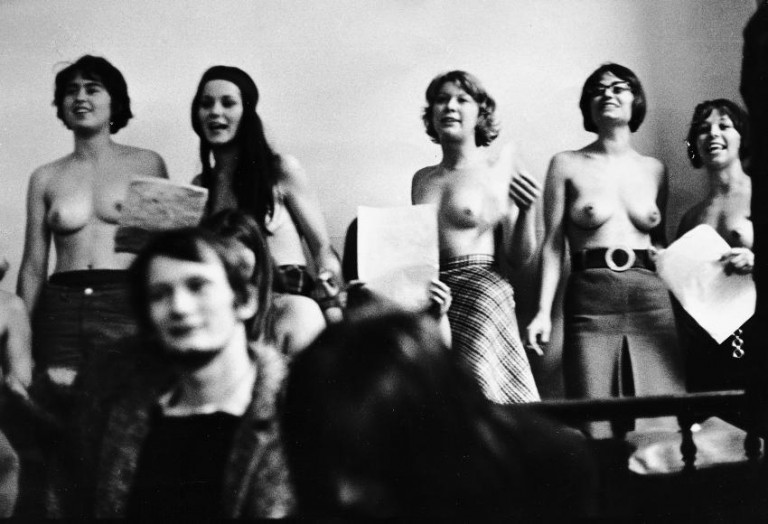
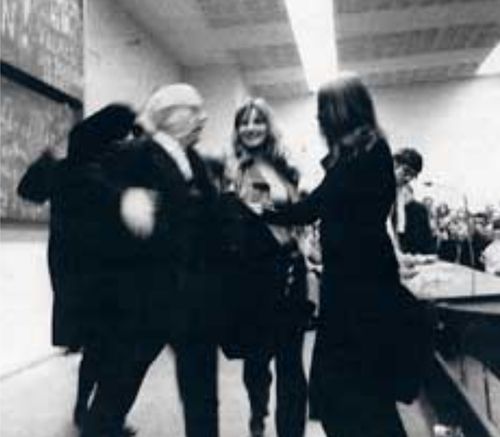
This is actually not something to be ashamed of, because there is no firm definition of CM by its adherents. It is an abstract slur that has nothing to do with the actual philosophy of the Frankfurt School or its ideas. The generalized picture of CM according to sites like Reddit or Youtube is that Cultural Marxists are a bunch of sex- and identity politics-obsessed intellectuals who despise (white) Western civilization and are trying to pull it down from the inside. CM found common cause, or were indistinguishable, from the New Left and form the basis for an intellectual conspiracy. As the OP's reading into the Frankfurt School's work suggests, such an interpretation is absurd. To give an example of this, Adorno was notoriously conservative and straight-laced, much to the chagrin of the increasingly radical student body of the University of Frankfurt. In April 1969, the students demanded in his lecture that he engage in self-criticism and disrupted the professor. Some of this disruption involved walking up to the chalkboard and writing anti-Adorno statements, but most famously, a group of female students took off their tops (obviously NSFW) and accosted the old man. This type of disruption shocked Adorno and he called the police. In a letter to Marcuse, Adorno wrote:
The police should not be—to use the jargon of the ApO—abstractly demonized. I can only reiterate that they treated the students far more leniently than the students treated me: that simply beggared description. I disagree with you on the question of when the police should be called. Recently, in a faculty discussion, Mr. Cohn-Bendit told me that I only had the right to call the police if blows were about to rain down on me; I replied that, by then, it would probably be too late.
The Busenaktion (breast action/operation) shows that notions of a united intellectuals front between 60s radicals is often overblown, but also the 60s intellectual milieu was often characterized by fratricidal conflicts that would make any common conspiracy to overthrow the West, even if it did exist, a most complicated proposition.
The intellectual genesis of CM, like many conspiracy theories, is difficult to track down as it had many different origin points. The American Paleoconservatives Pat Buchanan and William S. Lind certainly helped popularize the idea of a common conspiracy among academic intellectuals against the West. Their writings picked up cosmetic elements of the Frankfurt School and twisted them all out of proportion. In a typical passage in Buchanan's The Death of the West, he writes:
Cultural Marxists understood [the power of the politics of personal destruction]. Their Critical Theory was a prototype of the politics of personal destruction. What the latter does to popular leaders, Critical Theory does to an entire nation through repeated assaults on its past. It is the moral equivalent of vandalizing the graves and desecrating the corpses of its ancestors.
Many of the institutions that no have custody of America's past operate on the principles of Big Brother's Ministry of Truth: drop down the "memory hole" the patriotic stories of America's greatness and glory, an produce new "wart-and-all" histories that play p her crimes and sins, revealing what we have loved to be loathsome and those we have revered to be disreputable, even despicable. Many old heroes have not survived the killing fields of the New History.
Buchanan's screed here conflates multiple intellectual traditions and disciplines into a single, undifferentiated mass that operates on the same plane as Pol Pot (killing fields). The Decline of the West draws on anti-intellectualism and a long-developed distrust of the academy in certain conservative circles, presupposing an near-monolithic control of these institutions by critical theory. Likewise, William Lind argued that CM was behind the emergence of political correctness and stifling intellectual "debate" by preventing alternative viewpoints on campus. Again, neither Lind nor Buchanan bother to understand the ideas of the Frankfurt School or the precepts of critical theory, all that matters is to describe it as the enemy.
Buchanan and company also had the benefit of widespread narratives of communist subversion and cabals that had been developed in milieus like the John Birch Society. One of the consistent minor themes in the Cold War discourse is that social movements like the African-American Civil Rights movement were infiltrated by CPUSA agents and they were the ones pushing expressions of discontent. The Marxist moniker in CM itself conjures up images of would-be vanguardists in the academy plotting to further the cause of revolution; The Death of the West likens Adorno, Marcuse, and other critical theorists to Marxist revolutionaries of prior generations. And as with other fringe theories on Marxist subversion, proponents of CM dabble in antisemitism. William Lind spoke at a Holocaust denial conference in 2002 and Buchanan has periodically attacked the importance of Israel to US foreign policy and in news columns in the 1980s argued that Nazi war criminals were victims of KGB frame-ups. While not blaming Jews directly, Buchanan employs a variety of dogwhistles implying a unified Jewish conspiracy to advance its agenda. In a similar vein, in a 2000 speech The Origins of Political Correctness, Lind summons up images of nefarious Jews:
How does all of this stuff flood in here? How does it flood into our universities, and indeed into our lives today? The members of the Frankfurt School are Marxist, they are also, to a man, Jewish. In 1933 the Nazis came to power in Germany, and not surprisingly they shut down the Institute for Social Research. And its members fled.
Of course, this all begs comparison to the Nazi's own propaganda use of "Cultural Bolshevism" to slander political opinions and individuals as tools of international Jewish Communism. Like adherents of the CM conspiracy today, the Third Reich used the term loosely without any real definition of what it meant.
The idea of an intellectual conspiracy to undermine the West is of course nonsense. As /u/commisespaceinvader notes the Frankfurt School had a diverse set of beliefs and were far from a united front. But this reality is immaterial to the importance of Cultural Marxism as a slur. The preexisting set of conspiracies and ideas developed by the likes of Lind gives this slander a degree of flexibility, especially for people who cannot even be bothered to understand what the Frankfurt School actually wrote.
Conspiracy theories aside, is it fair to say though that certain ideas about culture can have their roots in Marxist thinking? When I hear people talk about "cultural Marxism" today it's less in terms of a secret cabal to overthrow the West and more in terms of the background radiation of Marxist thought, which is seen as disagreeable by some. It seems fair to say that members of the Frankfurt School naturally would have been pleased to see their views take hold, right? I am a graduate of a conservatory but was not familiar with any of Adorno's writing on music until this year, but in retrospect the influence of those ideas on the musical landscape seems pretty inescapable to me.