If you look really closely, the name Prussia contains the word "Russia" so someone would think that it has Slavic citizens (Mainly Polish as poland is south, or russian)
However the Germanic Kingdoms/Empires/States always liked to have control of Prussia.
Is it the same kind of situation like western slavic states (for example Czechoslovokia) where they are of slavic descend but have a big German influence?
The word Prussia does not contain the word Russia any more than the word fairy contains the word fair: the words sound alike but have entirely different histories.
Prussia comes from Slavic/Baltic prus-, which is of uncertain origin. Etymonline suggests that it derives from po-rusi "[living] near the Rus'", but the entry for prusak in Vasmer says that such an etymology is "impossible", and he's right: there's similar words (e.g. Pomerania < *po-morje 'near the sea') and in these words the o doesn't drop. The fact is, there's really no conclusive evidence for any etymology of Prussia, and we just don't know where it comes from.
The oldest Prussians in the historical records spoke a Baltic language, related most closely to Lithuanian and Latvian.
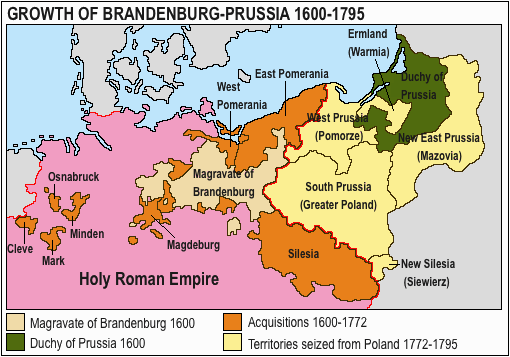
Moving beyond the linguistics of the word "Prussia" which /u/rusoved has succinctly summarized, it is also worth mentioning that Prussia is something of a misnomer for this political entity. The population core of Prussia was Mark Brandenburg which had a long and storied history in the Holy Roman Empire. Brandenburg was one of the Electorates for the Holy Roman Emperor and was one of the stronger north German states. The Hohenzollern Elector of Brandenburg inherited the Duchy of Prussia in 1618, which was still a fief of the Polish crown. The Hohenzollerns then began a process of gradually stripping away this Polish authority in the Duchy and expansion of Hohenzollern territory and prestige. Eventually, Emperor Leopold I allowed the Prince-Elector Frederick III to assume the title King in Prussia, a title that was nominally separate from his HRE title. Frederick III/I's successors would on their own accord begin to style themselves as Kings of Prussia. The European-wide fame of Frederick the Great helped to further elevate the status of Prussia. But despite this new prestige, the geographic region of Prussia remained something of a political and cultural backwater within the Prussian kingdom. Brandenburg was still the major cultural and administrative hub of the kingdom during the eighteenth century.