For reference let's just pretend it's this armor specifically
https://en.wikipedia.org/wiki/Plate_armour#/media/File:Italian_-Sallet-_Walters_51580.jpg
I ask this question because I was watching
https://www.youtube.com/watch?v=IkDDBL7jNew
Which as a summary is a bunch of people today getting in actual armor with actual swords and just beating the shit out of each other.
But I noticed that even if those weapons were sharp I can't see how they would do any damage at all. If I'm hitting my opponent with a giant sword and he's wearing plate we just might as well be hitting against a rock for all the real damage I feel like it would do. So how do I kill him?
Trying to cut armor with a sword will not be very useful as you say, so you are left with 2 main ways to defeat a armored opponent, 1: Piercing the armor in some way or 2: Killing the wearer through bludgeoning attacks, either by denting the armor or by giving the wearer concussions or other internal damages because of the energy transfer from the blow.
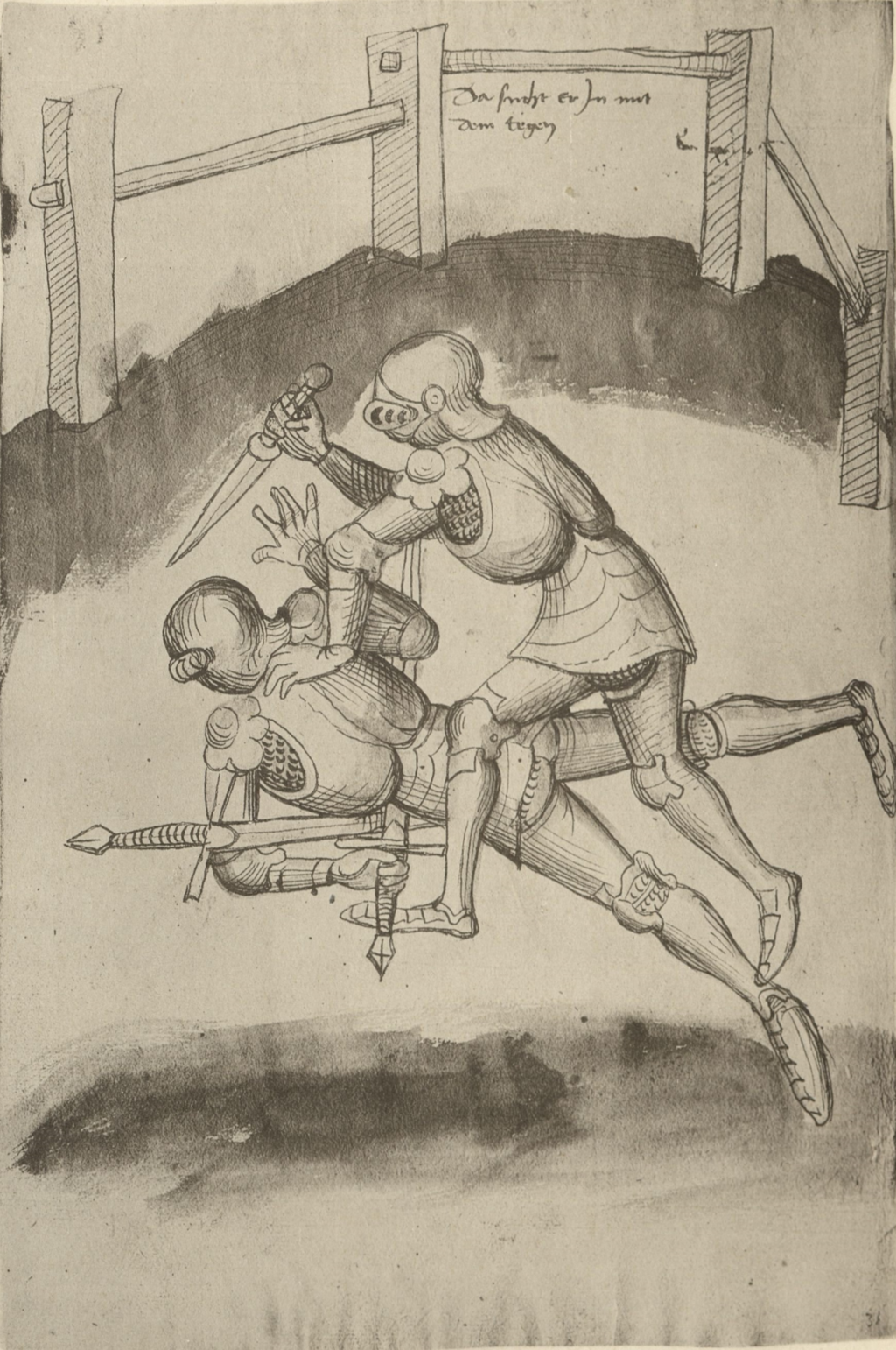
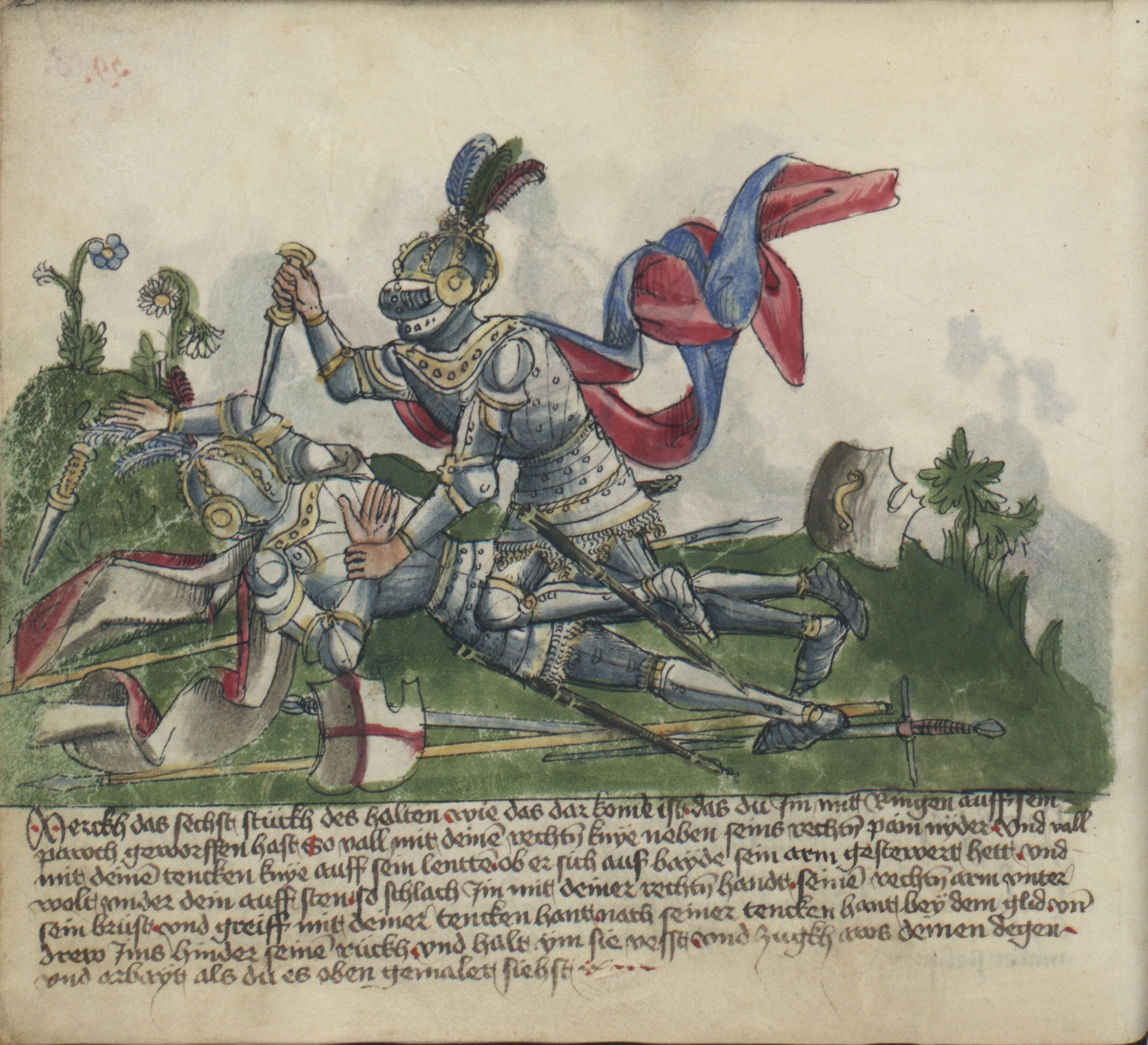
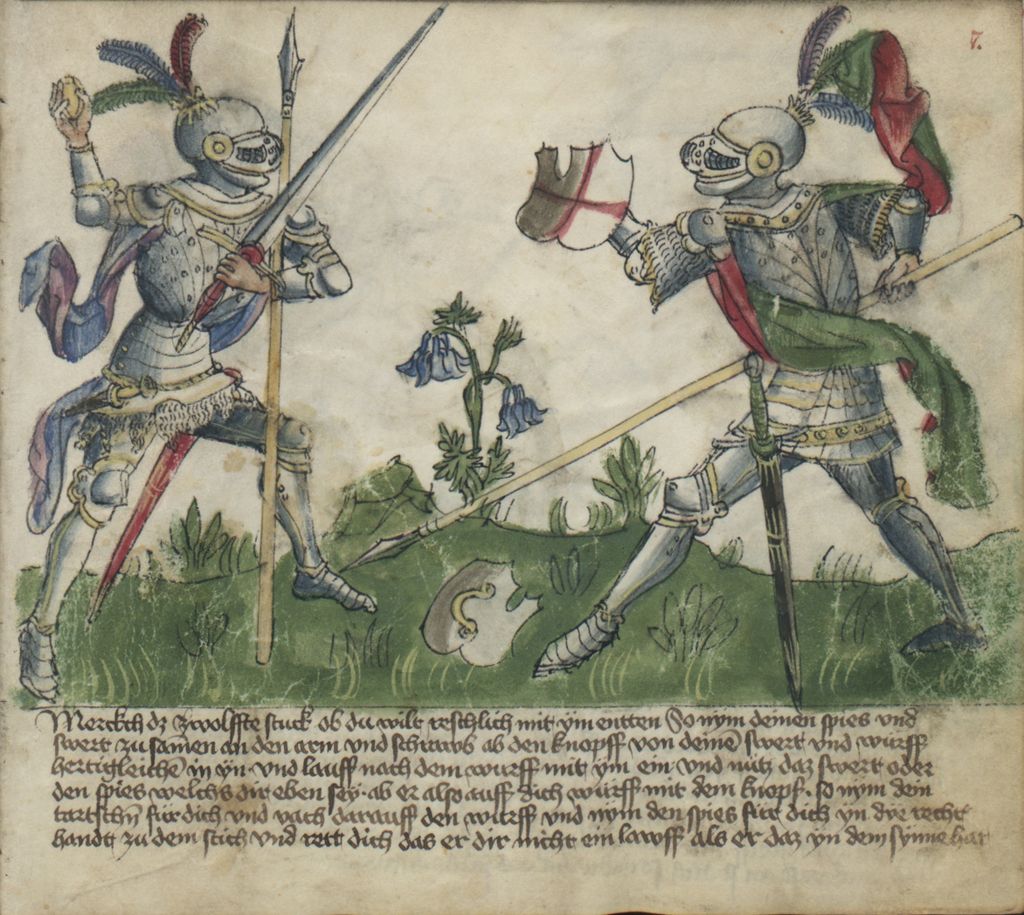
How this could be done would depend on what weapons you had at hand, but the some main weapons that were used in the time period you stated were swords, longswords, daggers, maces and warhammers. Swords and Longswords were at the time period you stated (1470) could be produced to be good a piercing, thus these weapons could be used to try to pierce the armor, which might work if you were lucky. But since armor often were hard to penetrate, the more effective technique would be to try to find a weakness in the armor, such as eye slits, back of knees, armpits and so on. To get close enough to put your sword or dagger in these locations, you would have to end up in a grapple with the enemy knight (since it is doubtful that a moving knight would stand at the same spot long enough for you to aim for the weak spot, as the knights knew which spots to protect), and then overpower him and force your dagger or sword into the weak spot of the armor. This would be a very effective if done correctly. Here is are some examples of such a technique: First Example. Example from Hans Talhoffer a German Fencing Master, of a Knight grappling with another Knight. Third example
As mentioned earlier, there was also the option of using warhammers or maces, which could kill by either piercing the armor or by bludgeoning in the case of the warhammer, or by just bludgeoning in the case of the mace. By using these weapons you could avoid the grappling part, and just try to place well placed blows without getting hit yourself. The warhammer might not pierce the armor on the first strike, but the wearer would feel the blows, and the attacks would be fatal if enough blows were delivered or if the warhammer pierced the armor at a point where the enemy would receive a fatal wound. The Longsword could also be used as a form of warhammer, if you held the sword by the blade and hit the enemy knight with the cross guard.
In addition to this there is also the option to try to kill the knight by archery, but this could require many arrows if the armor is good.
If all else fails, you also have the option to throw your pommel to the end knight rightly
There were many weapons effective against the man in plate armor. They were not always effective but the armored man was by no means invulnerable. As with any weapons system in history, counter measures were exployed; the guy in armor had mobility limitations and might have a restricted field of vision.
A long sword called a "tuck" comes to mind. It had a narrow but stout blade, sharp point, and dull to non-existent edges. You would use it on the joints and chinks of armor to kill your opponent by getting past his armor.
Impact weapons such as maces and mallets were used against armor. A good hit on the head would produce brain trauma no matter what the helmet of the armored guy was.
By 1470 there were some guns, and these could pierce armor. And a bodkin point shot from an English longbow could do it at close range. Crossbows had some effectiveness as well.
The spike on many battle axes could pierce armor, especially when used against the head.
An ordinary battle sword had limited use against the guy in armor, but the face and armpits were key targets. At one battle in the Hundred Years War, light Irish infantrymen did great execution with knives, and in another, lead-headed mallets were used by English soldiers to great effect, against French knights bogged down in mud.
I am away from my books, but suggest that you Google the words "Towton skulls." The remains of these unlucky guys at the Battle of Towton show that the head was a primary target.
If you were a wealthy knight, your best protection might lay in your potential to pay ransom if taken prisoner. But as those skulls show, when battle was fought in earnest, getting killed was a distinct possibility. If you could not afford ransom, no quarter was available. You were totally at the mercy of the winner.