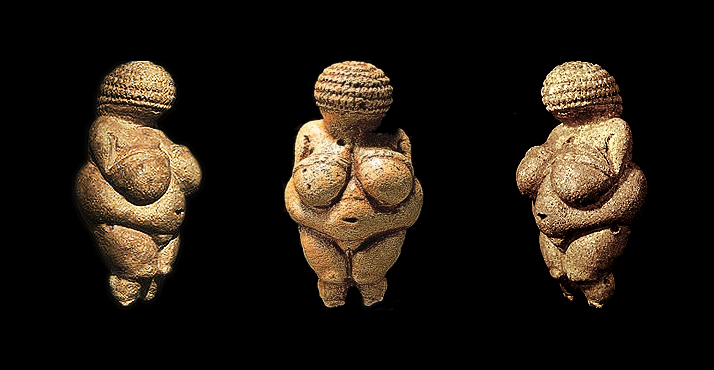
This would probably be a question better suited for /r/AskAnthropology, but I have a background in Western erotic art, primarily from the 19th century, so I will try and give this a go.
It is important to first understand the possible distinction between explicitly pygophilic cultural ephemera, and the sort of unassociated artwork/ephemera/social norms that existed before concepts of 'fetishism' were really properly understood. To be clear, one could argue that buttock fetishism has existed in the Western paradigm forever, and its continued existence in the United States is really just a manifestation of that. By this, I am referring to some of the earliest known "references" to pygophilia in the Western world, which can be found in artwork, and particularly in portrayals of Venus figures. The Willendorf Venus was purported to have been crafted around 25,000 BCE, and was discovered near Aggsbach, Austria. It should be noted that there is some dissent in the artistic community over who is actually being portrayed by the statue, as the name 'Venus' was attributed (by modern archaeologists and anthropologists) to many paleolithic statuettes that depicted buxom women. As you can note from the image, the woman being portrayed has exaggerated features, vis a vis her breasts and her buttocks. Subsequent portrayals of the actual Venus of mythology are believed to have been derived from this tradition, especially antiquity statues of Greek and Roman goddesses.
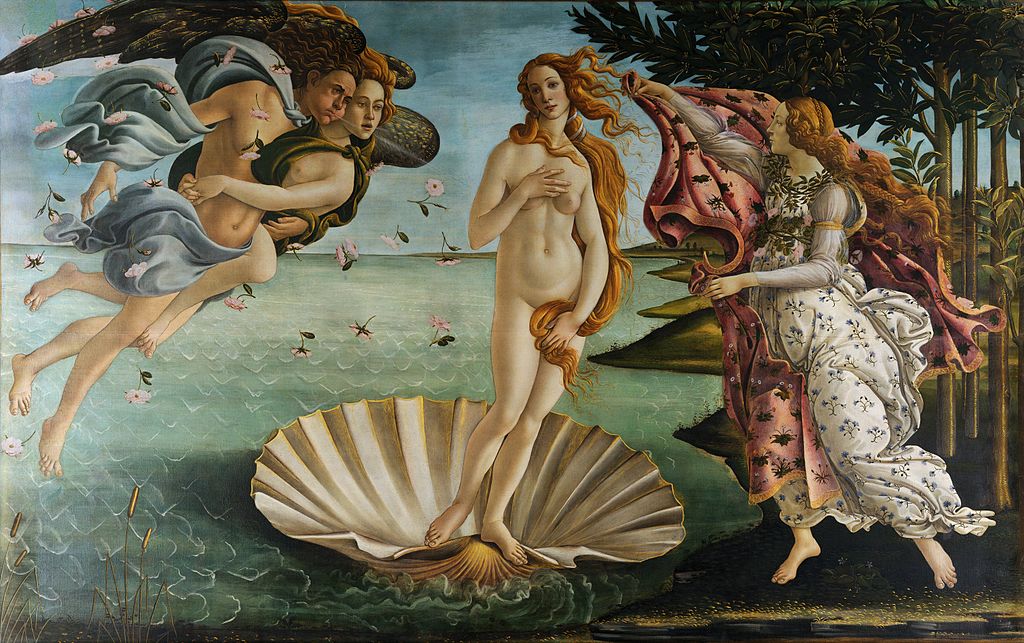
So the artistic tradition was definitely present for some time. But your question, if I may rephrase it a little, is about the reentry of pygophilic imagery into Western culture. I say 'reentry', because following the end of the Antiquity Period, a lot of this artwork, and thus the cultural underpinning, was lost. The Early and Later Middle Ages saw a rise in religious fervor, and with that came a new association with the buttocks: sodomy. This concept had existed since biblical times, and smaller monotheistic religious communities had frowned upon it for that whole time. Effectively, in these communities pygophilia was associated with the 'forbidden' sexual practice of sodomy. Henceforth, when Christianity came to dominate the cultural practice of the Western world, beginning in the 800's and peaking in the High Middle Ages, the cultural practices surrounding buttock fetishism were fairly extinguished. Much of the artwork you will find from that period was asexual, in regards to its portrayals of women. Many examples of Middle Ages artwork associated women devoid of most sexual dimorphisms to be pure and innocent. Women were near exclusively portrayed wearing full, head-to-toe gowns, dresses, and head coverings, and were almost never portrayed naked. This school of sexual thought was the dominant cultural force in the West until the Renaissance, and the drastic changes that it brought to the fine arts. Most art historians I know will point to a rather famous Botticelli painting, "The Birth of Venus" (c. 1480), as being a major turning point in the Western cultural perception of female sexuality and the female form. Between the beginning of the Renaissance and the end of the Early Modern Period (c. 1800), most artwork portraying nude women featured a then-modernized version of the Venus figure, portrayed typically with large buttocks and thighs, and narrow shoulders with small, plump, and typically naturally dropped breasts. It is believed that this figure is both referential to the traditional, erotically voluptuous Venus, but also the the 'maternal' portrayals of the Madonna in Christian artwork. However, because portraying the Madonna nude would have been considered blasphemy, most patronized Renaissance artists exercised this style by proxy, referring to their female figures as Venus, Hera, Aphrodite, and Juno (interestingly, Athena and Minerva are left off here, but that is a story for another day).
In any case, it is at this point that my area of study actually picks up, and pardon me when I say the 19th century was a strange time for erotic artwork. For all intents and purposes, explicitly erotic artwork was still culturally taboo, and frowned upon by most high society in Western Europe. However, new schools of free, philosophical thought, as well as a crumbling, archaic monarchic class had opened the floodgates for a more exotic, intense sense of sexual freedom. Writers like Marquis de Sade pioneered the Theatre of Cruelty, an artistic movement dedicated to exploring the vast frontier of sexual, sadomasochistic, and sadistic pleasures. Though the Libertine practices of a select few hardly reflected the behaviors of the majority of Western Europe, there were some things that passed over into the realm of widely accepted social practice. I, personally, would say that this was when pygophilia transitioned from being simply a matter of innate artistic portrayal, to being an outright cultural practice, and what we now consider a fetish. Erotic spanking, which had been a small part of psychosexual thought for thousands of years, became extremely prominent in the United Kingdom, portrayed in novels like Lady Bumtickler's Revels and Exhibition of Female Flagellants. Similarly, interracial interaction sped the growth of this fetish, as African slaves were sometimes shown off to house guests, displaying their 'exaggerated' buttocks. Famously, Saartjie Baartman, a Khoikhoi woman from what is now South Africa (then Kaapstad), was taken 'on tour' through the United Kingdom and on the continent, under the name 'Hottentot Venus'.
Arguably, the United States was one of the last Western countries for buttock fetishism to develop. It could be theorized that this might have to do with the US being a sort of stronghold of religious formalism and puritanism, which, by the late 1800's, was all but extinct from Western Europe. That said, eventually the same developments that occurred in Western Europe in the early 1800's did make their way to the US, and in full force. This was helped along by the sizable African-American population, that culturally, had never lost a respect for the voluptuous female form. This can be seen reflected in some of the earliest blues music of the 1900s, particularly within the subgenre known as 'dirty blues', whose lyrical content focused on a variety of taboo sexual topics, including pygophilia. It is from this musical tradition that pygophilia made its grand entrance into American culture, and to this day, remains foundational for every song you hear today talking about 'moneymakers', 'booties', or the like.
Sorry if this was overly verbose, or didn't come close to answering your question.
I suggest 'Objects of Special Devotion: Fetishes and Fetishism in Popular Culture' (1982), by Ray Browne, 'The Whore's Story: Women, Pornography, and the British Novel, 1684-1830' (2000), by Bradford Mudge, and a personal favorite of mine, 'The Vital Art of D.H. Lawrence: Vision and Expression' (1999), by Jack Stewart.
EDIT: I should add that, speaking in regards to anthropology, seeing is, a lot of the time, believing. So I would encourage you to go out and find the actual art and consume the culture to help make sense of this. My first interaction with erotic art was an illustrated book series called 'Toutes les Femmes' (All the Women), from France, circa 1870, which featured single-page illustrations of the female form, interpreted from culture to culture. I can't quite recall the author's name, but my grandfather had the books, and now my mother has them. I will see if I can find the author's name from her.
Please note that, in AskHistorians, the onus is on you to provide appropriate evidence for the historical claims you make. Stating that it can be found on Google is not helpful. Mentioning something you may have heard once is not helpful. Guessing based on what you remember from biology class is not helpful. Childish jokes are NOT helpful and will earn a temporary ban.
Proper comments for this subreddit should be in-depth, comprehensive, and informative while properly situating the answer in its historical context. It should also be backed by appropriate primary and secondary sources, whether or not explicitly mentioned in the comment (i.e. you should always be ready to provide sources if asked). In other words, answers here should be such as an historian of the subject would give.
Thank you.