The majority of aviation terminology comes from naval terminology: cabin, pilot, bulkhead, knots, &c.
Many traditions are likewise similar, especially in the world of Naval Aviation (for obvious reasons).
But one tradition has seemed to crop up sporadically at best: naming the vessel.
There are a few aircraft with specific names such as the Enola Gay, but largely callsigns and hull numbers are used.
Why are aircraft named like ships given the large overlap in terminology?
I think I should start by stating outright that the statement 'there are a few aircraft with specific names,' is in fact at least an understatement. The number of aircraft which have been given proper names by their crews is quite substantial. Though, I suppose, it depends on what percentage one considers ‘substantial.’ So let’s skip semantics and take care of the crux of the argument.
Assigning proper names to aircraft was a common phenomenon in some countries and some services. Aw-R-Go, Buffalo Gal, Heidi Ho, Memphis Belle (probably at least as famous as the Enola Gay), Piccadilly Lilly, Red Gremlin, Rusty Lode, Terry and the Pirates are all names of B-17 Flying Fortresses of the US 8th Air Force. And since you've mentioned the Enola Gay, take a look at the names of other B-29s which took part in both nuclear raids: The Great Artiste, Necessary Evil, Bockscar, Big Stink. I couldn't find specific numbers (I don't think anyone's done the calculation, in fact), but I'd wager that the vast majority of USAAF aircraft used throughout World War II had proper names assigned by their pilots/crews. The names were often accompanied by drawings, which were usually either humorously ingenious (as was the case with Bockcar, which was a pun on 'box car' and the name of a/c commander Fred Bock) or sexualized.
The nose art on the bombers was one of the first things that had caught [Willy Wyler's] attention on arriving at Bassingbourn. Neither the Nazis nor the British had anything like it, and Marine Corps and Navy regulations forbade it. It seemed so expressive of the exuberant spirit of the boy crews. “It was a way of holding on to our individuality, or sense of humor, in a war that was overwhelmingly vast, mechanized, and brutal,” Robert Morgan would observe later. There were cartoon icons like Mickey Mouse and ferocious firebreathing dragons but the favorite subjects of the amateur nose cone artists were voluptuous girls in pinup poses popularized by the work of commercial artists . . . Coyly seductive and impossibly beautiful, they were more than idealized versions of girls back home; they were brazen symbols of life on a war front where death was on everyone’s mind. . . . When Morgan picked a name for his plane, just before flying to England, he phoned George Petty and asked if he could use one of his Esquire magazine pinup girls on his bomber. Petty sent him a drawing and Morgan had an artist in his squadron paint two copies on his plane, one on each side of the nose. The crew loved them; the girl fit their youthful dash and homesick, sexual longing.^[1]
What needs to be said is that the practice did not die out with the end of World War II. One of the top US fighter aces of the Korean War, Harold Fischer, flew an F-86 named the Paper Tiger. There was also Hell-Er Bust X (of LtCol Edwin Heller), Jean's Joy and Johni's Joy (flown by different pilots from different squadrons in different periods) or MiG Mad Mavis.^[2] Among F-100 Super Sabres flown in combat during the Vietnam War one could find planes with names such as Millie's Moose, Soul Sister, Iron Butterfly, Blood Sweat'n'Tires [sic], Bettie Boop [sic again], and Lethiferous Lola.^[3] And these are just a handful of examples. A noteworthy phenomenon is that most of these did not have anything that we would call 'nose art.' They just had their names painted on the nose in a more or less fancy manner.
The habit did not die out with the end of the Cold War either. It is, in fact, still quite common. All the B-2 Spirit stealth bombers were given names according to the ‘Spirit of ___’ template. The Spirit of America, for example, hold the record of the longest operational flight by a combat aircraft, ever, with 44+ hours.^[4] And while fancy nose art is less common, you can still encounter it on some USAF aircraft. Take a look at the nose art of the KC-135E The Patriot here. It's a little bit on the nose, isn't it?^[5]
So, I hope we’ve come to an agreement that proper names of aircraft are not at all rare––in the US Air Force.
But what about other air arms of the world?
As we’ve already seen, the US Navy and Marines forbade nose art, but you could easily find aircraft with their own proper names. Take a handful of Corsairs from 1943/1944: Daphne C, Defabe, Gus’s Gopher, Spirit of ‘76 (the a/c had the number 76 assigned to it), Marine’s Dream, Lulubelle, Mary.^[6]
OK, but we’re still in the US. What about other countries? Well, Donald Miller is somewhat wrong when he says that ‘Neither the Nazis nor the British had anything like it.’ The British did. This was perhaps best visible on the Avro Lancasters, or it would have been visible had the Lancs not been used predominantly in night-time bombing operations. Lancaster names include Mickey the Moocher, Santa Azucar, The Captains Fancy, Oor Wullie, and Lady In Red.^[7] The Spitfire N3183/KL-B of famous New Zealand fighter ace Al Deere had the name Kiwi and W. G. G. Duncan Smith’s Spitfire Mk. Vb SH-Z proudly bore the name Atchashikar.^[8]
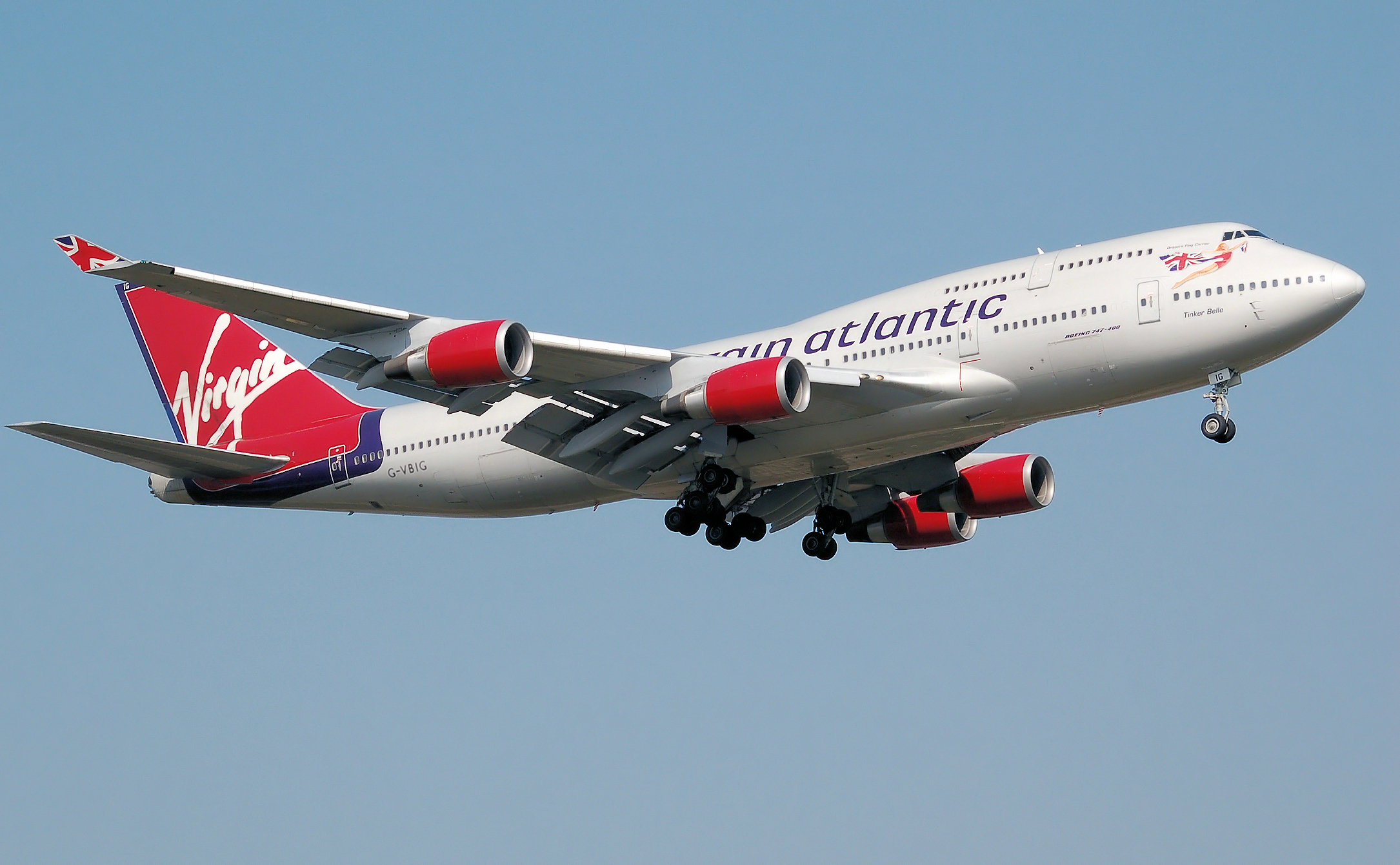
The tradition is alive even today. Airbus A310 MRTTs of the (contemporary) Luftwaffe bear names of aviation pioneers, such as Otto Lilienthal and August Euler. Russian Tu-160s are given names such as Valentin Bliznyuk or Alexander Golovanov. It’s not even that uncommon in civilian aviation. Lufthansa names a lot of their planes after locations in Germany. Virgin Atlantic gives its aircraft feminine names (such as Tinker Belle).
So, the only question left to answer is: even though individual names of aircraft exist, why aren’t they commonly used. The answer is, to facilitate communication. The name of an aircraft will have sentimental meaning for its crew, it will allow the crew to bond with the machine upon which their survival largely depends. But it’s simply not possible to conduct radio communication in a manner such as: ‘Lethiferous Lola, requesting permission to land.’ ‘Please hold, Lola, I have Rusty Lode on approach.’ ‘Rusty Load? I thought they were shot down over Berlin.’ ‘No, not Rusty L-O-A-D. Rusty L-O-D-E.’ Therefore, predetermined callsigns are used.
I would therefore argue that the reason why a large number of aircraft were not assigned any individual names is the lack of utility of such names. However, it has to be said that such names have not been common even at the very onset of aviation as we know it. Alberto Santos-Dumont, for example, only assigned numbers to his subsequent designs (like the famed Quatorze-bis, or 14-bis). And for the purpose of analysis, individual a/c numbers are significantly more useful for one simple reason: numbers are fixed once and for all, whereas names can be assigned, reassigned, changed and changed again. Which brings us back to Enola Gay. She was named by Colonel Paul Tibbets after his mother. The bomber, however, was initially assigned to Robert A. Lewis who had not chosen any name for the plane, but apparently had something in mind, as he was furious when he discovered that 44-86292 had been named Enola Gay without his consent.
And finally, please take note that not all ships are given individual names. Take German U-Boots, which are only assigned an alphanumerical designation. Or US PT-boats. Perhaps even more important than utility in communication is the feasibility of inventing enough names?
Notes
[1] D.L. Miller, MASTERS OF THE AIR: America’s Bomber Boys Who Fought the Air War Against Nazi Germany. Simon & Schuster, 2006, p. 117. (Incidentally, I've just finished translating this book into Polish).
[2] W. Thompson, F-86 Sabre Aces of the 51st Fighter Wing. Osprey, 2006, p. 5060.
[3] P.E. Davies & D.W. Menard, F-100 Super Sabre Units of the Vietnam War. Osprey, 2011, p. 40–48.
[4] Łukasz Golowanow, Duchy nad Afganistanem. B-2 w operacji „Enduring Freedom”. [Disclaimer: this is, in fact, my own article].
[5] Pardon the pun.
[6] M. Styling, Corsair Aces of WW2. Osprey, 1995, p. 27–37.
[7] J. Lake, Lancaster Squadrons 1944–45. Osprey, 2002, p. 35–45. Also: Lancaster and Manchester Nose Art Images.
[8] A. Price, Spitfire Mk V Aces 1941–45. Osprey, 1997, p. 34.
There's a lot of good responses here. I would just add a few things:
Ships do have hull numbers as well as names. The hull number is painted much larger and more prominently than the name...can be seen from a longer distance. Names, obviously, are easier to remember and use than numbers. However, for aircraft, using names have some distinct disadvantages.
By the start of WWII there were far, far more aircraft than ships. Communications with aircraft, by necessity, has to be much faster and with greater numbers than with ships. For a command center or control tower, writing names and keeping track of them was impractical. So, tail numbers were used.
Also, with so many planes there were bound to be two planes with similar names out there. Aircraft radio wasn't very good then, and is still hard to understand even today. As an example, the names "Memphis Belle" and "Give 'Em Hell" could be easily confused over a static filled radio.
Some more points: During WWII many cities and organizations got a plane named for them as a reward for selling war bonds. Crews of those planes generally were not allowed to change the name.
PT boats, landing boats, etc. did not have names; they used their hull number.
Railroad terminology was also used in aviation. Runway, terminal, and concourse are examples of railroad terms applied to airports.