Kamikazes, or more properly Tokko (special attacks), were a tactic the Japanese only used during the last year of the war. The Tokko units first formed in mid-1944 and made their debut in the autumn of 1944. While there was a culture of self-sacrifice within the Japanese air units of both the IJN and IJA. If an aircraft was hit and could not make it back to base, some pilots preferred to use their plane as a final weapon against the enemy. This was not official Japanese doctrine, but left up to the individual pilots. At Pearl, the one aircraft that likely engaged in this free-ranging Tokko was Lt. Fusata Iida's A6M2. He had told his fellow pilots that if his plane were damaged and could not return, he would crash into an enemy target of opportunity. While there may have been other suicide attacks by damaged aircraft on 7 December, Iida did signal to his wingman his plane was damaged, lending strong credence to the theory he deliberately crashed his Zero. But for the Pearl Harbor operation, the IJN intended its pilots to return to the carriers with their planes. Even at the early stages of planning for Pearl where Kido Butai's strike force would launch their attacks at maximum range envisioned that the strike force would ditch in a specific part of the Pacific and be picked up by Japanese submarines.
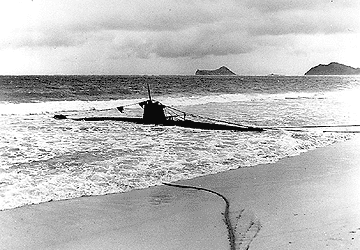
The one component of the Pearl attack where the IJN commanders did not expect the crew to return was the mini-submarine attacks. Unlike the planes, the IJN commanders conceived of the minis' attacks as one-way missions. What the IJN planners did not count on was the utter failure of the midget submarines to even reach their targets. The midgets were difficult to navigate as exemplified by Ens. Kazuo Sakamaki's boat which ran itself aground off Oahu. Sakamaki and his crewmate Kiyoshi Inagaki tried in vain to get the submarine off the coral reef, and both became weakened and delirious from oxygen deprivation and the noxious fumes from the sub's battery. Both he and Inagaki set the sub's scuttling charges, which failed to detonate, and made their way into the surf. Whether or not they intended to continue the war or surrender is unclear, as the exhaustion led to Inagaki's drowning and Sakimaki passing out on the beach, where he was soon captured.
Sakimaki's ultimate fate illustrates what would have happened with other pilots and crewman captured: they would have been treated under the provisions of the Geneva Conventions. The Japanese government received official notice of his capture, as per the Geneva Conventions, and accordingly struck his name off the books in descriptions of the attack, such as this famous image of the minis' commanders in which Sakimaki was absent.