They really have not stopped using camouflage. The plethora of both light and dark greys on modern military aircraft are a form of camouflage. These greys blend into cloud cover and light conditions. Of course not all modern military camouflage is optimal. The F-117's all-black scheme was not ideal for nighttime conditions. One of the early prototypes featured a scheme of pastel greys, greens, and browns which would have blended into night skies better than all-black. The USAF opted out of this scheme for maintenance reasons, but Ben Rich, the Lockheed Skunk Works director at the time, speculated that the decision was because "real men don't fly pastel aircraft."
The only real period where camouflage became somewhat passe for aircraft was during the 1950s and early 1960s. The USAAF during the Second World War had begun using natural-metal finish in middle of the war. The rationale was that camouflage paint added to both production time and degraded performance and was not needed in times of air superiority. Such thinking carried over into the jet-age for a number of air forces. The advent of radar as well as the sense that missiles had relegated air combat to beyond visual range meant that some air forces felt that camouflage was no longer necessary. But these sentiments proved to be short-lived in the jet air combat of the 1960s and 70s. The IDF's Mirage III's fought the Six-Day War in bare metal, but the same airframes got a desert camouflage soon after the conflict. Vietnam stimulated the USAF to think of camouflage schemes beyond just air defense greys. The Soviet bloc underwent a similar evolution. In the 1950s and 60s, its aircraft tended to be natural metal or some form of air defense grey, but by the 1970s many aircraft acquired new camouflage schemes. Sweden's air force anticipated that it would be fighting against much greater numbers, so it adapted camouflage that would allow its aircraft to blend in, such as the intricate splinter scheme of its Saab Viggen fighter.
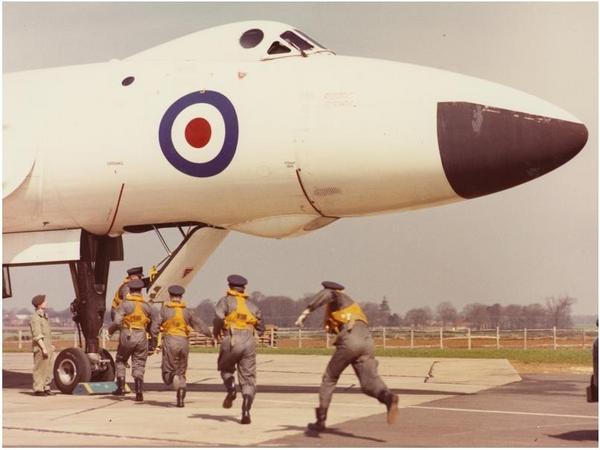
Of course, it should be stressed that painting aircraft often has a rationale behind it other than just hiding its visual signature. There definitely is a morale or psychological element to it, as Rich sarcastically pointed out. But paint also helps protect the airframe from the elements and corrosion. Many of the natural metal airframes had some type of varnish applied to it them; the interwar IJN used a type of lacquer on its A5Ms that sometimes changed with the elements giving rise to so-called "Golden Claudes" which has stimulated debate in the plastic modelling community. P-51 Mustangs' wings left the factory with silver-colored primer that smoothed the wings' rivets and panel lines to reduce drag. The B-36 had an aluminum-based lacquer applied to protect the large airframe from damage. Naval aircraft almost never were unpainted as they had to deal with corrosive salt air. Paint also protected aircraft whose primary role was nuclear attacks. USAF's SAC used anti-flash white on the bottom of its bombers like this B-52, while the RAF's Avro Vulcan were all-white. This white paint was not to blend into the sky or clouds, but to lessen impact of thermal radiation on an aircraft after it had delivered its nuclear payload.
The US 8th Army Airforce stopped painting their bombers green in 1943 as they recognised that the German air defence network would acquire targets by radar and therefore the increased performance gained from the weight saving by not painting their aircraft was of more benefit.
Tactical air forces in ground support roles remained in camouflage colouring as they were more likely to be identified visually than by radar.
In some situations, being identifiable rather than unidentifiable provided a major advantage, hence the use of invasion stripes on allied aircraft over Normandy in 1944, where the allies air superiority was so great that friendly fire presented a much greater risk to allied aircrew than enemy fire.
Post war developments in radar resulted in visual identification of aircraft becoming less common reducing the need to protect against visual identification. Additionally, as aircraft speeds increased, a camouflage pattern on an aircraft would be less discernable to the naked eye, rendering it of less use.
Camouflage colouring has not disappeared entirely, low level ground attack aircraft are still painted in camouflage patterns in many airforces, and even where camouflage patterns have been phased out, colour schemes are still subdued.