My folks live in an old Northeastern American home, built in 1900. After getting talking about the various renovations they did, it was brought up that their electrician had informed them of 75 mysterious phone lines the house had; they all led to either the basement or attic. Now I have no clue what use those lines could have had, but it seems suspicious. Anyone have any insights or speculation as to why they would need so many lines in such discreet locations of the home?
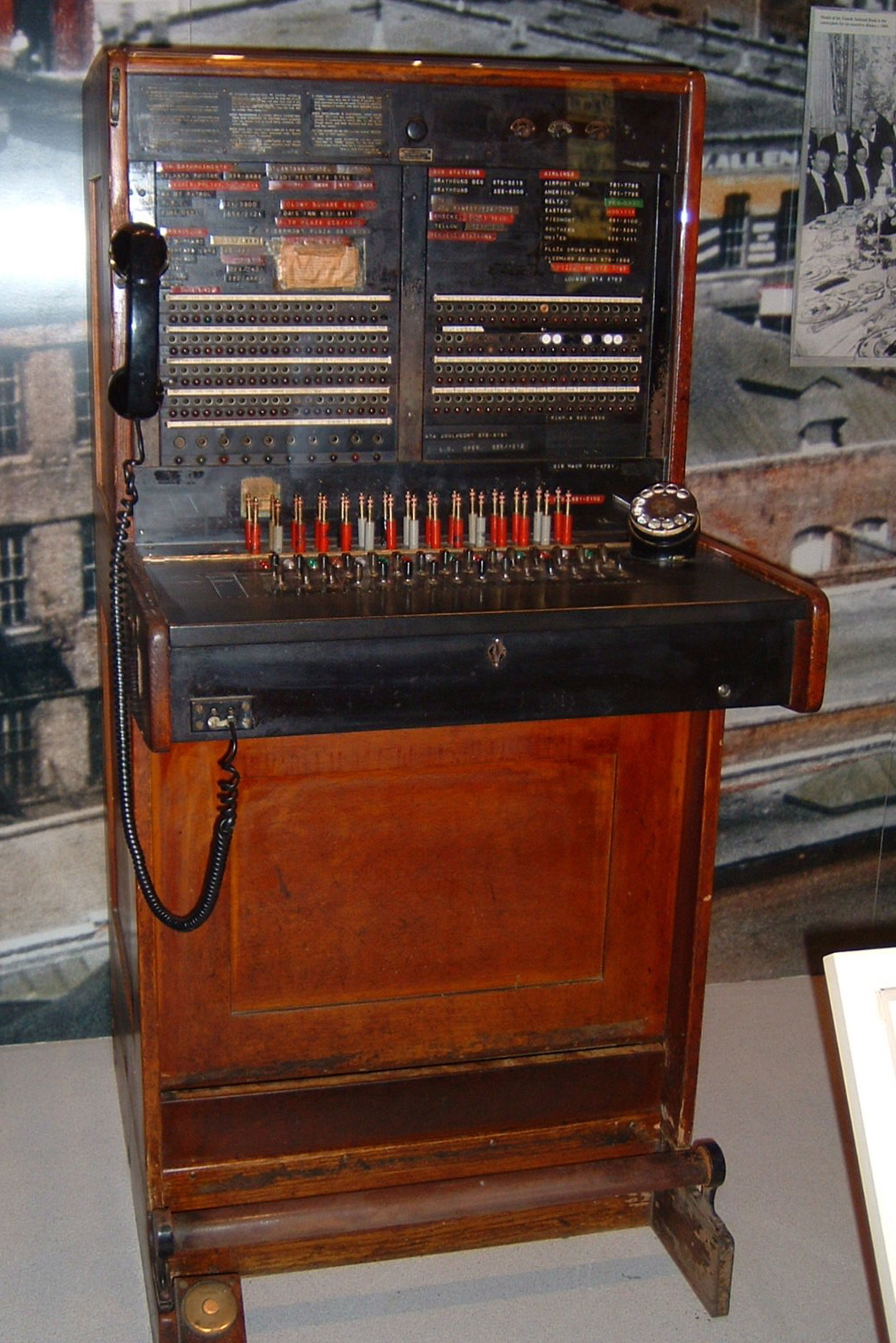
Were the phone lines new or old? In the early 20th century, local telephone exchanges were all manual systems, where a human "operator" would use plug wires to establish a physical connection between the caller and the called. They were usually located in residences or small businesses, especially in small towns or rural areas, to ensure the operator was available at all hours. Here is a manual exchange from 1924, consistent with the age of the house. After WWII, most of the manual switchboards were gradually replaced by electro-mechanical exchanges, triggered by the dial pulses (and eventually tones) to make the desired connection.
If the phone lines are newer (post 1970), the house may have been used as a telephone sales "boiler room", or as small tech company with a modem bank. Back in the 1980s and 1990s, most home and small business computer users did not have broadband internet connectivity, but used modems to communicate with various services (mail servers, bulletin boards, AOL, etc) over plain old telephone (POTS) lines. The client modem would dial the phone number of the desired service's modem, perform a "handshake" to establish communication protocols, then exchange digital data encoded using tones over the phone. Modems require a dedicated line, so if a service wanted to support more than one client at a time, they would need a bunch of modems, and consequently a bunch of phone lines.