Hi! I'll try to answer your question as best I can. I'm not an expert on English art, but American art and English art have frequently been closely related (especially in the 18th century). First, I need to discuss a couple of the terms you've used.
photo-realistic - I just want to note from the outset that this is an anachronistic term when talking about the art of the 18th century, since photography was not invented until the 1830s. Artists had certain mechanisms (such as the camera obscura) available to them that helped in transcribing real objects into paint, but there was no such thing as a photograph as such, so artists would not have spoken about photo-realism in this sense. I'll get into what they were interested in below, but this should be said from the outset.
You've used a value judgment when you say the paintings from the 19th and 20th centuries look "bad." While the subjective nature of taste is a truism of human culture, and of looking at art in particular, scholars these days tend not to be interested in quality. When you use "bad," I take it that you dislike art that we often call "modern" or "abstract." In my post I'll try to explain the emergence of abstraction and abstracting tendencies in art, but ultimately if you think these paintings look "bad," that's more a matter of taste than anything an art historian can effectively answer.
OK, so why does Sir Joshua Reynolds' Jane, Countess of Harrington look so different from Joseph Mallord Wiliam Turner's Snow Storm, Steamboat off a Harbor's Mouth, not to even mentionJames Abbott McNeill Whistler's Nocturne in Black and Gold: The Falling Rocket? In order to answer this, we need to begin with a history of Western painting stretching back to the Renaissance.
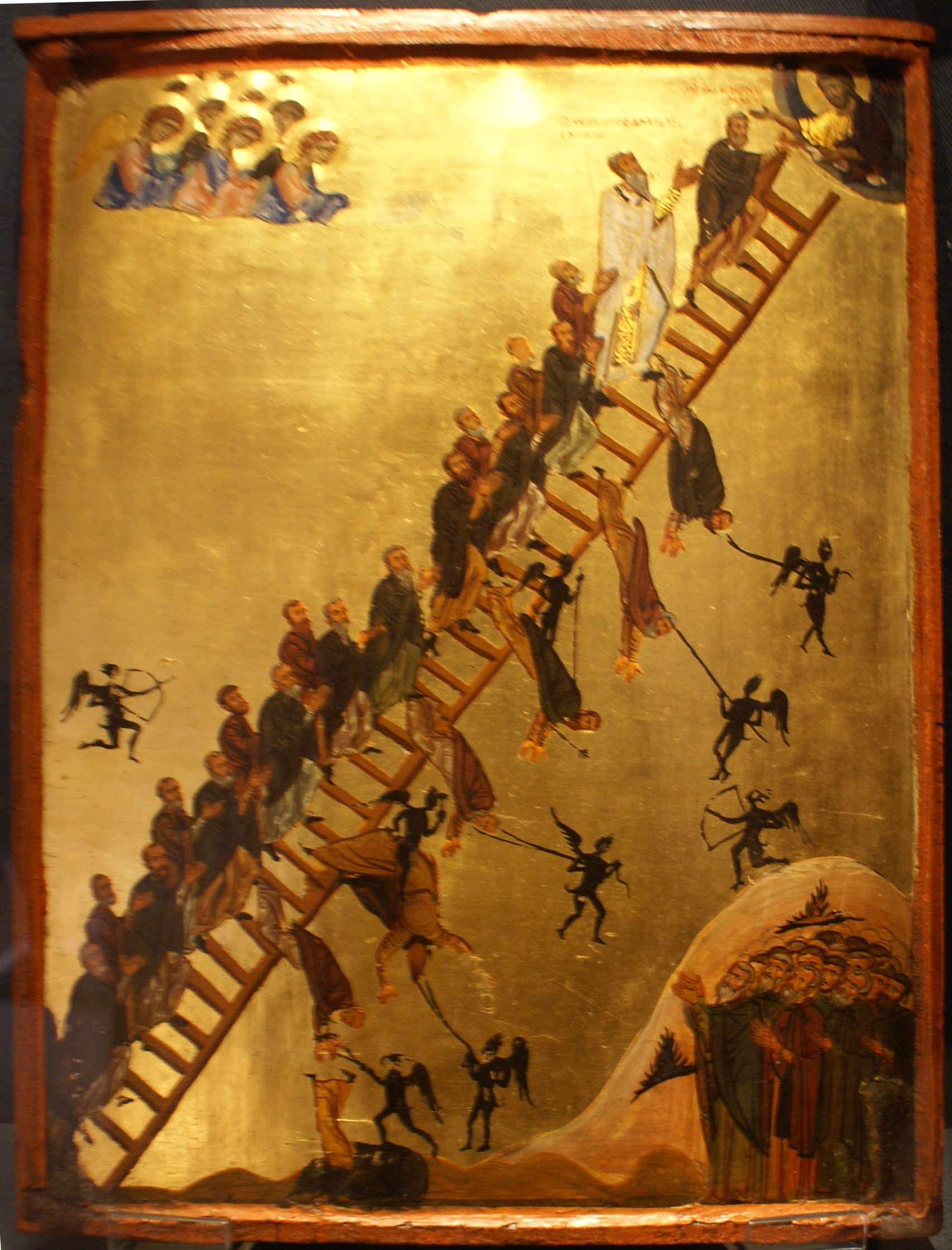
As you will see from some of the links to previous questions about the realism of ancient art, it has not always been a truism that illusionistic fidelity to nature is the main goal of art. In the era of history that we now know as the Renaissance, however, artists gradually began to be interested in inventing a way to more-or-less realistically represent upon a flat surface the way things look in three dimension. The system that eventually achieved popularity for doing this is called linear, or one-point perspective. By use of a kind of grid (conceptual or actual), an artist can represent the various proportions of objects as they recede into space in a way that the observer will perceive as "natural" or "illusionistic." This is in contrast to the techniques used in the European Middle Ages, which were interested more in the heavenly divinity of religious subjects than in representing the corporeal, sinful world that we live in. So around 1500 the Western world begins to come to agreement that fidelity to nature is the loftiest goal of art. However, as theories of art continued to develop in the seventeenth and eighteenth centuries, the goal starts to shift. In addition to an interest in representing our world, Renaissance artists and thinkers were interested in the learning of ancient Greece and Rome, and so they looked to ancient art for examples of perfect forms to incorporate into their art. As they did so, the goal of art began to be more an imitation of perfect forms than strict imitation of contemporary life.
In the eighteenth century this interest in perfect imitation of the past reached something of a peak, with the precepts of Neo-classicism demanding ever more formally rigid adherence to linear perspective and ideal classical forms. The correction or reaction to this emphasis was called Romanticism, which was a movement not just in art, but in literature, as well. Some books you might be familiar with from the Romantic movement include Frankenstein and The Sorrows of Young Werther. Romantic works in both visual art and letters emphasized more of the subjective nature of visual experience, as well as the awesome, sublime power of nature. This change was key, because now art was not necessarily always about universal truth or beauty, but could also be about an individual's experiences. To that was added a series of new understandings about the nature of perception. In the nineteenth century, people began to be interested in the subjective nature of perception, the fact that what something looks like is dependent on both an individual's eyes and her brain. In other words, vision is about interpretation rather than some sort of universal truth. This insight was key to the development of Impressionism which, among other things, took as a given that any given object, person, or place, would look differently depending on who was doing the looking, as well as when they were doing it. This was a key moment in the history of art, when art was freed from the need for mimesis (either of "real life" or of some ideal that was related to but outside of real life). Instead, the individual perspective of the artist became the goal, clearing the way for all those -isms you may have heard of, such as Fauvism, Expressionism, Surrealism, etc. Each of these movements had their own theoretical precepts and influences, but they all share, as does modern art writ large, a belief that individuality is central to the artistic experience. As artists explored this new freedom, many of them became interested in abstraction, or art which is increasingly divorced in form from any outside referent. It became increasingly about concerns entirely internal to the work of art.
This is a somewhat simplified view of the development of modernism. I've minimized the influence of photography, which many see as minimizing the necessity for art to have a mimetic function, and which others say opened interesting new compositional problems for artists to explore. I've also not really mentioned avant-gardism the increasing interest by artists in rejecting the art of the past, in constantly moving artistic production forward and towards the new. Avant-gardism is closely related to leftist politics, and a belief that art can mirror a way for the improvement of society. But this is the basic reason why the nature of art changed so radically from the 18th century to the 20th and beyond.
Sources:
Boime, Albert. The Academy and French Painting in the 19th Century
---. The Social History of Modern Art
This semester I'm using Britt, ed. Modern Art: Impressionism to Post-Modernism, and I think the first chapter does a decent job of laying out what I just told you in this post.
Hope that helps!
Also... Historians have to decipher the often difficult to read and differently worded text accounts from the Tudor and Civil War period yet when we get to the 1700s, especially more towards the latter part of the century, everything feels 'modern' in many ways..?