Apart from many french cities partially remodeled in the "Second Empire" fashion, after the unification of Italy (which occurred with significant french help!) the City of Milan (Italy's industrial hub) adopted an expansion plan clearly inspired by Haussmann's plan for Paris.
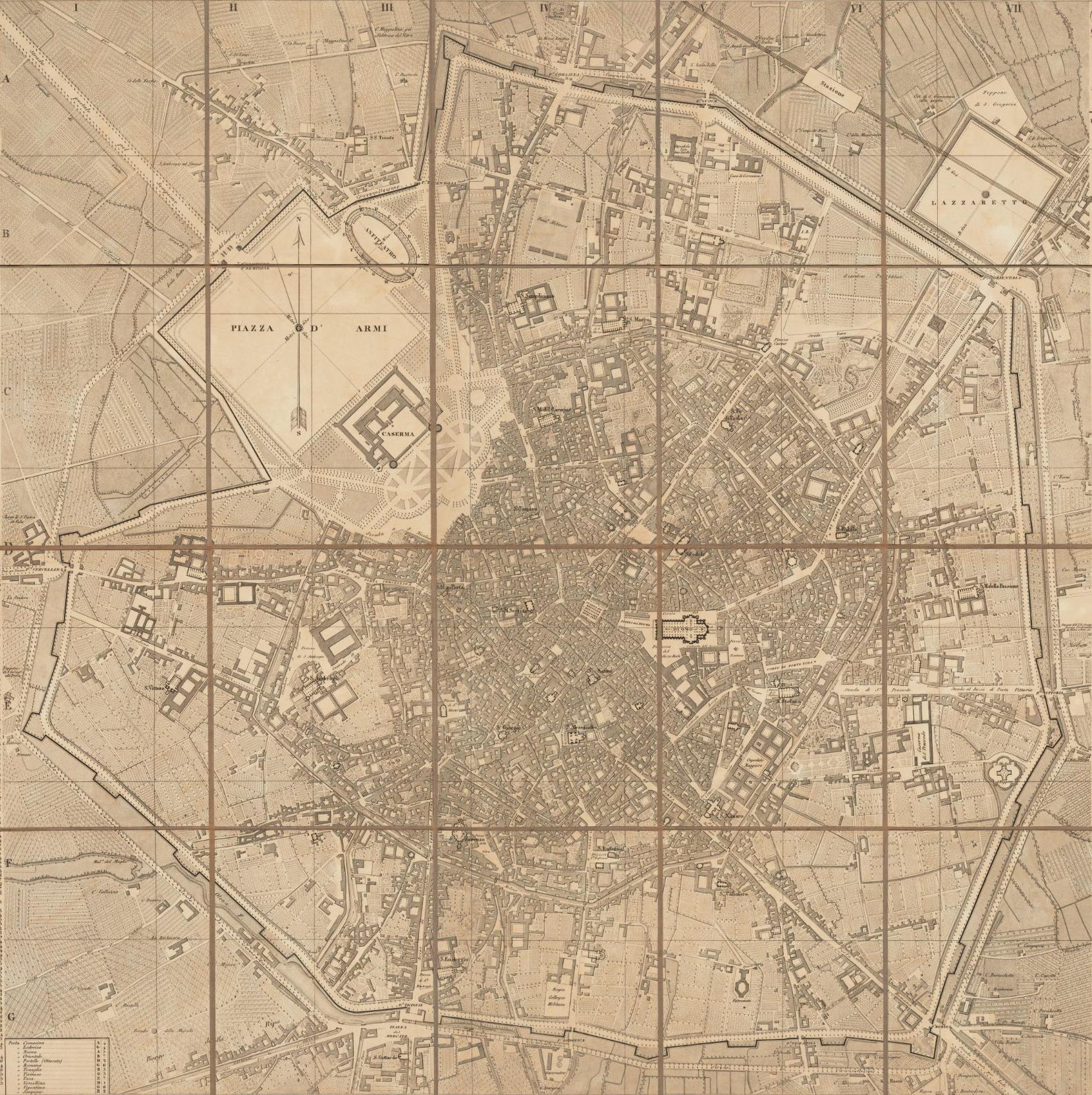
A plan was drafted by Cesare Beruto, the head of the city planning department, a new city office founded as a clear reaction to the initiatives taking place in France. Beruto's plan also included carving wide boulevards in the city center, and adopting a grid-like system to expand the city outwards, in addition to the reduction of the city's canal system in favor of expanded rail transport (compare the blue lines, representing waterways, in this 1880 map to this 1830 map) and the demolition of the old city walls.
You can compare the old city plan to the new one to get an idea of the kind of changes the city council implemented. Beyond planning a grid-like structure for future expansion, immediately noticeable is the addition of a boulevard in the center of the city connecting the Castle to Cordusio Square, the expansion of the central cathedral square, and the widening of existing arteries radiating from the center of the city to the outside (notable is "Corso di Porta Venezia," the boulevard connecting the city center to the northeast, which stayed the same size: this had been already turned into a monumental boulevard when the city was part of the Austrian Empire, being the terminus of the road connecting the city to Venice and Vienna. Compare this to "Corso di Porta Romana," the boulevard connecting the center to the southeast, which had been the city's main avenue during the Renaissance; you'll note how this avenue, which previously dissipated into many small streets, was connected to the cathedral square with an avenue running in a straight line).
Although the modifications made to Milan were the most significant implemented in Italy, they weren't the first. Upon the initial proclamation of the Kingdom of Italy (which excluded the Papal States and Rome) the new capital city of Florence, in spite of having been the capital of the Granduchy of Tuscany, was found to be entirely inadequate to house the new national administration. In 1865 architect Giuseppe Poggi's bid won a tender to restructure the city. His plan called for the demolition of the city walls to construct Haussmann-style beltways and the construction of modern city blocks surrounding the old city center.
The plan For florence was never implemented in its entirety, because in 1873 the capital of Italy finally moved to Rome, which implemented a plan parallel to Milan's. Of the three this one is the less drastic, incorporating the widening of existing streets and the expansion of he city via orthogonal blocks, and doesn't really include what are normally called "Haussmann-style" boulevards.