According to this video breastplates were generally a bit shorter than people today assume. Coming down to about the bottom of the ribcage or natural waist. I'm wondering how universal that was.
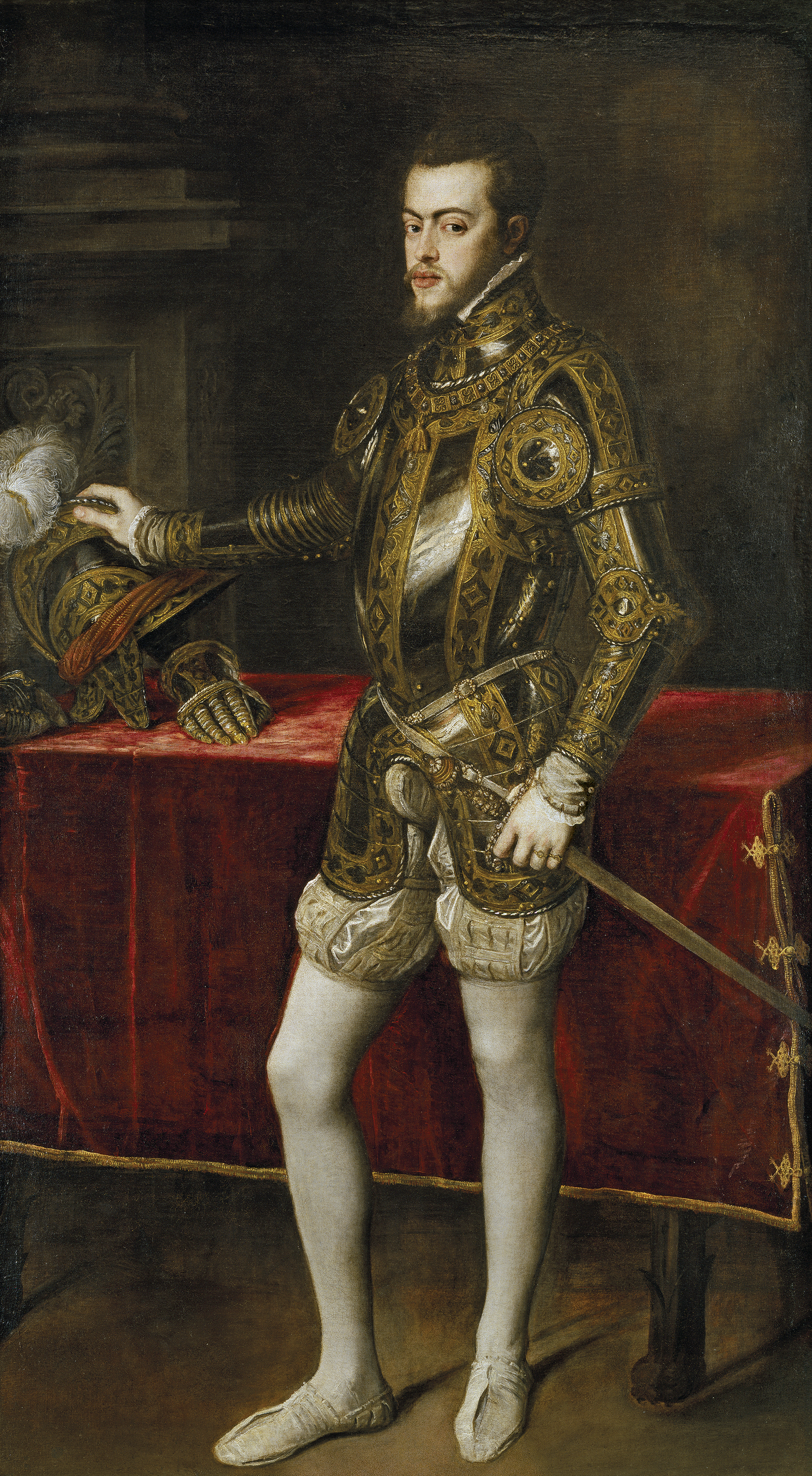
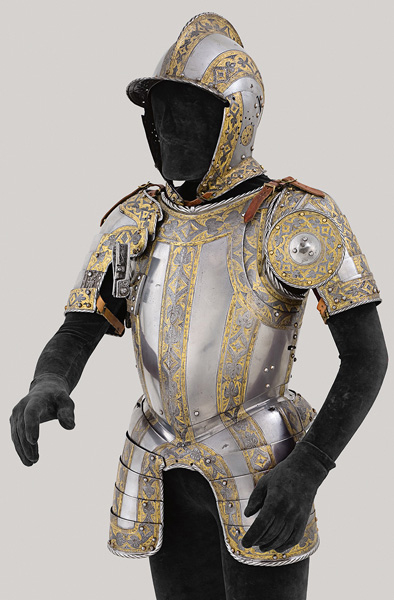
According to this chart it seems that some breastplates in the 16th and 17th century were relatively long. For instance the sides of this brestplate seem to stretch down quite a bit farther than the sides of this one. Am I correct that the plate in the first image ends closer to the hip? and if so why were some breastplates longer than others?
In the spirit of transparency, the titular 'Knyght Errant' is a friend of mine and I greatly enjoy his podcast. While because of their format we don't use podcasts as sources here, his Knyght Errant and Matt Easton's Schola Gladiatoria are the two podcasts that I unreservedly recommend on the subject of historical armour and weapons. Moreover, in this video he brings up some very fundamental points of armour design - that steel is a rigid material, and as such the 'cut' of armour (a steel garment) is constrained not just by fashion, but by human anatomy and by the actions that the wearer must perform while wearing it. Different forms of armour restrict different fields of movement because different sorts of fighting require different kinds of movement - for instance, some larger pauldrons for the shoulders may restrict full mobility of the arms over the head because when fightin on horseback the ability to raise both hands over the head is not essential. Sometimes more or less movement at the waist is essential. That said, in the video Knyght Errant explicitly mentions the late Middle Ages (his own field of study), and this context is important - some of the longest-torsoed armours are from the later 16th century, well into the early modern period by almost any definition (even among those of us who argue that the first half of the 16th century is essentially late medieval).
First, a word of warning. The chart that you refer to is a secondary (or even tertiary) source, and an old one at that (around 100 years old) - looking at the silouette of the 'gothic' breastplate, for instance, some of the breastplates are far too long, and show signs of being drawn from memory rather than life, or perhaps were shaped by other ideas of proportion (this is a problem whenever people draw people or clothes - we often draw what we are used to seeing, based on our own preconceptions of what waist lines and hemlines should look like). The chart also has a number of other innacuracies - though some modern historians of armour like Tobias Capwell still like to compare the development of armour to organic evolution, there aren't clear 'family trees' of armour in the way that are presented here - instead features are often borrowed between contemporary armours rather freely, or similar fashions and functions influence all armours of a time towards similar forms. Some other claims of the chart - that the 'anime' cuirasses of the later 16th century were for maritime use - are both wrong and honestly a bit puzzling to me.
That being said, fashion -does- influence the waist line of cuirasses. It also influences the profile of the tassets, the neck-line of the cuirass, the shape of the sabbatons and more besides - people conceive of what 'wearing' something looks like in a cultural context, and everything their wear, including armour, is part of that. So all armours are influenced by contemporary waist lines, while they are at the same time constrained by the limitations of anatomy.
One of the big manifestations of this is that sometimes the wastline of armour is higher than others. Generally, the sides of the breastplate have a kind of 'minimum point' around the natural waist, but some breastplates go above this, like the 17th century example you cited. Others are right around the line of circumference around the belly button. This follows fashion - 17th century waistlines are higher than those of the later 16th. And of course, different people are proportioned differently. This accounts for much of the difference in the length of the sides of breastplates.
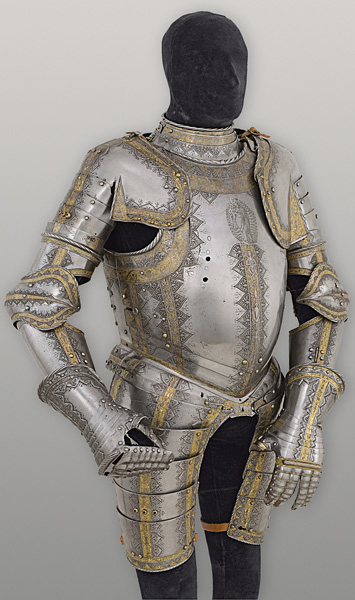
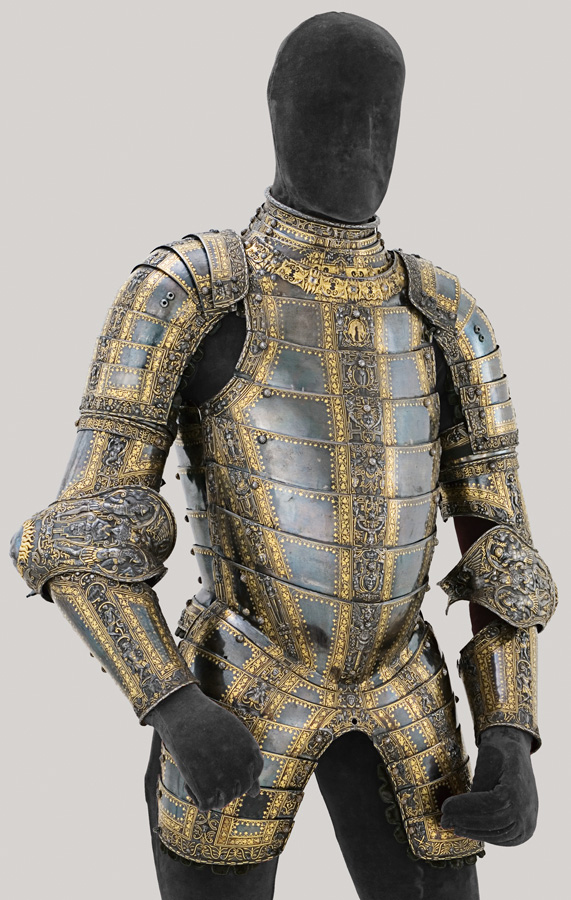
However, with all these changes basic movement needs to be considered, just as was mentioned in the video. There are a couple of ways to deal with this while extending the breastplate. One is to make a two-part breasplate (which Knyght Errant briefly mentions in the video). This is was the most common construction in the mid 15th century - an upper breastplate and a lower plackart, with a greater or lesser degree of overlap. However as plackarts fall out of use or become purely reinforcing breastplates in the 16th century, you see many breastplates with waist-lames - articulations in between the main breastplate and the tassets, to give extra flexibility. The example you give of a longer-torsoed breastplate has waist lames - though these are not clear in the painting, the original 'flowers garniture' by Desiderius Helmschmid for Phillip II survives, and you can clearly see the on the cuirass articulated waist. Note that there are other features which may seem to make the torso of the curiass more elongated - their are articulated gussets in the arm, which allows the arm-hole to be higher (like the waist-lame, the gussets are not apparent in the painting). Waist lames are very common in armour from the first half of the 16th century (in cases where it does not have a very short torso) - it can also be seen in Desiderius's 'Muhlberg Garniture' for Philip's father Charlves V. Finally, in the second half of the 16th century some cuirasses were made partly or entirely of articulated lames - the so-called 'anime' cuirass. This is another armour of Philip II by Desiderius Helmschmid in this style - in this case, the cuirass extends very low because the 'bend' of the waist in provided by the articulation in the cuirass itselt, like the waist lames writ large. In general, these features allowed the extension of the cuirass to fit with the plunging waist line of contemporary fashion.
Now, there are some cases of single-piece breastplates that plunge rather low, like the 'peascod' breastplates of the later 16th century. Without waist lames, I would expect these to restrict motion, but I don't know of any real studies of fitted armours done in this exact style.