I know Romans worshiped all the Olympian gods, but they gave special consideration to Saturn, a Titan, who tried to eat Zeus and the other Olympians. As far as I'm aware, the Greeks didn't worship Saturn, at least not to such a degree as the Olympians. The Greeks considered Zeus to be the leader of the gods and special consideration was given to him as far as I know. How come the Romans not only worshiped Saturn but considered him such an important figure in the Pantheon, perhaps placing his worship above that of Zeus?
We know almost nothing about the origins of the cult of Saturn (Latin Sāturnus or Saeturnus). You should not assume, however, that he was worshiped as "the" Saturn of Greek myth from the get-go. Virtually all of the Roman "gods" had dim, dark beginnings in the prehistory of Italia, and only later became associated with Greek equivalents. This was also the case for many Greek gods in Greek cities in the dim prehistory of the Greek world (so a fertility goddess in Corinth might eventually be compared to Demeter).
We don't even know the etymology of the word Sāturnus, though some have tried to link it with the Latin word sata "sown things; crops." I myself do not like this etymology, the least of which reasons is the variation between the long ā of Sāturnus and the short vowel of sata. Saturn was associated with fertility and crops in the earliest period, as far as we can tell, but also with destruction. The rites of the Saturnalia, which have been hopelessly garbled in our sources, seem to point to the observance of the cycle of life and death and to fire, either in an illuminating sense or in a destructive sense. The pontifical formulae mention a personified goddess Lua Saturni in the same section as the Nerio Martis and the Virites Quirini. This is very complicated to explain and I won't attempt it here, but it does suggest that the presence of Saturnus in Latium was very ancient and very fundamental in ways we do not quite understand.
Some scholars suggest that Saturnus was imported from the Etruscans during the time of the Etruscan regal period (down to 509 BCE). It seems the case that in this period there was a small altar to Saturnus in the area which would later become the forum, supposedly put up there by the companions of Hercules. The last Etruscan king of Rome, Tarquinius Superbus, is said to have decided to replace the altar with a temple. He did not rule long enough to see it completed, and it was finally finished in 497 BCE by the fledgling Republic. Most of what we know about the temple itself is that underneath it was the aerarium, a sort of vault for the city's money. We know next to nothing about any of the rest of it, despite its prominence in the forum both 2400 years ago and today.
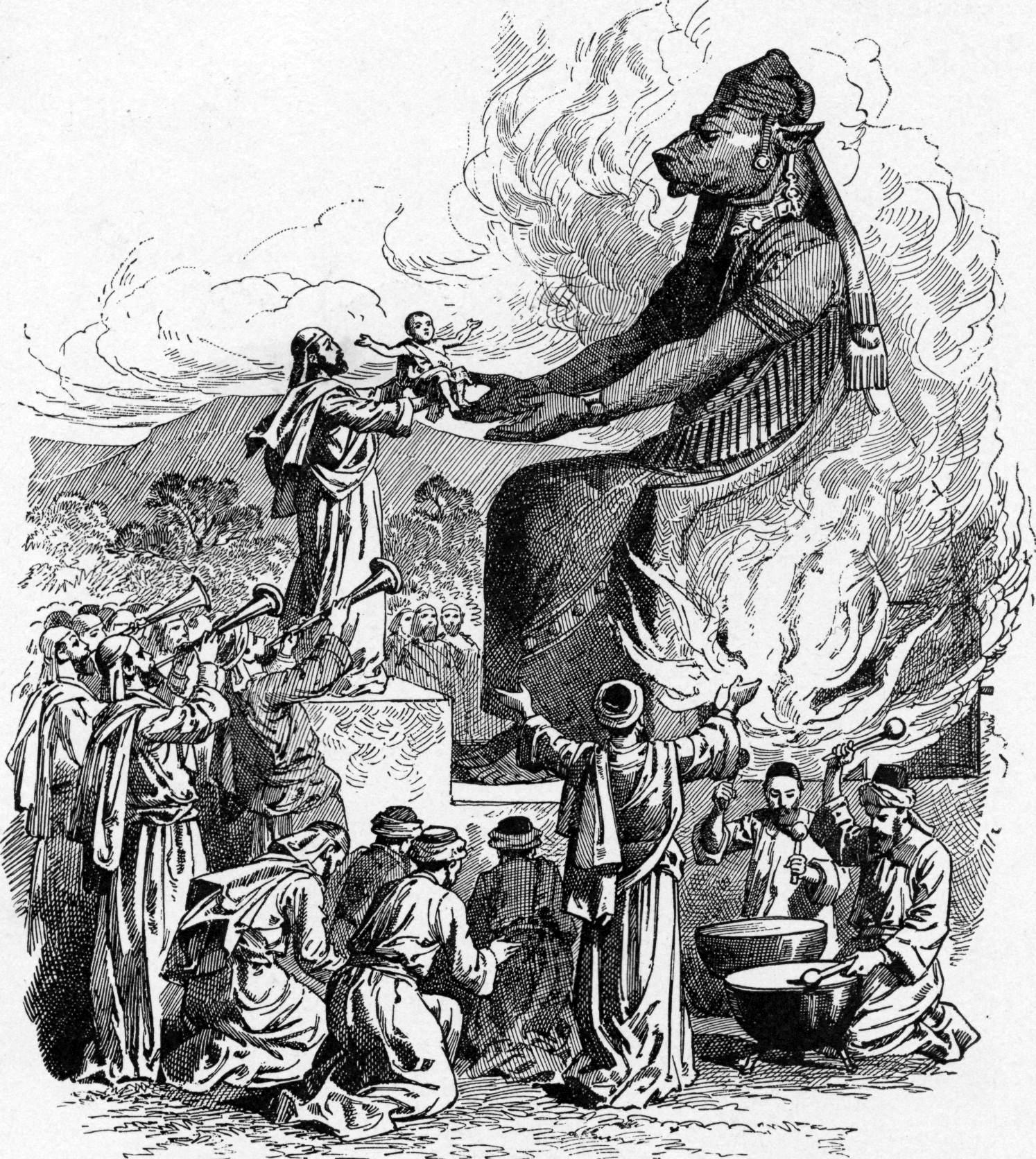
In 1938 an Italian scholar named Manni suggested that Saturn was not from the earliest beginnings of Rome at all, but was "imported" to Rome some time during the Punic Wars with Carthage. It is true that Romans often "stole" the gods of their enemies in a process called evocatio, and it is also true that in later times Saturn was somehow associated with the Phoenician god Ba'al (and via him, his terrible consort Tanit), and also became entangled with the Romans' imperfect understanding of certain ancient Punic rituals involving destruction by fire, including the famous moloch rites. I don't know what to make about all that, except to say that the building which we usually call the "Temple of Saturn" in the forum has foundations that are older than the Punic Wars.
At some point (probably in the 2nd century BCE) this god became firmly associated with the Greek titan Kronos. At this point he was re-imagined to be the mate of Ops-Rhea, herself a hybrid goddess of old Latin and newly-imported Greek ideas. His main festival, the Saturnalia, becomes hopelessly obscure (if it wasn't already) and the already-difficult path back to the beginnings became even more muddied. The result is that we really don't know very much. The very best place to look for information on this subject is Georges Dumezil, Archaic Roman Religion (1996), and even he has almost nothing to say about Saturnus!