Edit: By Southeast Asian kingdoms, I meant the small kingdoms located in the Indonesian archipelago, Philippine archipelago, Malaysia, and Borneo.
To clarify what I'm trying to ask, I want to know what kinds of technology do they use in these places and whether they compare to the ones in East Asia.
TL;DR: At least for firearms technology, it depends, but generally speaking I'd say yes.
Well, there are two issues we need to face first. First, where in Southeast Asia are we talking about? Southeast Asia is a geographic term, not a cultural one. Vietnam is part of East Asia and shares far more with Korea than with Myanmar, Myanmar is much more similar to Sri Lanka than to Aceh, Aceh would have identified more with the Ottomans than with Laos, and so on. You can imagine that there were vast technological gaps within Southeast Asia too.
Second, how do we compare technology? To quote an AH flair who has deleted their original account,
People create technologies to respond to perceived social and environmental needs, and there's no "forward" or "backward" motion to it, unless a particular society decides that there is.
Technology develops separately according to where and how you live. Since the temperate plains of China and the tropical jungles of Southeast Asia are two very different environments, it's not that easy to compare the 'level of technology' between the two.
With these caveats in mind, let's look at something that is both relatively easy to compare and is pretty important in EUIV mechanics: military technology, that is, firearms.
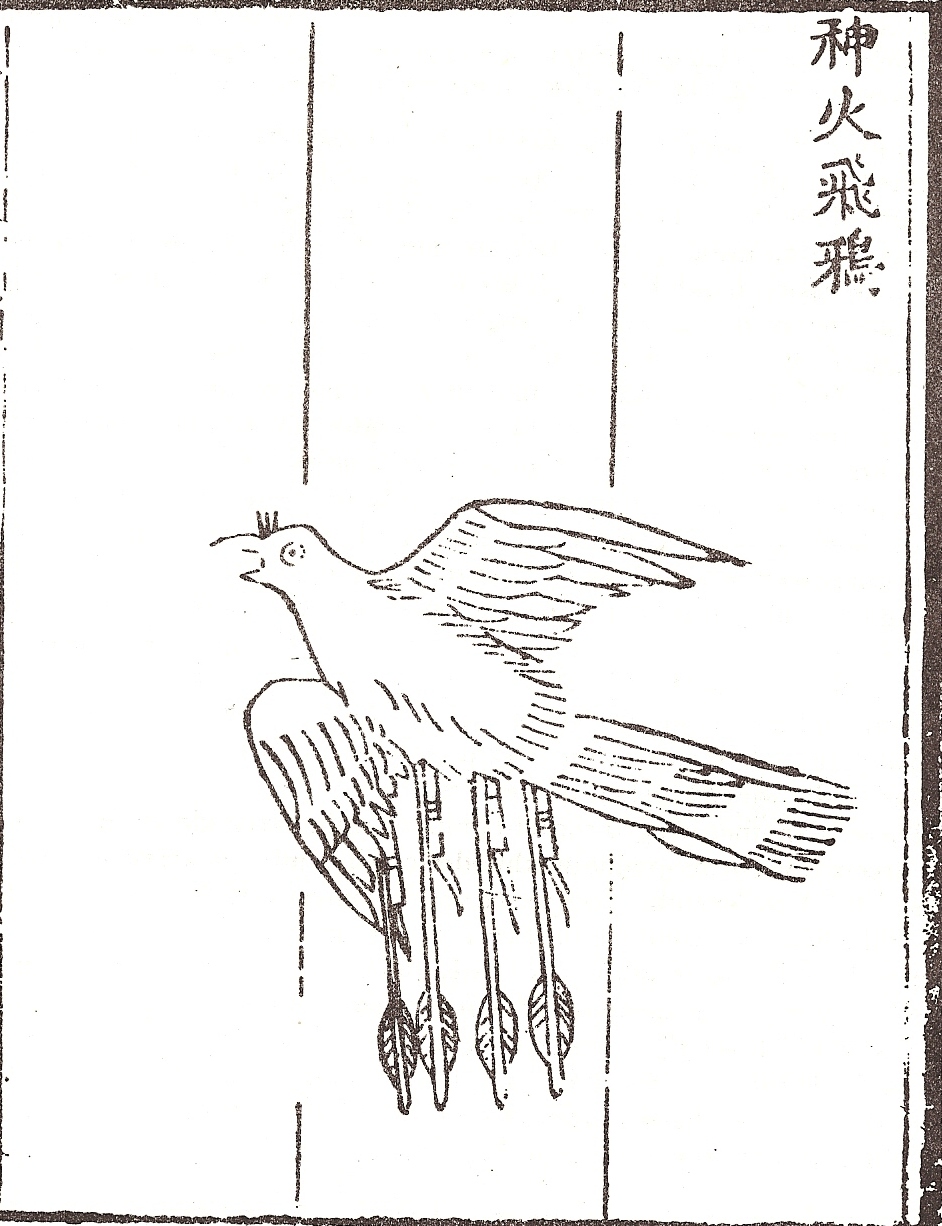
As you're probably aware, China was the first to invent gunpowder and also the first to apply it to military uses, resulting in not only the first guns but bizarre shit like the Flying Crow with Divine Fire. Naturally, firearms technology was quick to spread in those parts of Southeast Asia which immediately border China. So let's discuss Vietnam and Myanmar.
The first evidence of firearms in Southeast Asia is in Vietnam. It is the year 1390. Terrifying savages from the south, led by their king Che Bong Nga, have been devastating the kingdom ever since 1361. The Viet troops are helpless to stop them, and the capital itself has been sacked no less than three times in the past twenty years. All seems lost... Then a corps of gunners shoots down Che Bong Nga. The barbarian king is dead. Vietnamese civilization is saved.
What were these guns? Our sources say little beyond the fact that they were some sort of firearm (火铳 hoả súng, "fire gun"). Simple Chinese-inspired handguns (pic) are the most likely candidate. And while this is the first known record of guns in Vietnam, it seems very likely that firearms technology was already highly developed in Vietnam, in some areas superior even to China. In 1407 the Ming conquered its little southern neighbor. Curiously, the official history of the Ming dynasty says that the Chinese only then obtained cannons, and from Vietnam at that:
When it came to the time of Ming Chengzu [the emperor who invaded Vietnam], Jiaozhi [Vietnam] was pacified, the techniques of magic gun and cannon were obtained; a firearms battalion was especially established to drill [firearms.]
This can't be entirely true because pre-1407 cannons have been discovered in China. But what does appear to be true is that Vietnamese firearms were superior to Chinese ones in many aspects and were adopted by the Ming army. Here's an example (image included). The caption says:
Fire Lance. This was acquired during the conquest of Annam [Vietnam]. There is a wooden wad behind the arrow; some lead bullets and such are also placed with it. Its ingenious part is that [the wooden wad] is made of ironwood, [hence it is] heavy and forceful. It can shoot three hundred paces.
Indeed, there is no Chinese gun with a wooden wad that has been dated to before 1415. This fire lance was put to good use while fighting the Mongols:
[The Ming armies had] just got the fire lance from Annam [Vietnam]; one barbarian [Mongol warrior] marched straight forward, and two followed; [they were] all hit by the fire lance and died.
Another apparently Vietnamese innovation was the igniting device. Old Chinese guns had a small hole on top where the fuse was inserted. The Vietnamese actually had a rectangular slot with a lid on top, meaning that the gunpowder and the fuse would stay dry even in the rainy season. This type of gun suddenly appeared in China after the conquest of Vietnam and was being used to fight Mongols and pirates even in the late 16th century.
Development of firearms continued even more rapidly after the Chinese were eventually kicked out. When Viet armies march out to conquer, a 15th-century warrior-poet said, "the boom of the thunder-cannon shakes the earth." One historian notes:
To some extent, we may say that a military revolution had taken place, and Dai Viet [Vietnam] had become a "gunpowder state," if not a "gunpowder empire."
By the seventeenth century, Vietnamese mastery of firearms astonished even Europeans (all odd spellings sic):
The [southern Vietnamese] being now become so expert in the managing of them [firearms], that they surpasse our Europeans: For indeed they did little else every day, but exercise themselves in Shooting at a Marke: Whereupon they became so fierce, and so glorious, and to have so great an opinion of their owne valour, that as soone as they perceived any of our Ships of Europe to come towards their Ports, the [Vietnamese] Kings Cannoniers presently presented them with defiance: But ours understanding now that they [Europeans] were not comparable unto them [Vietnamese], avoyded the Tryall as much as they could, knowing well by experience, they were growne more certaine to hit where they would with their Artillary.
In the domain of military technology, Vietnam absolutely fits in the East Asian category.^1
On the other hand, Vietnam is kind of an outlier in its closeness to China. What about the rest of Mainland Southeast Asia, like Myanmar or Thailand? The first guns arrived in Myanmar in 1397, when a group of Chinese soldiers deserted to a local kingdom and taught them how to make cannons and guns. The king treated these firearms experts with even more respect than Buddhist monks, leading a disgruntled noble to kick him off the throne. In 1404, a Bengali mercenary in Myanmar used a weapon called a ban. A ban is a type of rocket:
an iron tube of about one foot long and an inch in diameter, fixed to a bamboo rod of ten or twelve feet long. The tube being filled with combustible composition, is set fire to and being directed by the hand, flies like an arrow to the distance of upwards of 1000 yards.
The extremely competitive nature of 15th-century Myanmar, which was divided into at least four competing kingdoms, means that by 1409 - just twelve years after the first mention of firearms in the sources - all major kingdoms had at least some guns and cannons.
In Thailand too, by 1411 the northern kingdom of Lan Na attacked a fort belonging to the southern kingdom of Ayutthaya by casting a copper cannon and firing "volleys at the tower." Northern Thai chronicles of the 15th century are replete with comments like "they set up cannon and bombarded the city gate, and then took the city."^2
Let's go further south. When the Portuguese took the city of Melaka in what is now Malaysia, they reported that there were three thousand "cannons" in the city, mainly [bombards](https://en.wikipedia.org/wiki/Bombard_(weapon)), which were as good as those made in Germany. But Malay sources tell it differently. From one chronicle:
On arrival at Melaka the [Portuguese] ships forthwith opened fire with their cannon. And the people of Melaka were astonished at the sound of the cannon, and they said, "What sound is this, like thunder?" When the cannon balls began to arrive and struck the people of Melaka, some had their heads shot away, some their arms and some their legs. The people of Melaka were more and more amazed to see how these guns were made, and they said, "What is this weapon called that is round, yet is sharp enough to kill?"
The city of Melaka had never been seriously threatened before the Portuguese (at least not since its early days). There was less of a need to develop firearms technology, and the three thousand cannons may have been more for show and intimidation than actual use. Finally, in some places - like the peninsula of South Sulawesi in eastern Indonesia - there were apparently no firearms at all until the 16th century. So again, let's not generalize about the state of technology throughout Southeast Asia.^3
But from a military perspective, I think putting SEA in the Chinese tech category is fine.^4
^1 See "Chinese Gunpowder Technology and Dai Viet" by Sun Laichen in Vietnam: Borderless Histories, p.75-121; Nguyen Cochinchina by Li Tana, p.43-46
^2 "Military Technology Transfers from Ming China and the Emergence of Northern Mainland Southeast Asia (c. 1390-1527)," again by Sun Laichen.
^3 Michael Charney, "Iberians and Southeast Asians at War: the Violent First Encounter at Melaka in 1511 and After"
^4 Much of this also follows Charney's Southeast Asian Warfare, 1300-1800, ch.III, "Firearms"