From what i understand. The Mongols took over the entire known world through cavalry. Mongols dominated the land by being excellent with their horses.
But thats the LAND. Did they never fight at sea? I find it odd how an army can take over such a large amount of land and seemingly never have to fight any sea battles.
Did the mongols even have a navy? or were sea battles just not needed?
Just to give you a quick answer, yes! For a while, Kublai Khan had one and used it to gain power on the coast of China and Vietnam. According to an article in the journal of Mongol studies, it played an imported role in the Yuan conquest of China.
There were two Mongol attempts to invade Japan. The second one is more famous; a large Mongol fleet attempted an invasion of Japan in 1281, but got wrecked by typhoons (some really good luck for Japan, I guess). The Mongol navy was big enough to transport about 100,000 ground soldiers, so that's a considerable fleet, especially for the time.
Here's a link to an article from some archaeologists who are trying to recover parts of that navy.
Okay, a few things here. First off take a look at the territories the Mongol Empire conquered, and you'll note the distinct lack of large bodies of water needing to be crossed, much less fought on. As you note, their entire culture and way of life was centered around a lifestyle of the steppe which did not lend itself to much in the way of ship manufacture. So that's why you really don't hear about the Mongol fighting at sea - because they rarely ever even encountered large bodies of water, much less thought much about crossing them.
But, that's not to say that they did not, on occasion, try. as /u/hmmcintyre pointed out the Mongols rather famously attempted to invade Japan, the first time in 1274 which did not go well. Undeterred by the loss of ~40,000 men and 900 Korean/Chinese ships, Kublai raised another amphibious force and made a bet that surely that typhoon had been a 1-off and couldn't possibly happen again. Well, in 1281, that turned out to be wrong, and though this time the Mongols were able to land a portion of the flett on Honshu, the Yamato had used the intervening years to construct massive coastal fortifications and we able to repel them. Having lost two entire invasion fleets in the span of less than a decade, Kublai decided he didn't want Japan that badly, after all.
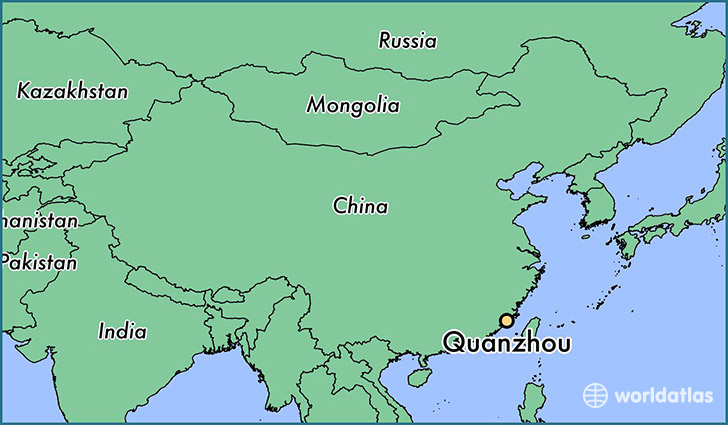
The other major naval expedition sent by the Mongols was far to the south, and was an attempt to conquer the Indonesian island of Java, which was in the 13th century a major hub of trade and commerce, and thus rather desirable. It would again be Kublai to order this undertaking, and it would once again prove a ruinous boondoggle. The Mongol fleet departed from Quanzhou, Fujian in 1293 with a force of some 20-30,000 soldiers, and sailed past both Dai Viet and Champa (northern and souther Vietnam, respective) which like the rest of Indochina had likewise (and would continue to) successfully resist Mongol conquest. As they approached, Malay and Sumatra submitted to the khannate's demands, but king of Java opted to resist. In spite of aid given by a traitorous local to the arriving invasion force, the Javanese were able to ambush the main Mongol/Yuan camp and slaughter some 3,000 of the senior most elite soldiers therein. Thoroughly demoralized, and with the terrain very difficult for their main tactics to prove effective on, the Yuan forces attempted to withdraw back to their ships and depart - but once again the weather intervened against them. The monsoon winds had died down since their arrival, making departure all but impossible and they were forced to remain encamped on Java for a further six months, being constantly harassed and picked off by the Javanese for the duration.
When they were finally able to return to Khanbaliq, Kublai ordered that two of the three general commanding the expedition be punished - one with 70 lashes, and both with having one third of their property confiscated (though he later restored it to them). It would prove an ignominious end to Kublai Khan's conquests, because he would die the follwing year in 1294