I can comment on the use of Allahu Akbar more so than the use of Deus Vult, but I suspect that may go a long way towards answering your question.
"Allahu Akbar" is often rendered in English as "God is great", but literally it's a comparative meaning "God is greater" (I've come across suggestions that it is superlative "God is greatest", but to my admittedly non-native grasp of Arabic grammar that would have to be "Allah huwa al-akbar".)
As a phrase, it has a fundamental usage and position in Islam. It features in the call to prayer, Islamic prayer itself, and in the Sunnah (NB: "takbir" meaning to recite "Allahu akbar."
Socially/culturally/linguistically its usage and meaning goes far beyond either its literal meaning or religious use. It can be used as a joyous expression equating to "thank god!" (alongside the existing Arabic phrase al-hamdulillah lit. thanks be to God) or in anguish, such as at a funeral or upon witnessing terrible (akin to the English usage of "Oh my God..." or "Jesus Christ...")
It has perhaps gained most notoriety in the west as a battle cry of Islamist militants, notably in their last moments before committing a suicide bombing or similar "martyrdom operation." While the phrases use as a battle cry goes back to Muhammad, the particular association of the phrase with violent terrorism is something that would have been alien to Muslims historically.
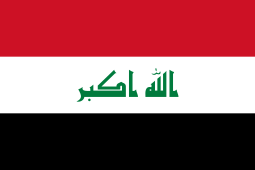
The phrase also has wider political usages outside of militancy. The call and response of "Takbir!" "Allahu Akbar!" is common at Islamist rallies and gatherings of all sorts, not just extremist Islamist militants. It has adorned the flag of Iraq since 1991, initially in Saddam's own handwriting. It appears in block kufic script in white leterring in two rows on the flag of Iran. And it has historically appeared on other flags of predominantly Islamic countries, such as Afghanistan. It was the title and formed a large chunk of the content of the national anthem of Libya until the 2011 revolution.
So while I cannot say whether or not "Deus Vult" was used in some of these situations, I think I can say with some degree of knowledge that it was not used in the myriad ways that Islamic peoples use "Allahu Akbar."
edit: also as an addition that slipped my mind; the closest translation to "deus vult" itself in Arabic are the phrases "Inshallah" meaning "if God wills" (which is obviously more epistemelogically circumspect about knowing what "God wills" and "mashallah" meaning "[this] is what God willed". While the latter has the same literal meaning of "deus vult" it has not been used in the same context of what I, for one, most associate "deus vult" with, namely as a kind of justification for orthodoxy or for taking action against heresy/infidels. Rather, "mashallah" is used to express joy, again somewhat akin to "Thank God!".
edit 2: what I had written about its use in the Quran I think was misleading/incorrect so I deleted it.