Not easily, and it involved a good deal of toil, cursing, and filth.
The process was basically to lash the carcass to the side of the ship. Once its made fast you rig up what was basically scaffolding so men could work blades and saws around it. You cut the head off to process it on its own, the Spermacetti being the most valuable portion of the animal, and it goes right in the barrel.
The blubber though contains a huge helping of oil though that needs to be gotten at. So with blades, and blocks and tackle large strips were essentially peeled off. Once on board they could be sliced and diced smaller and thrown into vats to boil down, and from there into the barrels. The whole process would involve most of the crew and be continuous until the animal was rendered down, time was wasting, the catch might be wasted by sharks, spoilage, or another chance to get a whale missed if it took too long.
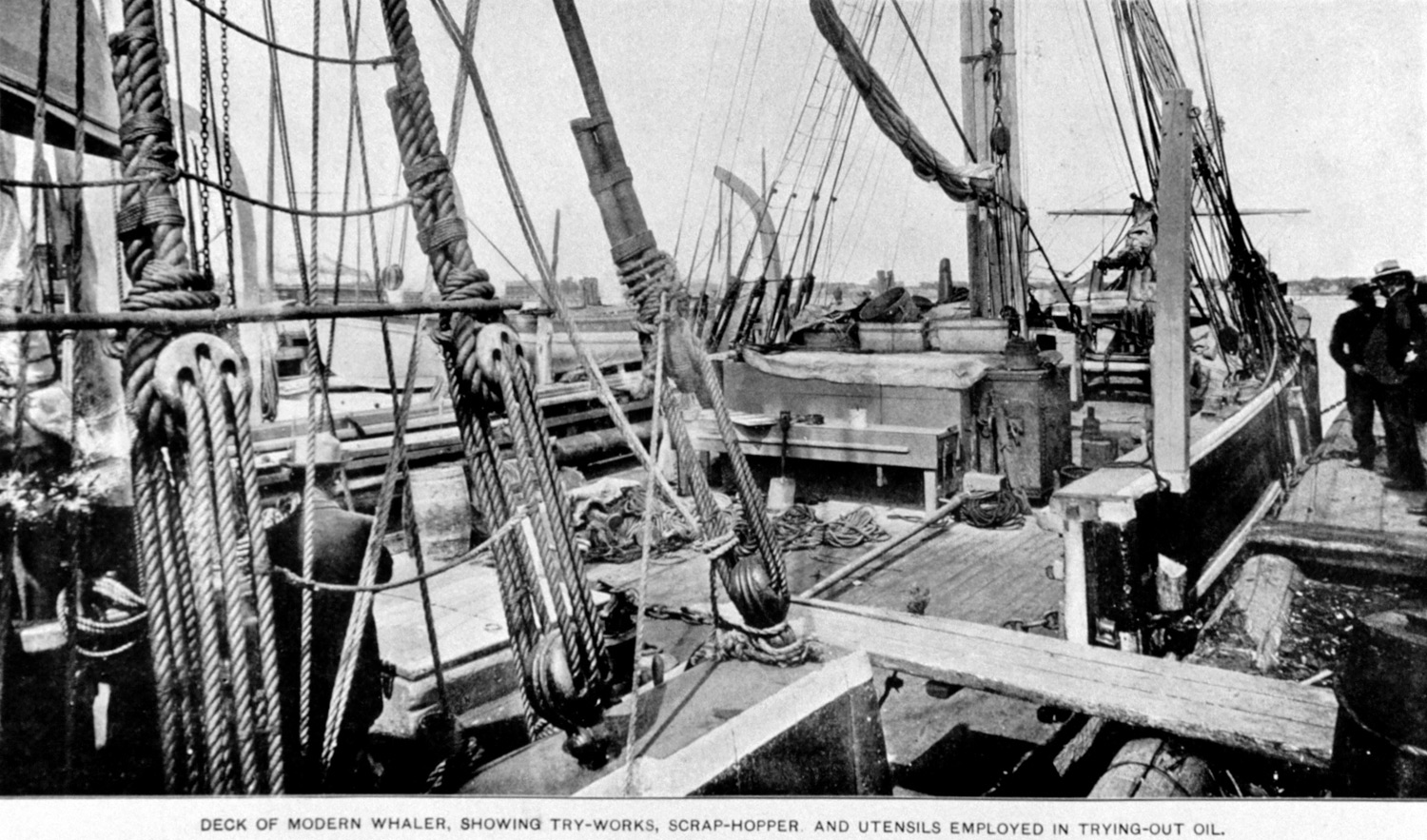
The entire process was called "Trying Out" the whale, and special brick ovens and iron vats would be built on the ship to allow for the rendering of such huge quantities of blubber at once.
Contemporary lithograph of the process:pic
Picturee of the works on the deck of a ship: pic
To get a better sense I also honestly would suggest watching a few clips from the old 1956 version of Moby Dick, Melville himself based the novel on his first hand experiences as a whaler. And the film if missing a few bits here and there not being quite right, absolutely nails the spirit of the undertaking.
Clip1: https://www.youtube.com/watch?v=0uOAe5e85yM
Clip2: https://www.youtube.com/watch?v=r1nSj-gzE8g
The NEH and New Bedford Whaling Museums also have quite fine overviews and descriptions of the process.
https://www.neh.gov/humanities/2010/marchapril/feature/whaling-the-old-way