Were they on their own? Would they get together and rebuild? WAS there a plan?
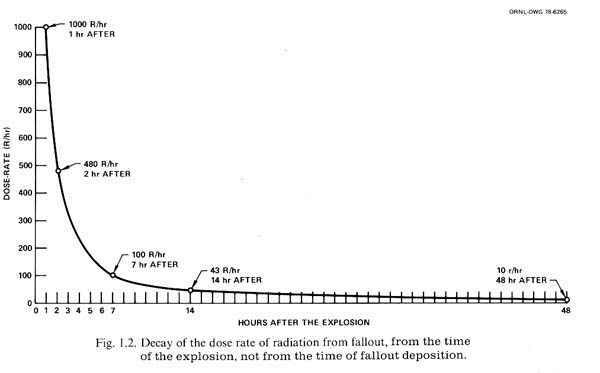
Most people misunderstand fallout shelters. You were not meant to stay in there for decades. You were meant to stay in them for a couple of weeks at most, many places only a few days. Storing a few weeks of food and water is not that hard. At that point the most heinous of the radioactive byproducts will have decayed and you can evacuate the area. (To make sense of that chart, you can consider 600 R to be a probably fatal dose. So in the beginning it would be fatal to spend even an hour in that level of radiation. By the end, 10 R/hr isn't great, but you aren't going to die immediately of it. Actual starting values can vary, but 1000 R/hr is pretty high. In some areas it might be, say, 10,000 R/hr, but the decay curve is going to be the same, it will just take that much longer to bottom out.) There may be long-term contamination, but it is of a chronic and not acute variety (you'd get sick living there, but not walking through it if you were careful and didn't eat anything on the ground — similar to the Chernobyl situation today, where you can visit, but you shouldn't live there unless you're already super old and an increase in 10 or 20 year cancer rates isn't going to be noticeable). Your cancer rates would increase, but it wouldn't kill you immediately, or kill everyone.
As for the plan, the idea was that some semblance of the US government would survive and would coordinate rebuilding and reconstruction. The Federal Civil Defense Agency attempted to come up with all sorts of plans along these lines. They are not utopian; they are mostly mundane. In fact their banality can be somewhat shocking. My favorite example of this is their plan for burying the millions of dead bodies using trench diggers. But they had plenty of other such studies, too, ideas about how you'd reconstruct things even if a significant portion (e.g., 50%, plus or minus depending on targeting choices, the usefulness of civil defense, defenses, etc.) of the population was dead, and the main population centers destroyed.
Of course, the difficult thing to predict is whether any of those plans would matter in the end. I am not sure what their confidence level was on that. But the idea was that if you did have a plan, maybe eventually things would rebound. If you didn't have a plan, it definitely wouldn't. Here's a nice excerpt from a 1970s civil defense document that talks about the benefits of planning and the time-scales expected for recovery, if recovery was to be had.