I'm currently abroad and don't have access to my books, but I think I can do enough from memory to at least give this a go.
Your question has a bit to unpack — what would a "fully developed" mass transit system look like, for example? Does New York City have a system that measures up to developed-nation standards? If so, then what about Chicago, Boston, Washington, or San Francisco? Perhaps the places that are coming first to mind are the sprawly masses of the American South and West that grew most spectacularly in the 20th century, like, say, Houston, or Phoenix, where there's little question that lacking a car is a significant burden, the rail network is minimal, there are many places the buses don't go, and those who don't have a car are overwhelmingly in such a position due to poverty. You also might be thinking of the extensive suburbs with inadequate bus and rail connections even in those cities with functional mass transit systems.
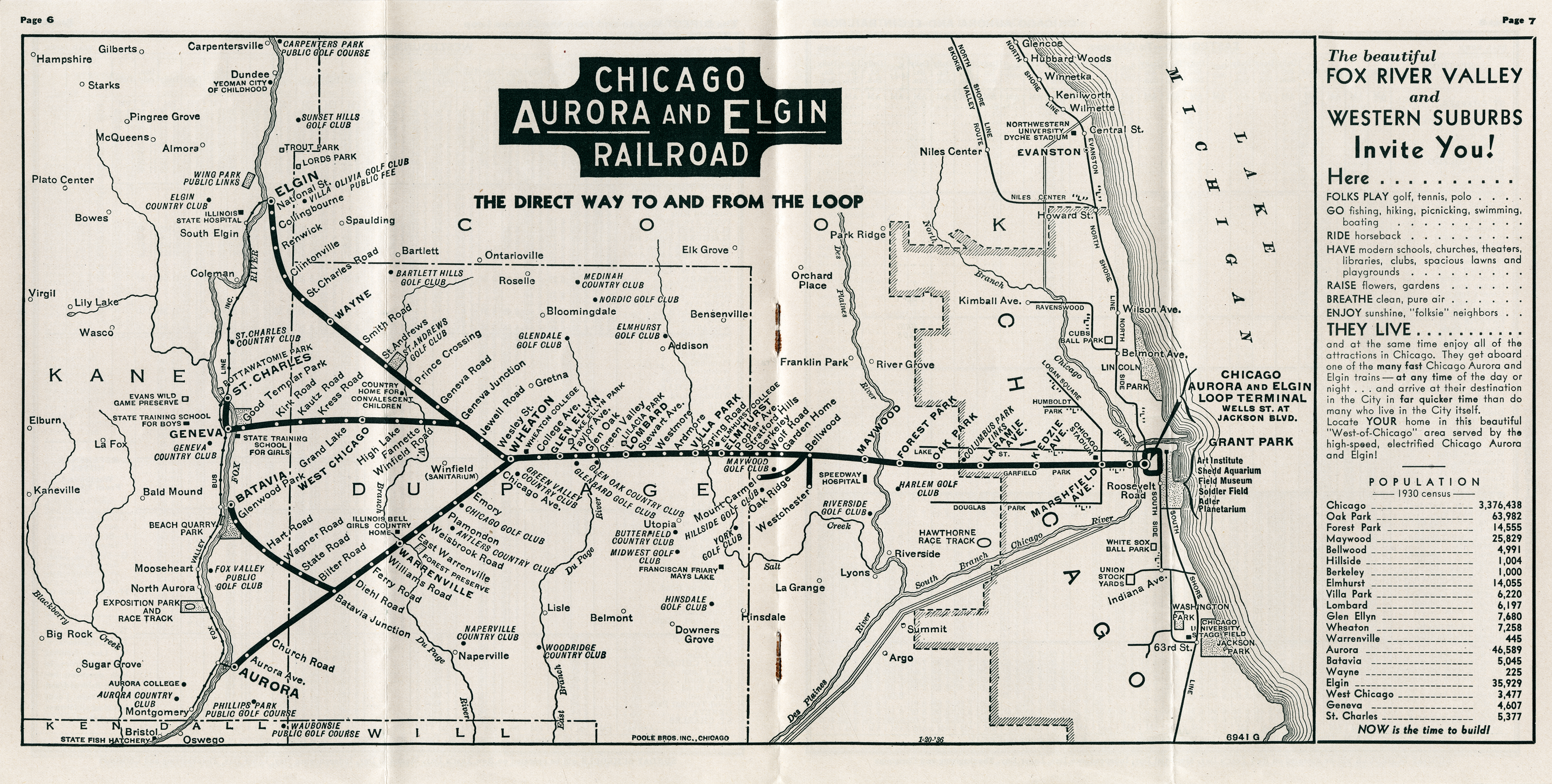
If we go back to the years between World War I and World War II, though, we would see a different picture. Most large American cities were covered in privately-owned streetcar networks at this time, though private auto use was increasing astronomically as cars became more affordable. Still, the level of income inequality at the time meant that for large swaths of Americans a car was still a luxury. As such, well-developed transit networks were a necessity. Even for the middle class, the paucity of limited-access highways — the first in the US, the Arroyo Seco Parkway connecting Los Angeles to the suburb of Pasadena, wasn't opened until 1940 — meant that the streetcar networks were important for getting to work on time. This wasn't just the case in urban America, but in the increasingly fashionable suburbs as well, many of which were connected to their urban cores via high-speed "interurban" streetcars. Take this example from 1937 of an interurban that connected Chicago to suburbs more than 50 km/30 miles away and ran late into the night. As was typical for the era it connected suburbanizing rural communities to the city center, via dedicated tracks in the countryside and sharing space with urban rail in the city proper (these were elevated in Chicago; elsewhere they were often street-running). There were also commuter rail and metros in the cities large enough to warrant them, nothing that you could call undeveloped by the standards of the time.
Ultimately it was the rapid expansion of US suburbia after World War II, though, that led to changes in transportation infrastructure. As such, the main resource I'm going off of here is the venerable history of American suburbanization from the colonial period onward, Crabgrass Frontier by Kenneth Jackson. He makes the convincing argument that the American love for the suburbs drove its reliance on the personal car, not the other way around. Of course it helped that the US enjoyed a long economic boom from the end of the 1940s well into the 1960s, and it helped that the country was full of cheap farmland and real estate developers eager to get rich quick. But economic and political factors alone don't explain the rush to flee the cities and fill up new single-family houses on the urban fringe. Cities were seen as crowded, dirty, unsafe. It didn't help that they were full of immigrants, Jews, and, increasingly, blacks, and many Americans of that era were quite racist. (A good book on that aspect of American suburbanization in particular is Bourgeois Nightmares by Robert Fogelson, which looks at Los Angeles as a case study.) The 1944 GI Bill, which among other things provided for low-interest home loans for returning WWII veterans, fed into those cultural norms by favoring new construction in ethnically homogeneous neighborhoods, and by systematically excluding black veterans from the program. These new housing developments were privately constructed and often lacked connections to mass transit, but they were cheap and the need for a car was a small sacrifice to attain the American Dream of home ownership. As cars became more firmly established as the future of suburban mobility, demands for highway infrastructure reached a fever pitch, culminating in the massive giveaway to the real estate and auto industries that was the Interstate System, authorized in 1956, which provided for federal money to build or upgrade limited-access highways not just between cities, but within urban areas. All new Interstate highways were required to be toll-free, further enhancing their utility compared to mass transit — this was not necessarily true of those built previously.
Meanwhile, within the cities, many civic leaders had become convinced that city centers would become obsolete if they didn't provide for the middle class to easily drive in and out of them. As the federal government subsidized Interstate construction through city centers, mayors rushed to bulldoze paths for the new highways through poor and/or minority neighborhoods, displacing residents and generally making large swaths of the city unpleasant to live in. The influx of autos onto city streets had already rendered streetcars much less useful as they were frequently stalled by traffic. The build-up of the freeways was only one of many nails in their coffin, as the companies holding them went bankrupt and local governments had little desire to step in to save them. In most of the country, the elite and middle class saw them as impediments to progress, as they just got in the way of your car. Freeway traffic at the time was light. Cars were seen as more modern and efficient. There was little appetite for large mass transit infrastructure projects; where failing streetcar systems were bought up, they were often converted to bus systems which could more cheaply use the newly built auto infrastructure. Buses were presumed an adequate substitute for those who could not afford cars, though their numbers dwindled as decreasing ridership on these comparatively inadequate systems made it more difficult for their operators to turn a profit. Only rail lines with dedicated rights-of-way (i.e., commuter rail, or underground and elevated urban rail) were generally salvaged by local governments, as the number of people they moved could not easily be matched by private vehicles and their rights-of-way were too narrow to be used by buses or cars. And only later was mass transit widely seen as a necessity for the urban poor and thus requiring government subsidy.
American mass transit continued to decline in the decades following as suburbs expanded and cars became more affordable and necessary. City dwellers did not begin to seriously rebel against the destruction caused by urban freeways until the 1960s–70s, with San Francisco and Manhattan being notable early exceptions. (This parallels trends in Canada and Western Europe — see, for instance, this article in the Guardian about activism against auto-centric infrastructure in Amsterdam around the same time period.) Pushes toward government funding of urban mass transit were fitful at this time, with federal subsidies going to new systems in San Francisco, Atlanta, and Washington, DC. However, the successes of their initial buildouts in the 1970s coincided with the economic turmoil following the 1973–74 oil crisis. Despite a view that reducing car dependence would be a good thing, a lack of government intervention — and a lack of funds to do so even if such a thing were palatable — meant that suburbanization continued unabated. The election of Ronald Reagan in 1980 and his subsequent drastic cuts to the federal budget made any massive changes to the status quo untenable. During this decade we start to see light rail lines built on the cheap in cities previously lacking rail systems. None of these were planned on a scale to where they could supplant more than a fraction of the auto traffic in their respective regions.
I almost forgot about Amtrak. The US national rail provider was formed by a public-private takeover of failing intercity passenger lines in 1971; freight railways retained ownership of the tracks themselves. Conservatives in Congress tried to kill it for many years after. Expanding or substantially improving it was a non-starter for quite some time.
The "car culture" question is an interesting one which I don't have a satisfying answer to. But I wouldn't necessarily assume that there is something uniquely extensive about the car culture in the US as opposed to other places. After all, many other countries, such as Germany and Japan, have been known for their auto enthusiasts. I would argue that a great deal of how widespread car culture is perceived in the US has more to do with its high levels of car ownership and the extent of infrastructure that relies on the personal auto. With this being the case, a car is necessary for a great deal of what Americans do in their spare time. What might look like car culture is in large part an integration of a very necessary tool into many facets of American lives, along with entrepreneurs taking advantage of this necessity by catering to people already on the road — hence drive-thrus, motels, big box stores, and so on.
I hope this is OK as a follow-up question. I've seen it claimed that there were cases of the automobile industry using tactics such as buying land to prevent the development of (particularly urban) public transport systems. Is there any documented truth in this?
Part of it has to do with the structure of the American government.
The United States is decentralized to a degree that is nearly unheard of in other developed countries. There's a a philosophy of letting issues be handled at the lowest level possible. Don't let the federal government do something if the states can handle it. Don't let the state handle it if counties/parishes can take care of it. Don't let them do it if local cities and towns can address it. On and on and on.
Now, this isn't necessarily a bad thing. After all, when it comes to decision making at the national level, you're one of 330,000,000 million people. Do you feel like your voice will be heard in the same way it will be in your city, where your local city councilor may be responsible for a few thousand people? You're more likely to run into your local mayor in line at Dunkin Donuts than you are Donald Trump, after all. Handling government issues at the lowest, most local level possible allows ordinary citizens more of a voice. However, it does have some consequences:
The United States has fifty different criminal codes, fifty different organizations setting education standards, and fifty different tax systems. A doctor in one state may not be able to practice in another, and a lucky teenager older than his date could be having a the time of his life, yet an identical teenager across a state border is committing statutory rape. See if that state of Massachusetts cares about your firearms license from another state, or the hoops a teacher in another state needs to work in California.
This isn't really how it works in other countries. In Germany, if you encounter a police officer, he's going to be roughly equivalent to an American state police officer (not to say that local law enforcement doesn't exist, but the bulk of their duties concern code violations and civil issues. In some cantons local law enforcement doesn't wear a uniform or carry guns). In France, a FEDERAL board of education sets educational policy throughout the country. In the UK, healthcare is administered at the national level.
Okay, so the US is decentralized. What does this have to do with transportation?
Suppose I'd like to build a high speed rail from, oh, I don't know, LA to California, something that the state of California has been trying to do since 1996. Unfortunately, they can't build a stop sign without getting sued.
This actually helps to illustrate some of the problem. There's no federal Minister of Transportation able to unilaterally say "no, this is going from Point A to Point B and if you don't like it you can screw." A project of that nature has to juggle a myriad of different stakeholders - everyone from cities, towns, private property owners, and other organizations. The United States doesn't centralize power to the degree that other countries do, and projects that, by definition, are going to involve lots of different stakeholders (like mass transit) become a bureaucratic nightmare.
Source: Inman, Robert P. Editor. 2009. Making Cities Work: Prospects and Policies for Urban America. Princeton: Princeton.