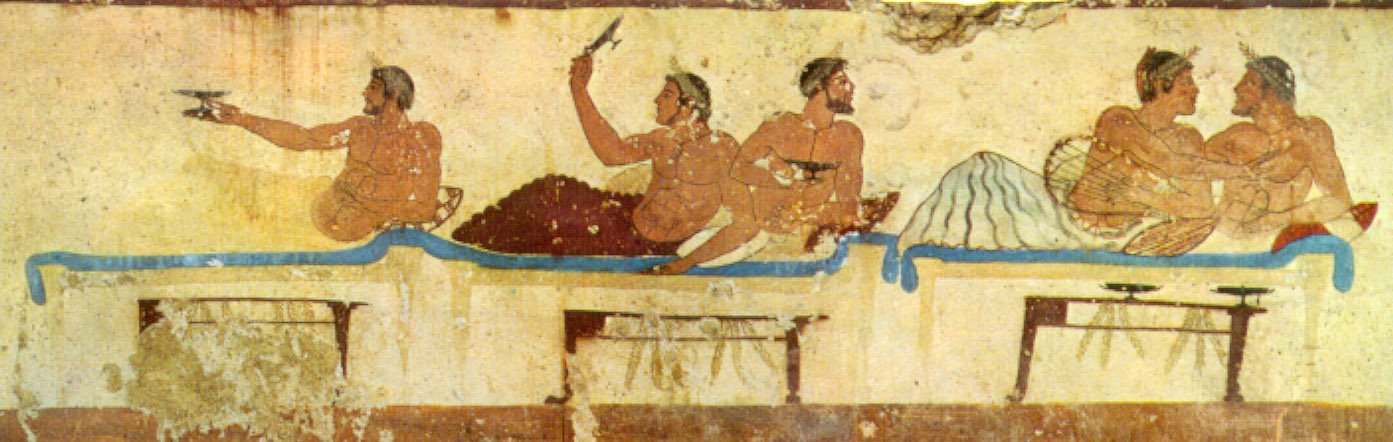
First off it's important to note that we have a lot more 3d art surviving from ancient times than 2d art, so it's difficult to say when "photorealistic" 2D art became a thing. We do have paintings from Pompeii and Herculaneum though that are very photorealistic by ancient standards. Similar to the Roman adoption of Greek sculpture styles (and flat out copying of existing sculptures), Roman painting was likely an imitation of Greek painting. Most of the Greek paintings we have now are on vases (very difficult medium to be "photorealistic" with and pre-hellenistic frescoes. However, if you compare the 2d and 3d art from these periods you can actually see they largely developed analogously as far as realism goes. Compared this 5th century "archaic" fresco with another one from the classical period 1-2 centuries later:
https://upload.wikimedia.org/wikipedia/commons/9/99/Symposiumnorthwall.jpg https://upload.wikimedia.org/wikipedia/commons/f/f7/Agios_Athanasios_1_fresco.jpg
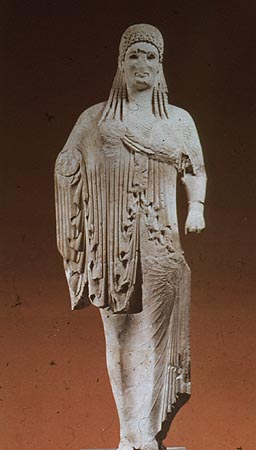
when you compare archaic kouroi to classical sculpture, you have the obvious stuff like contrapposto developing but there's also an overall difference in how the human form is developed. It's a bit difficult to explain but you can see in comparing both paintings and sculpture in the archaic/classical periods that earlier on the human form was more like a blank, "flat" figure with indications of form later superimposed on it. Look at the first fresco and the figures are pretty much flat with muscles and whatnot denoted by lines. With sculptures, features earlier on are pretty much superimposed on a vaguely human-shaped cylinder and gradually they become much more lifelike as the centuries go on.
http://swh.schoolworkhelper.netdna-cdn.com/wp-content/uploads/2012/12/Kouros-Kore-statues.jpg?x37075
and compare the ruffles here:
http://employees.oneonta.edu/farberas/arth/Images/ARTH209images/Sculpture/archaic/kore_antenor.jpg https://encrypted-tbn1.gstatic.com/images?q=tbn:ANd9GcQTMJP0OTT1F5FbS-udKN4av6RU-k8M9BMeqd_k1uzizns3Cmpu
Comparing the frescos earlier you can see the same developed in painting.
There's also the subjectivity of photorealism to take into account. I would consider the second fresco to be at least on the road to photorealism but by today's standards it's still relatively flat. My point is though that, at least in the context of ancient greece and rome, sculpture and 2d art both developed closer adherence to "real life" on roughly the same timeline. Another important thing to realize, particularly in medieval and ancient Egyptian and Mesopotamian art, is that art (but especially 2D) was primarily didactic. Adherence to real life was not as important as getting the message across-- can you tell it's an arm? Good enough.
so TL;DR realism developed in both 2d and 3d art at roughly the same times, but whether or not you consider the 2d art "photorealistic" is subjective. Also, it's simply way more intuitive to make 3d out of 3d than 3d out of 2d. I do somewhat reject the notion that 3d art developed realism earlier than 2d though