In this thread on /r/todayilearned some people posted some drawings from when Napoleon went to Europe and they look almost as good as anything that can be drawn today. Why haven't people always been able to draw this well?
Have a read of some of the FAQ answers /u/jschooltiger linked to. It's a mistake to think of historical art as ham-fisted attempts at naturalism. People create art in styles that match their own motivations, cultural background, fashion and personal aesthetics. That's was as true in history as it is today. Naturalism isn't the objective standard of "good" drawings, it's a style that has come and gone through history. The Fayum portraits (ca. 100 CE) are a well-known ancient example. And then obviously it came into fashion in European painting after the Renaissance,
With that said, there's a really interesting—and controversial—paper by psychologist Nicholas Humphrey that suggests that the relative rarity of naturalistic art in history has something to do with the way our brains work.
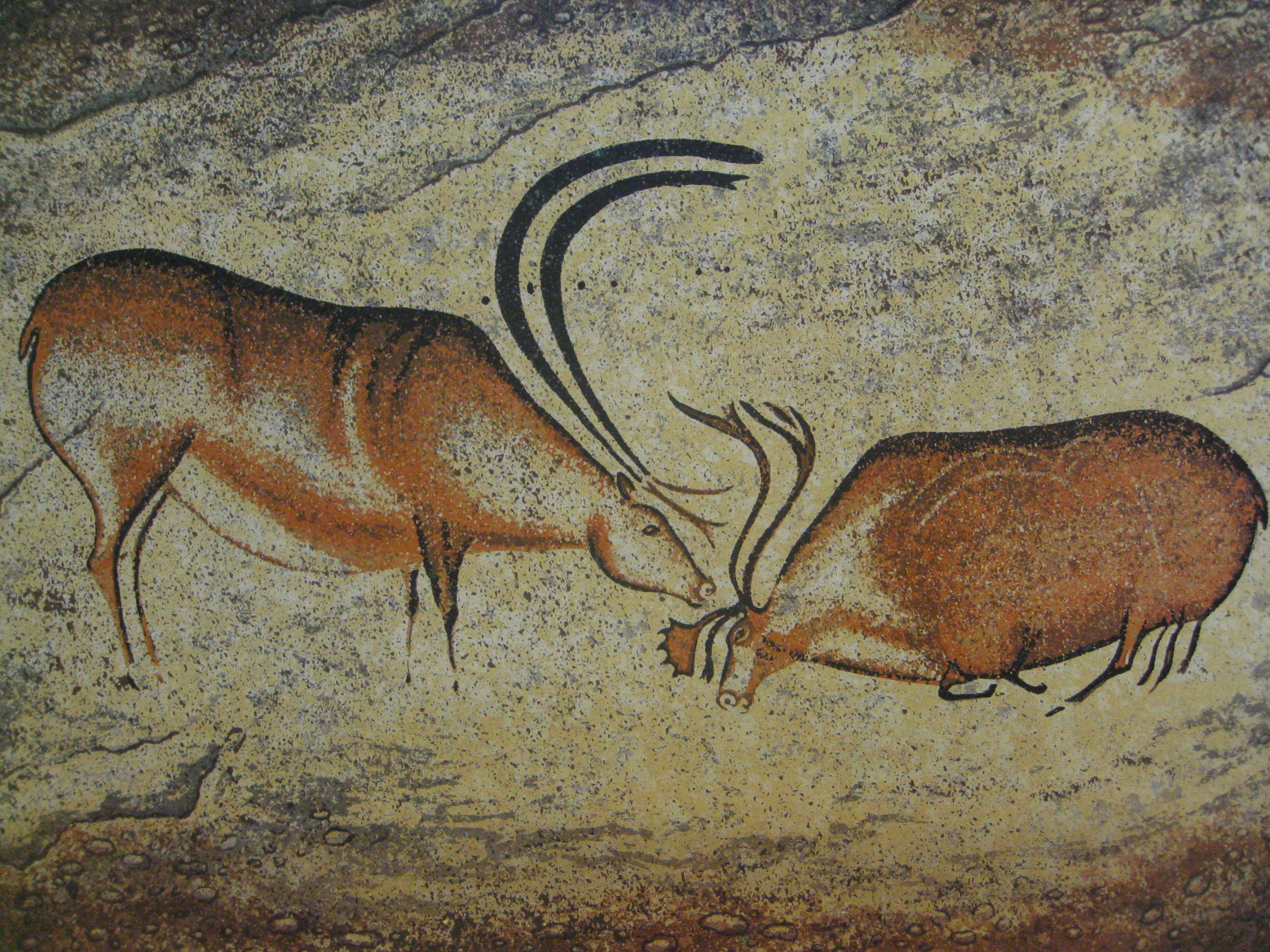
He takes as a starting point the fact that, despite the stereotypes, Upper Palaeolithic cave paintings (30,000–10,000 BCE) are actually pretty damn realistic. Prehistoric painters were obviously limited by their medium and a lack of time to develop their skills, but they used sophisticated techniques like shading and foreshortening to add perspective and depth to their work. They strove to depict what they saw in the real world, rather than a schematised version of it. Above all they had an incredible ability to memorise and reproduce anatomically correct snapshots of animals in motion. For example, cave paintings contain more accurate depictions of animals' gaits than even modern artists with the benefit of slow-motion photography.
Humphrey draws parallels between the naturalism in cave art and drawings made by a severely autistic girl called Nadia. Nadia couldn't speak and had no interest in social interaction, but from a very young age she produced incredibly realistic drawings of animals that bear a striking similarity to cave art. Psychologists who worked with her explained this as a result of the fact that Nadia was very literal-minded. She didn't really conceptualise the world around her, she just saw it as it is, and so she was able to draw it as it is.
So, Humphrey's theory goes, up until 20,000–10,000 BCE, all human beings had minds that were a bit like Nadia's. They had language, but only a very limited language, used to communicate their mental state to other humans via simple utterances. They didn't carve the external world into abstract symbols to communicate with each other about it, like (neurotypical) modern humans do. Thus they had the same innate affinity for naturalistic drawing. But towards the by the end of the Palaeolithic humans had made the great evolutionary leap of extending their linguistic abilities to the non-social world. And in order to communicate in a more abstract way they had to think and experience the world in a more abstract way; they began to parse the visual information streaming into their eyes as a collection of discrete, conceptual objects. The flip-side was that they lost that innate ability to realistic reproduce what they saw – as indeed Nadia did, when at a later age she learned to use spoken language.
Imagine a typical children's drawing (not Nadia's) of a person: a pair of eyes and a line-mouth in a round hand, maybe with some arms and legs sprouting out of it. They draw that because that's what they think of a person as. And they think that because that's what we all tend to see when we look at a person: their eyes are the place where their emotional state is most visible, their mouth forms the words they're saying to you, and—as a secondary concern—their arms and legs might be used to run over and club you to death. It's not particularly important to our brain that, actually, people's heads aren't round, they're oval-shaped and the eyes are in the middle. Or that, you know, noses and torsos exist.
After the Palaeolithic, humans had the same inclination: to produce conceptualised depictions in their art rather than realistic ones. If they set out to depict a battle, they drew men on horses throwing arrows at each other. The rest of the scene—the spaces in between the men and the horses and the arrows—weren't so important. By contrast, producing realistic art with a neurotypical modern mind requires us to overcome our natural tendency to conceptualise, and so has become comparatively rare.
Hi there -- while there's always more to be said on the topic, you may be interested in this section of our FAQ on "why wasn't ancient art realistic?" (The spoiler alert/tl;dr is that art has served a variety of roles to people throughout history, and "photorealism" is only one of those.)