With Sulla, the Triumvirate and the Civil War etc., concentrating the power in Rome to individuals rather than a senate the shift to autocratic rule seemed like a gradual, inevitable process. Could this be argued as a natural result of the successes of Rome (the Punic Wars, Gallic Wars, Mithradatic Wars) it became more difficult (at least in an ancient context) to rule via senate and popular vote?
Would there have been potential for the Republic to remain and Rome to expand to the size it was under the Emperors?
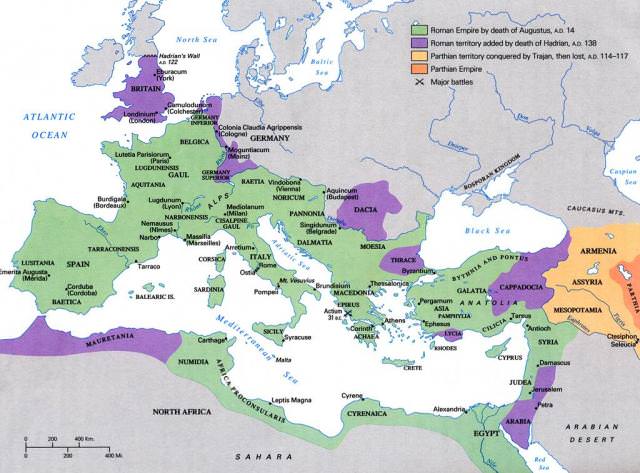
Sorry for the short answer, but I feel it's very relevant: almost all the expansion of Roman territory came in the Republic period, NOT the Imperial period. The territories conquered in the imperial period were Britain, Dacia, a small part of Germania, and some other minor areas such as Arabia and Mauretainia. That's pretty much it.
https://learnodo-newtonic.com/wp-content/uploads/2016/06/Map-of-the-Roman-Empire-under-Augustus.jpg
So if anything the Empire hindered Roman expansion. Who knows what might have happened if Rome had remained a Republic with generals vying with each other in amassing wealth ang the glory of conquest?
You have to remember, the Romans didn't wake up one day and go "We live in an Empire now!". At the end of the Wars of the Second Triumvirate Octavian was the only one standing. And his title wasn't Emperor. It was Princeps, or First Citizen. Technically, it was still a Republic and Augustus was "Just a guy who also happened to have been granted several key jobs by the Senate because he's so great you guys". And it stayed technically a Republic for a long while, with all the forms and the nods to the Senate. What the office of the "Emperor" rested on was control of the army. After all, you don't quote laws to men with swords! Old Emperor would go, a new one would either be the chosen successor of the previous (who usually had already been given all the same powers as the current Princeps in advance of his death) or whomever could get enough soldiers to support him in the inevitable civil war and the Senate would ratify the choice because the army has the swords.
By this time, the Empire as we know it was pretty much there. Augustus instituted the rule that there was to be no more expansion. The last real expansion happened under Trajan, and his successor Hadrian abandoned most of that when he took over. Most of the changes that presage our modern definition of transitioning to Empire had little to do with foreign expansion and much more to do with maintaining local order and prevent civil wars.