Examples such as this (Sentry Elite Class) and this (Austro-Hungarian Support) are the reason I ask.
While armor was worn in WW1 seen here is German "Lobster" armor it was not commonly used or issued. The major issue with armor at the time that many of the designs were simply too heavy and bulky for effective use by the majority of troops, for example the Germans issued armor to static units, like machine gun teams, but did not issue it to normal troops that had to be mobile. The British started developing armor for bomber crews as early as 1915, but this armor was not issued on a greater basis beyond the units it was designed for. The second issue was that while armor did get developed during the war it was often experimental and only produced in small amounts. These were armors that either did not make it into a country's armories, or if it did it was on a limited basis and as such the armor was not issued on a standard basis.
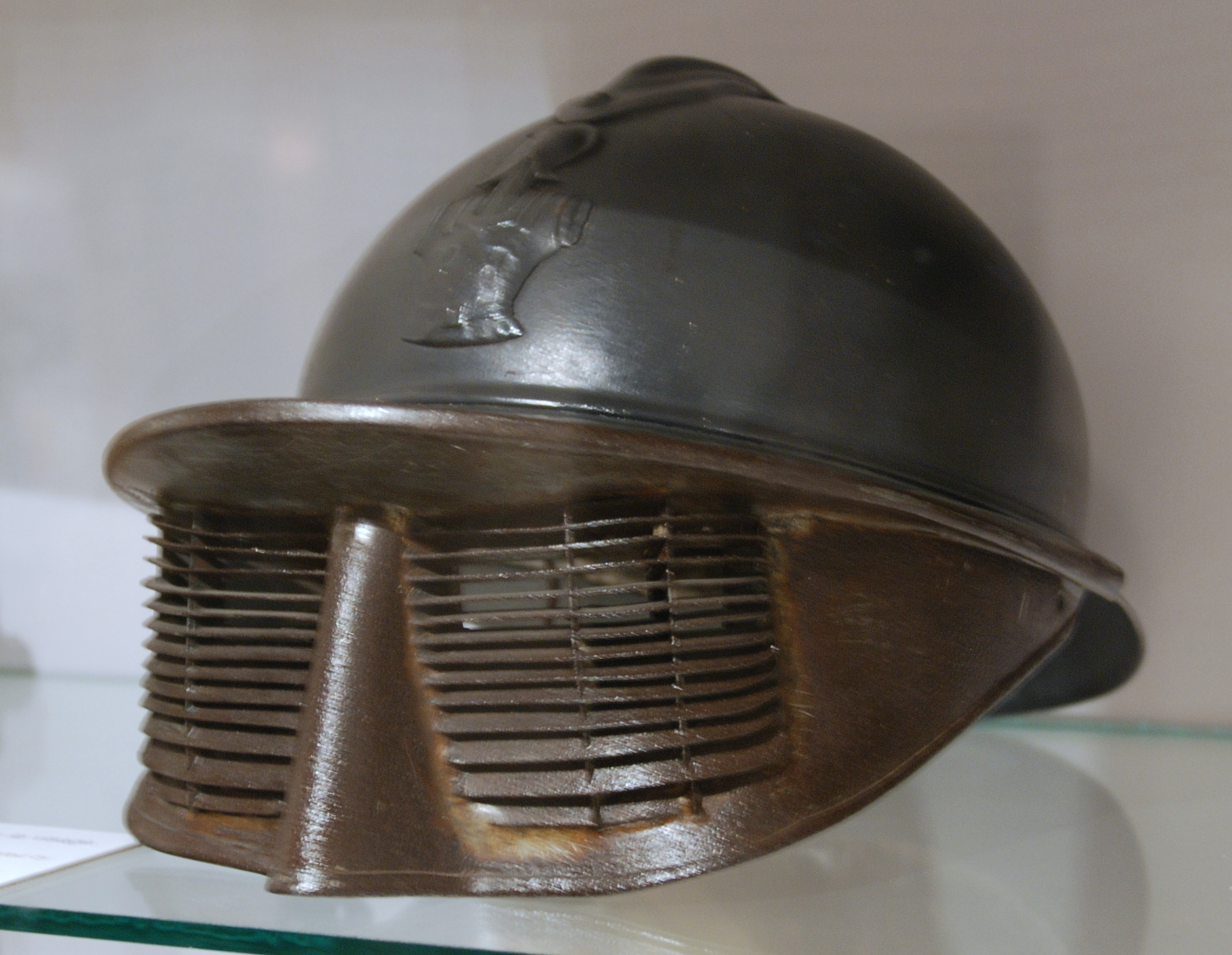
As for full face helmets, these were similarly experimental and either not issued or issued in small amounts to specialized units. What the Sentry Elite Class soldier is wearing is in fact a German sniper face mask, which was issued to some snipers but not to normal infantry. There was a variant of the French Adrian helmet with a face mask on it (though this was not full face) but again this was not a standard issue item by any means. The British issued helmets with slatted goggles with mail curtains on them to tankers, to protect against spalling, but these were not issued to infantry, as well as some units added mail curtains to their Brodie helmets. An American, Major Bashford Dean, also experimented with full face helmets, but the only helmets he produced were prototypes and never saw any sort of issue other than to testers. Ultimately, one of the biggest issues with full face helmets in any kind of modern warfare is that they greatly restrict field of view and perception, as well they can make it difficult to use a rifle with them.
So, for a general answer, items like these were issued to some extent, or even privately purchased, but were not widely used due to cost, experimental design, size and weight issues, and as well as other focuses during the war. When they were issued, it was usually to specialized units, like machine gunners or tankers, and usually not to general infantry. Some general infantry did use armor or helmets with greater face protection, but this was far from the norm. So yes, armor and helmets like this did exist, but they were not common.
No, it was not common.
It's important to remember that soldiers only received helmets nearly a year after the war had started. The European standard kit before this point included no real protection from enemy fire, and the bright colors of the uniform often made soldiers better targets for their foe. Armor was considered too expensive, heavy, and inefficient to be feasible on the contemporary battlefield.
An uncertain amount of soldiers did use body armor, such as plates of steel that tied around the chest to form a sort of bulletproof vest, but these were almost entirely on an ad-hoc basis. It does not seem to be a standard practice at all. The accounts and novels that came out of the war mention essentially no armor used aside from helmets. Nearly all of the battlefield photography you'll see from the war has a similar quality, such as that seen here: https://tce-live2.s3.amazonaws.com/media/media/d1177985-fd10-4407-9251-d2f1b59aa39b.jpg
note the presence of helmets but lack of any other protection.
It's also important to note the armor shown in these pictures would have been very inefficient and dangerous for the soldier wearing them, as a gas mask would not fit under it like it would under a helmet. This is not a minor issue, as gas was heavily used throughout the war.
Personal armour use in WW1 was probably a lot more common than we imagine.
While the experimental heavy types that left the wearer looking like a medieval knight that /u/DeadGripss talks about were uncommon (because they proved to be too unwieldy and impractical in the field), a number of lighter armour types were developed and used in significant numbers. Supply and deployment was often inconsistent, but post-war studies suggested that enormous numbers of casualties could have been prevented had they been used more widely.
Here is a scan from Anthony Saunder's Dominating the Enemy which has an excellent chapter on armour, showing a couple of slightly lighter designs (though still impractical and rarely used). On the German side in this category you could include the Stirnpanzer (also called the brow-plate or machine-gunner's prow-plate) which was issued as part of the 'lobster' armour that DeadGripss mentions, but often used on its own. This was a heavy steel plate that slotted over the two horn-like ventilator lugs that you can see on the German Stahlhelm helmet and provided extra frontal head protection to gunners, snipers and the like, but again this was so heavy and unwieldy that it had limited practical use - you wouldn't want to run around wearing one of them.
What did reach the front in significant quantities was the 'steel waistcoat' type of armour, usually made up of metal plates sewn into fabric pockets. I've seen an estimate that by late war enough armour was available to equip around 2% of the British Army (which sounds like a tiny amount, but the army numbers were in the millions of men). The Lancashire Fusiliers Regimental History describes a battalion-strength trench raid by the 12th Battalion in April 1918 in which body armour was officially issued:
"A feature of the operation was that 33 body shields per Company were issued and proved most useful in warding off bayonet thrusts and splinters of bomb and shell."
Aside from official issue, though, private purchase of equipment by individual soldiers and concerned relatives was widespread. With the whole nation on war-footing and most families having a loved one on active duty, a vast industry sprang up supplying non-standard kit for purchase along with endless media advertising which made sometimes fantastical claims for their products. This stuff ranged from foodstuffs and patent medicines, gadgets like luminous watches and trench periscopes, knives and tools, and all manner of clothing, including personal protective wear. Here are a few examples of advertising in the British press for body armour:
Wilkinson Sword Safety Service Jacket
This armour wasn't cheap - a general labourer's wage was 16 shillings a week, a room could be rented for 2 or 3 shillings a week, a week's food for a married couple was around 10 shillings - but you can imagine how advertising like this played on the fears of families. The armour could certainly be effective though:
His Majesty the KING has been graciously pleased to confer the Military Cross on the undermentioned Officers and Warrant Officers, in recognition of their gallantry and devotion Temp. Lt. Hugh Cowell Kinred, 14th Bn. Glouc. R."For conspicuous gallantry. When a bomb thrown by the enemy fell at his feet in the trench, he at once threw himself on it, and was blown into the air and much bruised and cut by the explosion, his life being saved by his steel waistcoat. His plucky action saved many casualties."
London Gazette, 27 July 1916
Press clipping of Kinred's story.
Captain Hugh Kinred, of 14th Glo'sters ("Bristol Bantams"), who enlisted when curate of this parish, has won the Military Cross. The Daily Mirror of August 22nd gives the following account of his exploit, together with capital photographs of himself and the few poor remnants of his tunic both donned and doffed: "The marvellous escape from death of Capt. H.C. Kinred will probably rank as one of the most remarkable stories of the war. While walking along a trench he saw a bomb come over and drop near seven soldiers who were fast asleep. 'In a moment, I saw the danger they were in, and that no time could be lost in picking it up: so I decided to smother it by lying on it. No sooner had I lain on it than it exploded, blowing me from the corner of the trench at an angle of about 30 degrees on to it's top, and I should doubtless have been killed but for the lucky chance that I was wearing a Whitfield steel waistcoat.' The Captain, who was promoted in the field, has been awarded the Military Cross for this act of self-sacrifice, in which he sustained serious wounds."
St John the Baptist Church magazine, September 1916
But as a counterpoint, Tom Kettle (who will be a familiar name to students of Irish history and literature) was wearing a steel waistcoat when he was killed in action at Ginchy whilst serving with the 9th Dublin Fusiliers, a bullet apparently entering a gap in the armour as he bent forward whilst climbing over the top of the trench.
Here is a contemporary video demonstration of the Dayfield, which shows how relatively light it was.
Near the end of the war Bashford Dean developed a 15lb set of half-armour for US troops, which provided head, torso and arm protection and was cushioned with vulcanized sponge-rubber, although this wasn't put into full manufacture.
So no, the full medieval-style plate armour and helmets from your Battlefield One examples weren't at all common, but lighter armour use on the WW1 battlefield was not as rare as we might think.