In at least the Stalin and Khrushchev days, the closest things you had to superheroes were sort of "very impressive Soviets" that you were encouraged to emulate. The emblematic character here is Aleksei Stakhanov, who allegedly mined 14 times his quota worth of coal. (It is perhaps worth noting that he had help.) The Soviet press/government launched a "Stakhanovite movement" in which people would be lauded and encouraged (and sort of required) to try to massively exceed their quotas, in the spirit of revolutionary spirit and love for the USSR, etc. Instead of superhero comics in the USSR, you have weird "socialist realist" books and things that promote what look to us in the West as very strange stories about the love of labor ("boy meets tractor" is a way in which this genre is sort of summed up by Soviet scholars).
Other than that it was very hard to laud individual people in the USSR (real or imagined) because the official state philosophy was not about the importance of individuals but the collective. And also because other than the heads of state, the state wasn't interested in promoting cults of personality about individual Soviet citizens. And amusing corollary for this is that this is partially responsible for the lauding of the "Mutniks", the dogs that the USSR sent into space (and sometimes brought back), who could be safely (from a political view) turned into icons in popular culture.
As others have already noted, the Soviet Union preferred to build cults of personality around exemplary Soviet citizens (Stakhanov, Lenin, etc.) rather than fictional characters. However, they’re missing some important Russian contributions to the comic industry, and don’t really explain why the Soviets didn’t have superheroes like we see in the West.
After the Russian Revolution in 1917, many artists and intellectuals fled the country. Russian artists who settled in Serbia actually helped pioneer the Serbian comic industry, and drew inspiration from western pulp comic strips. Prior to the start of WWII the Belgrade Circle of artists published in various comic magazines; Mika Mis, a magazine founded by Russian émigré Alexander Ivkovic, was one of the most notable. Another émigré, Dorde Lovacev, produced a number of comic strips and is considered to be the father of both Serbian and Russian comics. While in Serbia, he created the “superhero” character Master Death (also translated as Lord of Death), who appeared in four stories between 1939 and 1940. Nikola Navojev, another Russian artist, helped create the character Zigomar in 1939. Heavily influenced by The Phantom, Zigomar was incredibly popular among readers, and magazines would frequently sell out when his comics appeared. Publication ceased during WWII, but Zigomar was republished in the 70s, and a full run of the stories was released in 2012. Russian contribution to the Serbian comic industry “proved vital to making Belgrade one of the most active centers of comics production in Europe by the end of the 1930s.” (Alaniz, 59)
The Belgrade Circle was the most significant Russian foray into comics, and their production was contemporary to the Soviet Union. Within the Soviet Union, however, artistic and cultural production was heavily censored. Comics and superheroes were seen as a bourgeois phenomenon unfit for Soviet consumption. Any cartoons or comics that critics did consider appropriate were relegated to children’s magazines or satirical publications like Krokodil, as they were considered light children’s entertainment. State control of publishing prevented any official attempts to produce comic books as we recognize them in the west. Lovacev, who was deported from Yugoslavia after WWII, only produced one comic strip in the Soviet Union, which was published in 1966 under heavy censorship.
An additional barrier to the superhero genre was the association of comics with the west. Soviet critics considered comics low-effort picture books that appealed to destructive bourgeois ideologies: they promoted militarism, western moral superiority, crime, and violence. Isaak Lapitsky wrote in his 1958 American travelogue that “the heroes of comics are not miners, welders, mechanics, engineers, farmers, tractor drivers. They’re successful gangsters, cunning business men or police officers who manage to carry a profitable operation in the ‘black market’ in Europe or Asia…and inculcate a hatred of people and implant a culture of violence and sadism.” (Alaniz, 69) There was no place for superheroes within the tenants of Socialist Realism. Everyday citizens were extolled as heroes because they were part of the Soviet collective. Comic renderings of superheroes would compromise the established norm, and assert that there were in fact differences—good or bad—within the population.
Sources:
Alaniz, José. 2014. Komiks: comic art in Russia. Zupan, Zdravko. 1990. “The Golden Age of Serbian Comics.” http://www.rastko.rs/strip/zzupan-golden_age.html
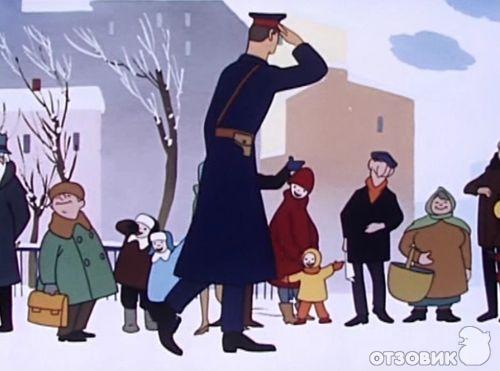
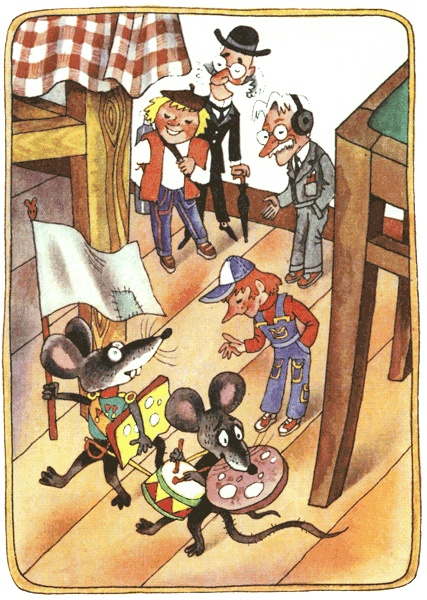
In the USSR there were no superheroes. In the usual sense. Nobody jumped over the roofs of the Moscow Kremlin. Nobody shot lasers from the eyes. No one was fighting the villains in a colorful suit. There was no culture of comic books and superheroes. But, there were various "special" heroes who fought against villains. In the USSR there was a culture of so-called "socialist realism" - a maximum of realism and simplicity. Therefore, the "special" heroes who had "super powers" appeared only in the pages of children's books. Like Uncle Styopa ("Дядя Стёпа") - a giant policeman who keep the order and [helped the kids!] (http://i4.otzovik.com/2011/05/21/80467/img/28464189.jpg). Or, for example, very small people living in instruments. They are called "Guarantee Men". This is a fairy tale about little people who fix their own devices. In a secret from their owners. And they were read only by children. These are cute, children's books. A little naive, in which something instructive Teenagers and adults read something else. About the heroes-spies or heroes of war. Who defeated the villain not because of super powers, but because to the strength of the spirit, intelligence and perseverance.
Hi, please also see this response by /u/Bufus