I was listening to a Radiolab episode, called Nukes (If you're interested: http://www.radiolab.org/story/nukes/). They were talking to an historian who stated that Truman was told (not asked) that the military had this bomb and was going to use it. The Generals were sure to mention that it was a much bigger deal than any other bomb, but Truman apparently thought they were only going to hit a "purely military target" and no civilians. He didn't grok.
My question is -- could he have understood? Could any reasonable person who did not personally witness the trinity tests or understand the science understand that a single bomb was going to wipe a city the size of Rochester off the map?
What is a much bigger deal on a scale that does NOT include atomic? What was the biggest bomb we had at the time? Is it reasonable to assume that he should have known? Or was the difference an order of magnitude past a much bigger deal?
Hi! I'm the historian in question on there. Full disclosure: aside from being me (and thus agreeing with me), I also helped pitch the episode and sat in on almost all of the interviews. So I'm invested in it. (A little more background on the episode if you are curious.)
My question is -- could he have understood? Could any reasonable person who did not personally witness the trinity tests or understand the science understand that a single bomb was going to wipe a city the size of Rochester off the map?
At some level, the answer is no — even the scientists, who had studied these targets and these weapons in detail, and had been at the test, were horrified at the results. Oppenheimer et al. thought the deaths would be "only" 20,000 people; it quickly became clear it was more like 60,000-80,000. Does that difference matter? Well, it did to Oppenheimer, but it is still a lot of people (its the right order of magnitude, which tends to be how physicists think about accuracy, for whatever that's worth).
But that isn't really what I am getting at about Truman. Truman seems to have thought that Hiroshima wasn't a city, but "purely" (his term) a military base. I have fleshed out the argument a bit more here but I also have a longer paper I am moving towards publication that gives even more evidence along these lines.
Could Truman have known this? I think so — I don't think he was intentionally misled, but I think he got inadvertently confused. I think a more attentive president might have followed up a bit more and been caught less unawares by the situation. Did he have a responsibility to know this? That's a broader question, a more normative one. For what it is worth, Truman never tried to dispense of responsibility for his part in it (even though he easily could have), and instead took on more responsibility than was technically required. So I think he felt a bit of a burden, there.
What is a much bigger deal on a scale that does NOT include atomic? What was the biggest bomb we had at the time? Is it reasonable to assume that he should have known? Or was the difference an order of magnitude past a much bigger deal?
If you're talking about single bombs, the "Tallboy" bomb during WWII was one of the largest (if not the largest) conventional weapons used during the war. It was about 5 tons of TNT equivalent. The Little Boy bomb was 15,000 tons of TNT equivalent, the Fat Man bomb was 20,000 tons of TNT equivalent. So these weapons are more powerful by a factor of thousands.
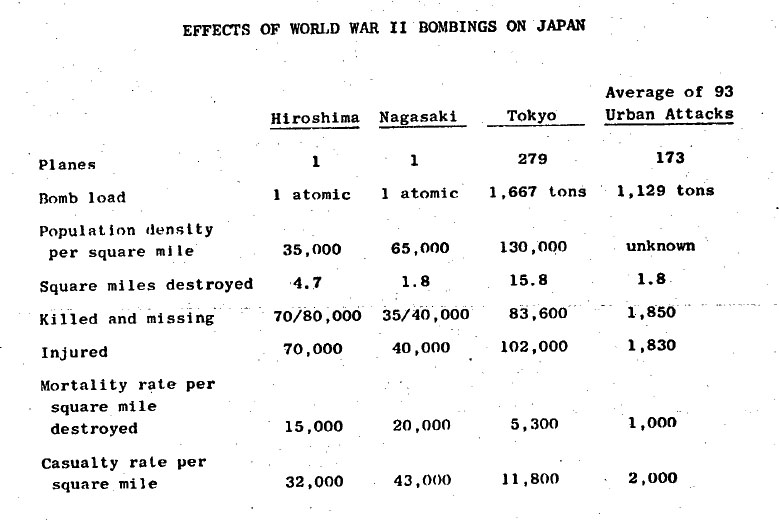
This isn't the best way to think about it, since you wouldn't drop a single conventional bomb on a city and expect too much damage. They thought instead in terms of raids, e.g., if I sent 100 planes loaded with explosives and flammable materials at a city, how many square miles would be destroyed, how many people would die, etc. On these fronts, you can do a lot of damage with conventional weapons, but it takes a lot of bombers. Here's the kind of numerical comparisons one ends up with in comparing atomic vs. firebombing raids — the atomic bombs are much more fatal, but a big firebombing raid like Tokyo (in which hundreds of planes were dropping napalm at low altitudes) destroys a larger area. (This image is sourced and discussed at some length on another post of mine, about the differences between firebombing and atomic bomb. They may have had moral similarities but their physical effects are not exactly the same.)
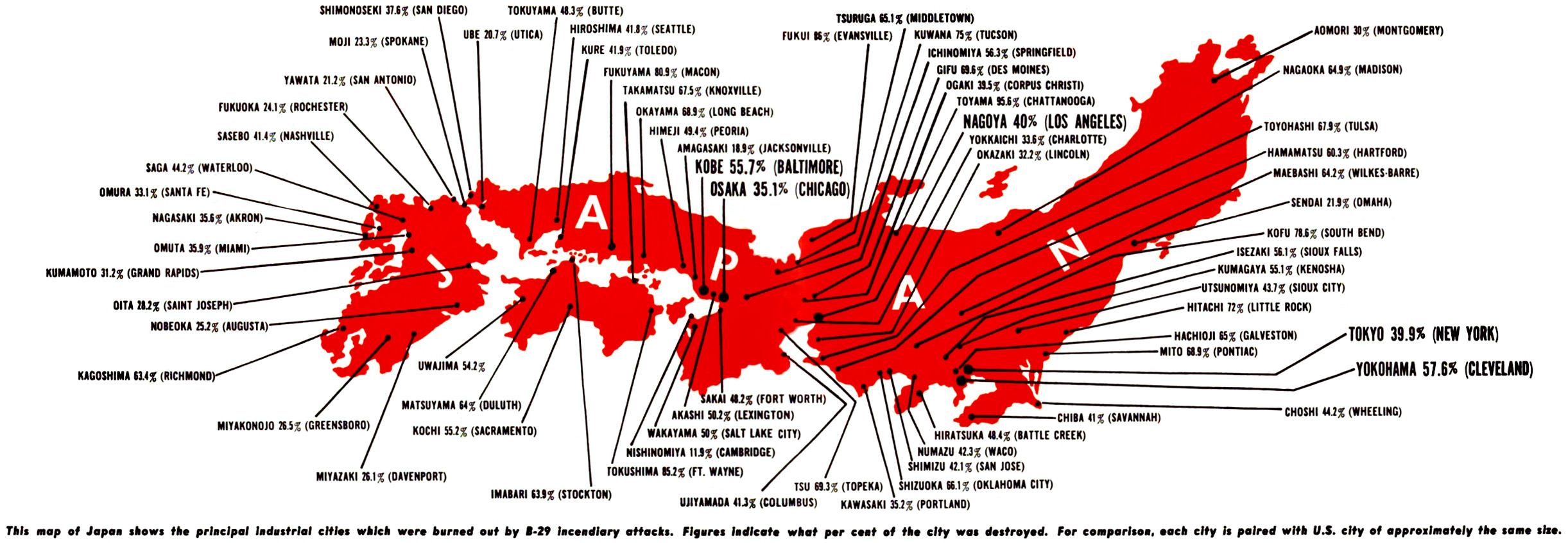
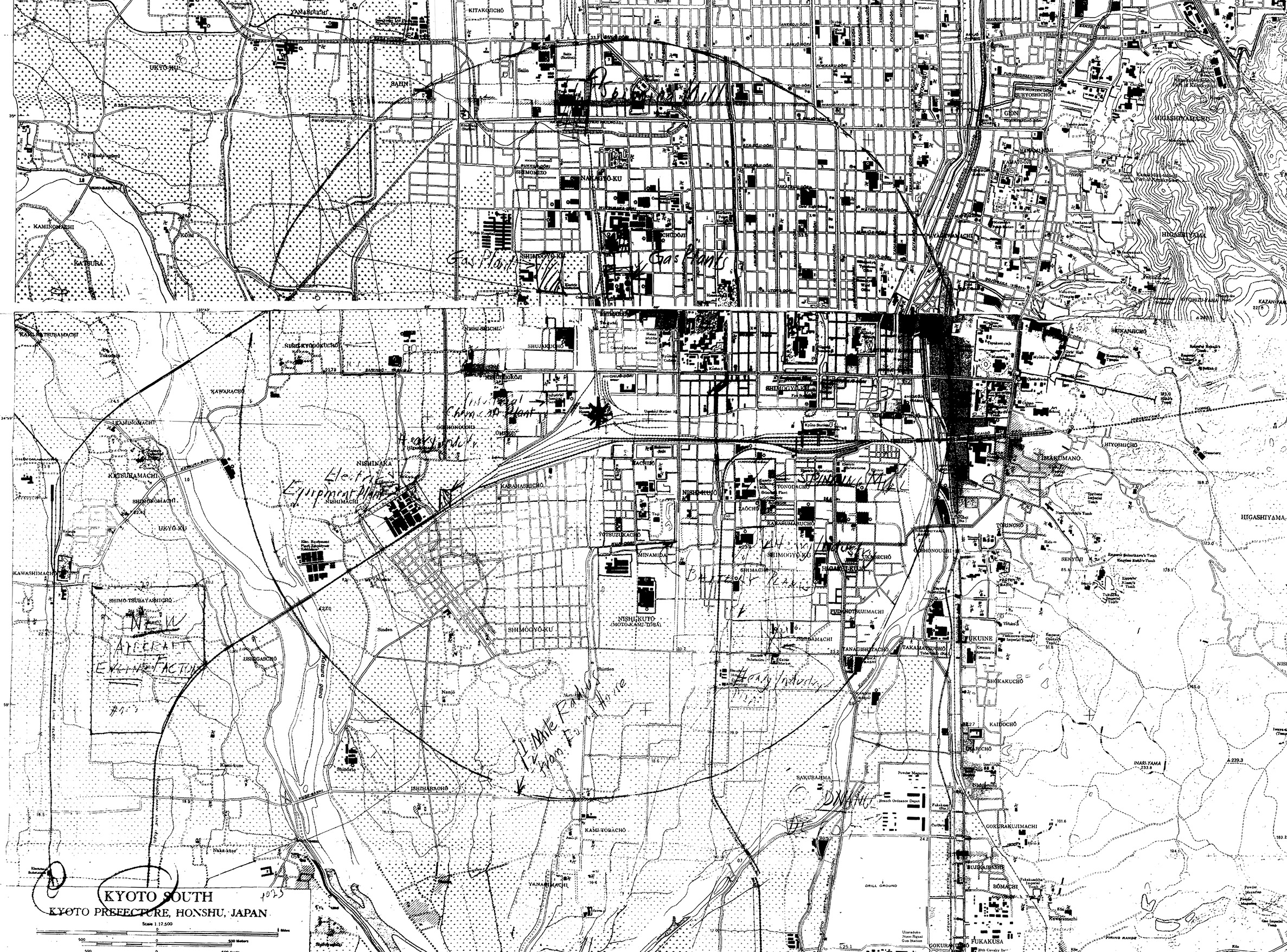
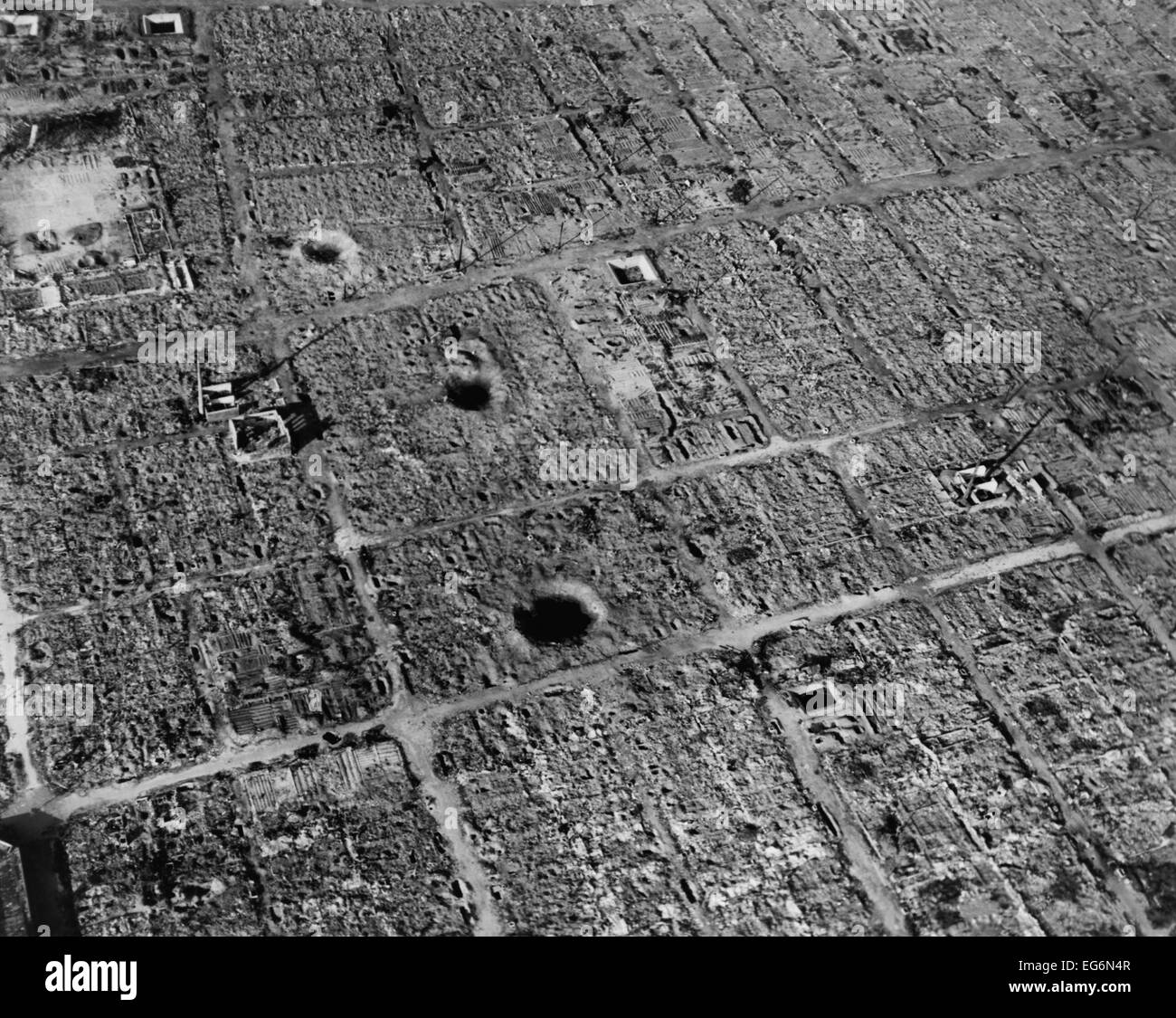
So to pull it back, if Truman had been thinking this through, he could have imagined that this was a single bomb that could accomplish the destruction of 200 B-29s loaded with incendiaries — that's not a perfect understanding, but it provides an analogy within the context of World War II, where destruction of cities by firebombs was strikingly commonplace by that point in the war. They knew about the area that would be destroyed by an atomic bomb, and could draw that on a map. They knew what a totally burning city looked like, what the remains would look like.
But the issue I was trying to bring up is that Truman, I think, fundamentally misunderstood the nature of the target. Destroying a large military base would have plenty of casualties — but they'd all be "military," soldiers and the like. Destroying a city means having a lot of unambiguously "civilian" casualties, like, as Truman put it, "women and children." He doesn't seem to have realized the latter was going to occur at Hiroshima. I believe him when he expressed, numerous times, that he thought Hiroshima was "purely" a military base — a line he stopped using, abruptly, once the Japanese reported on the destruction and the high civilian casualty rates. I think this confusion/realization/reaction does much to tell us about Truman's handling of the end of the war, and his handling of the postwar control of the atomic bomb (ergo its place in the episode).
SO /u/Restricteddata is actually the guy you want to talk to and who you heard on the episode! He also maintains a wonderful blog of his own here: http://blog.nuclearsecrecy.com/
But to help with a frame of reference the size of the Trinity Test is figured to be about equal to 20 Kilotons of TNT. While the most powerful conventional bombs used in the war were the British Tallboy and Grand Slam's at 6 and 10 tons respectively. While in terms of just explosion size the Port Chicago incident, where a munitions loading pier in California and ships adjacent went up is figured to be a result of about 2 Kilotons of TNT equivalent.
So it is not wrong to say I think that the atomic bombs did represent a whole order of magnitude of increase in destructive concentration.