Travelling through some medieval towns left me wondering, how did people react to traffic lights being installed in cities like London, for example? Was there resistance to using them, or were there many accidents to begin with?
I can't fully answer this question but I can add a little information.
Automated traffic lights were being introduced around the period that I study (WWI and the surrounding years), but I can't recall seeing any mention of them in memoirs or contemporary source material with regards to complaints, accidents, or even general reactions to them. I suspect the reason for this is that the gradual introduction and evolution of signals meant that city-dwellers became accustomed to them.
The first documented traffic control in London appears to have started in the 1720s on London Bridge, and by the 19th century it was common for police constables to be providing traffic direction to help alleviate the serious congestion at junctions caused by the tens of thousands of drays, cabs, buses and other horse-drawn vehicles that swarmed the streets of London. During WWI, the Military Police performed a similar service on the roads of Northern France and Belgium, particularly around ports and depots, which were swamped with troops, casualties, ammunition, and other supplies moving to and from the front lines.
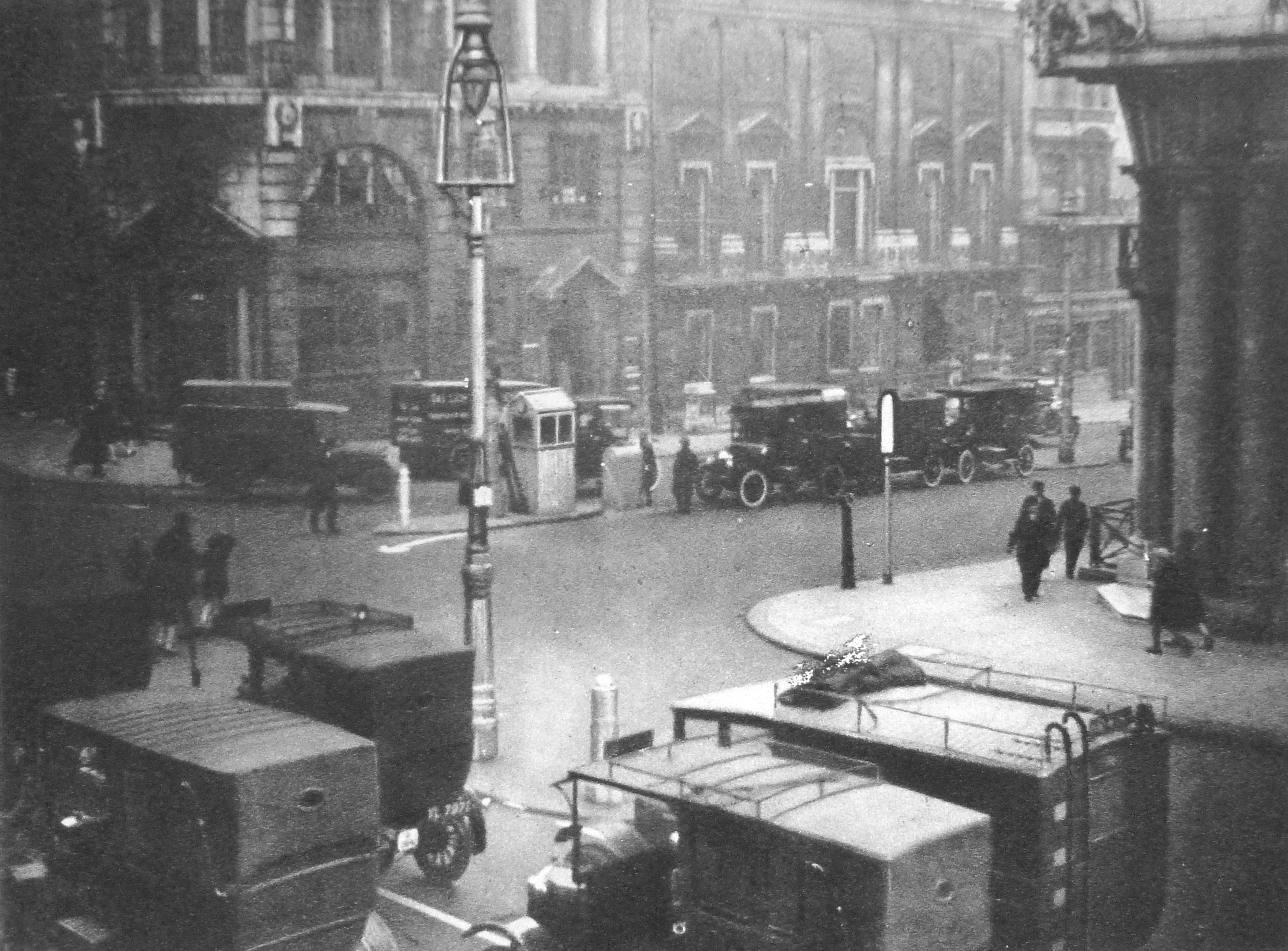
By the 1920s police whistle-and-hand-signals were being supplemented with electric lights. Officers would be stationed in a control booth like the one seen here:
1925, junction of St. James and Piccadilly, London
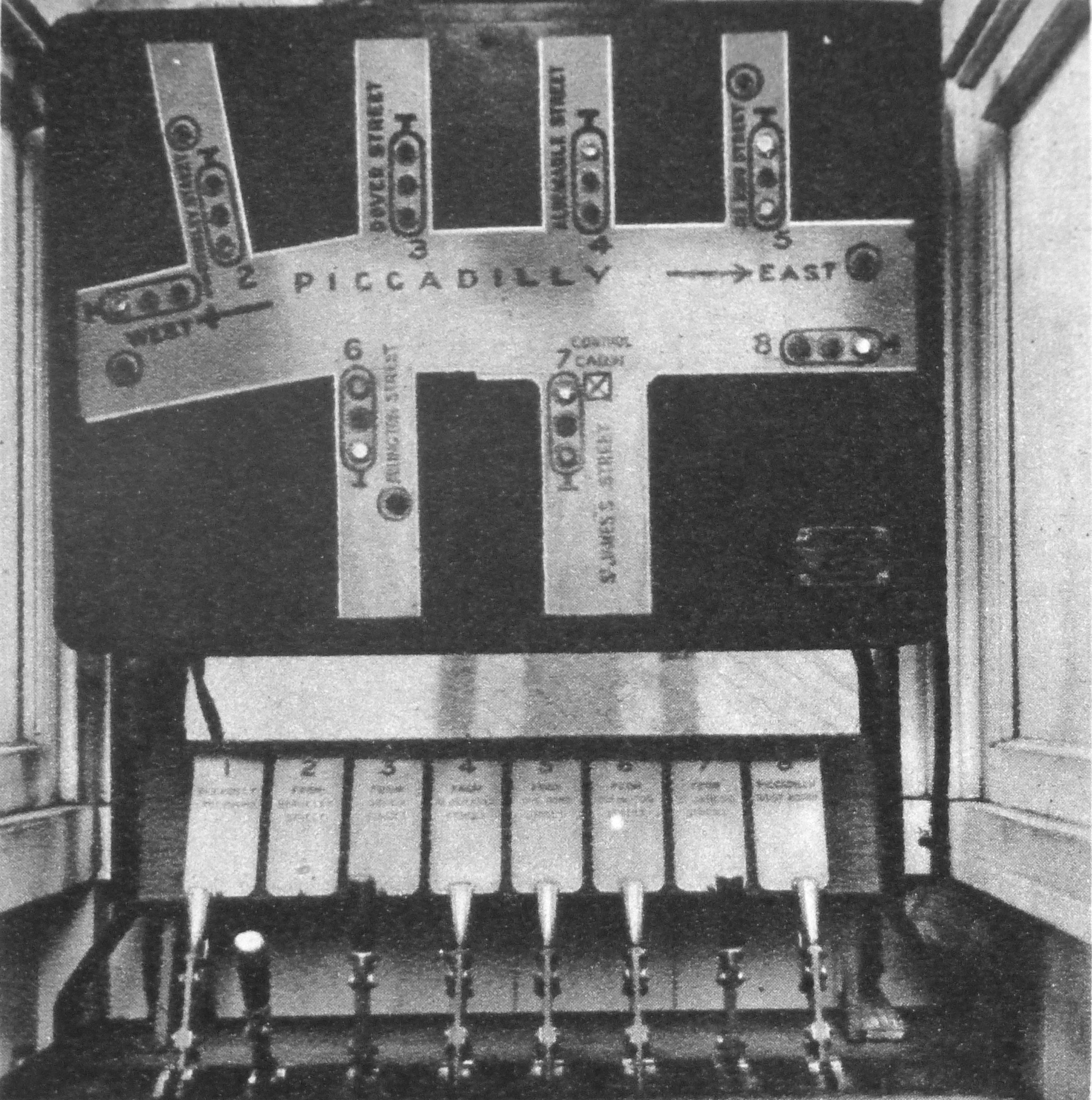
Here's an inside view of the booth. You can see how it was inspired by railway signalling equipment:
1925, interior view, traffic control booth
By the 1930s automation of lights was emerging, but as an assistance to police control: early automatic systems had a control box that would allow the police to easily take charge of the junctions in heavy traffic. Gradually, of course, automation took over completely.
Hopefully another poster can add more to this, but I'd say that there wasn't a huge negative response to traffic lights from city-dwellers because they evolved gradually from the sort of individual police traffic control at busy junctions that they were used to, rather than suddenly appearing as fully-automated systems.