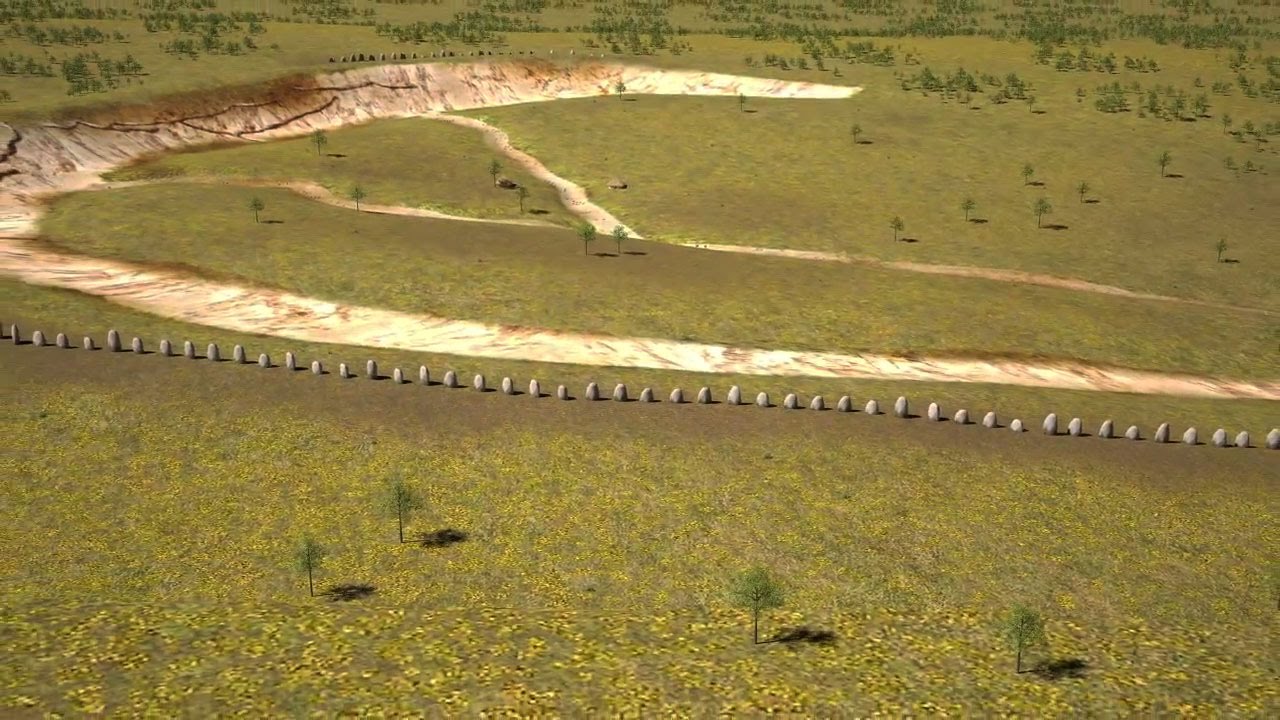
The reason nobody ever discovered what was beneath the Stonehenge megalithic site is because nobody was willing or able (or, in modern times, allowed to) carry out a proper comprehensive archaeological dig there. Technology available today however has allowed archaeologists to use non-invasive "virtual excavation" techniques so they can peer beneath the soil and create a comprehensive 3D map of the site and surrounding area, resulting in the discovery of new monuments and structures that had been buried by many centuries of time.
These newly found neolithic ruins buried beneath Stonehenge are pretty darn fascinating. The bulk of the more recent discoveries came due to the "Stonehenge Hidden Landscapes Project" - a four-year underground joint survey by a British and Austrian team examining the area in and around the well known (and above ground) Stonehenge megalithic structures, as well as around the Durrington Walls "SuperHenge" features (located about two miles or so away from the Stonehenge structures), (that last "Durrington Walls" image is computer-generated, and was made to show what they believe from the data recovered during the underground survey what the "SuperHenge" structure may have looked like during its heyday - 4500 years ago).
This modern underground survey of the site covers about 4 square miles of area around the Stonehenge megalithic site, and was conducted using what they typically call non-invasive remote sensing geophysical prospecting gear - primarily using very modern high-resolution Ground Penetrating Radar (GPR) and Magnetometer technology coupled with GPS mapping tech to allow for really precise surveying of the below-ground features to a depth of about 10 meters or so, without ever having to put a shovel in the soil to dig.
As for the implications of the discoveries, that is a tough one. It is believed that the buried monuments around the site (which is categorized as a "World Heritage Site" and thus protected now from a lot of actual excavation/dig efforts) most probably held some form of religious or worshipping significance, because they were clearly not easy to build or set up by the people who constructed them many centuries ago, given their limited technology of the time period. What they stand for and why they were built would only really be able to properly be researched and understood by doing a comprehensive dig of the site - something that the British government has been reticent to allow. As good as ultra-modern GPR and magnetometer tech is today at peering beneath the surface and mapping object placements below ground, it just does not allow for the required ultra-high resolution and understanding that could be gained by actually conducting an actual hands-on dig/excavation of the newly detected underground sites themselves. What it does tell us though is that the Stonehenge/Superhenge site area was a LOT more important to ancient peoples than even Stonehenge shows us, and that those ancient peoples (again, people who existed in the area maybe 4500 years ago or so) gave that area immense reverence and respect as a place of worship, worthy of building monuments and structures that would have taken a lot of effort and been quite time consuming for them.
Thank you so much! I honestly find the entirety of Stonehenge to be absolutely fascinating. Thanks for helping illuminate this subject a little more.