I'm particularly curious how they looked in terms of number of men, ranks, and organizational breakdown, both on paper and in practice. How many officers and NCOs would a company or regiment have? What were their duties?
We often think of the civil war in terms of big battles like Gettysburg, Antietam, etc, where huge armies of soldiers fought shoulder to shoulder with rifled muskets. How accurate is this picture, especially in a small-scale skirmish? Would men who purchased or were issued fancier weapons like the Henry rifle be fighting in line too?
I hope this topic isn't too big or broad. Thank you for your responses!
The building block of the Civil War infantry was the company, which at full strength would consist of a captain, two lieutenants, five sergeants, eight corporals, two musicians, and eighty privates. Outside of combat, in camp or on the picket line, the sergeants and corporals had charge of privates, but in battle, the captain had sole tactical authority. In line of battle, the company would divide into two ranks, with the captain and first sergeant on the far right of the company, from which place the two ranks could guide on them. The remaining lieutenants and sergeants took up positions to the rear of the company and acted as file closers, as well as doing whatever temporary repairs were necessary to keep soldiers shooting. The corporals stood in the first rank and had no special tactical purpose other than to stiffen the men by example. This illustration should help you to understand what I mean.
Ten companies and a small staff section composed of a colonel, lieutenant colonel, major, adjutant, quarter-master, surgeon, sergeant major, and quarter-master sergeant (with a few random flunkies) made up a regiment. When deployed in line of battle, they took up positions rearward of the file closers, with the colonel in the center rear, the lieutenant colonel and major in the center left and center right rear, and the sergeant major and adjutant on the far flanks.
How accurate is this picture, especially in a small-scale skirmish?
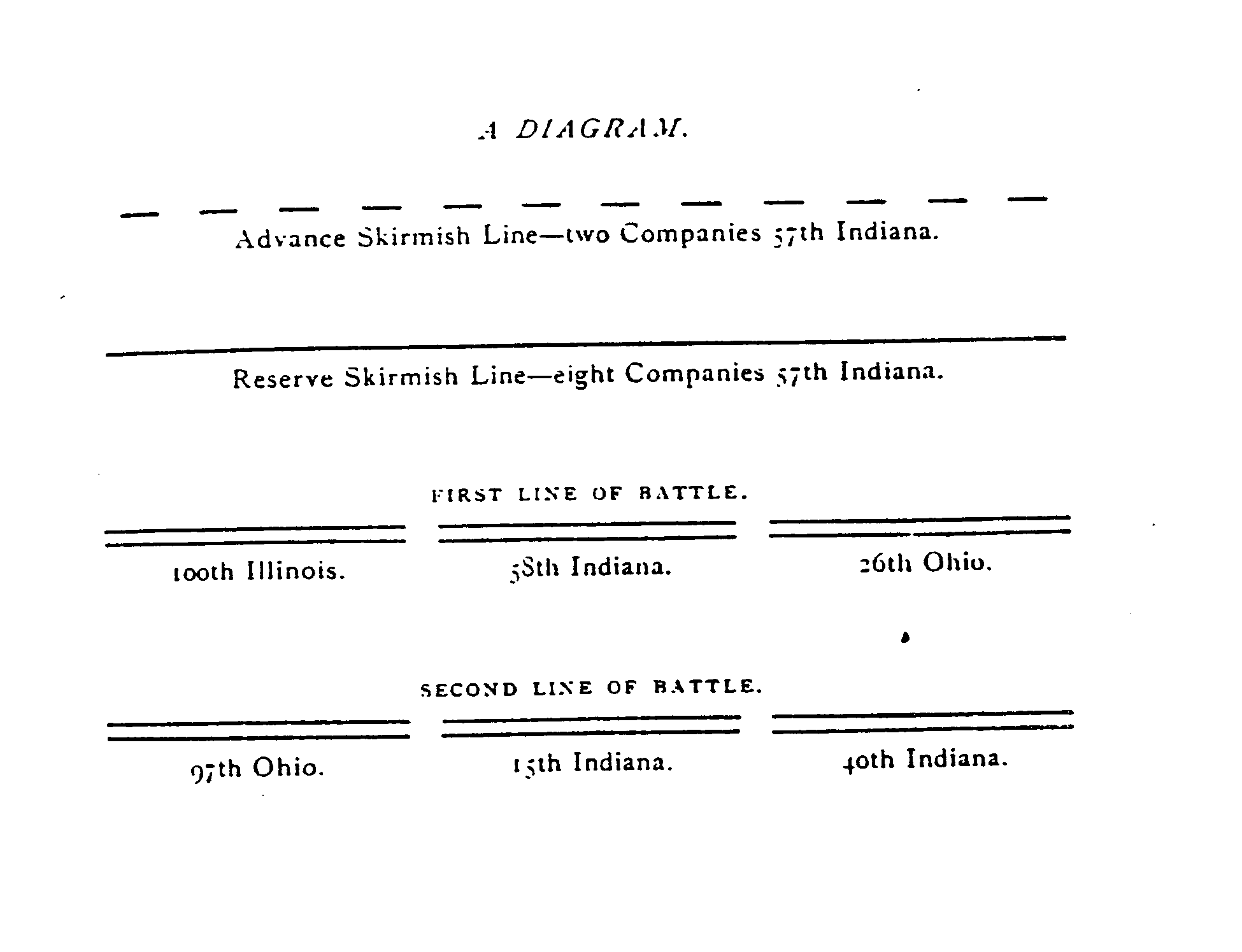
I'm not really sure what you mean here. Certainly, in large actions the Confederate Army formed line of battle much the same as the Union. It remained the most effective way to organize and control volunteer soldiers. That doesn't mean every unit fought in closed ranks, though. This diagram shows how skirmishers could be posted in front of infantry in close formation. Outside of battle, both armies maintained picket lines of dispersed soldiers to screen the armies and provide advanced warning of enemy movements.
Would men who purchased or were issued fancier weapons like the Henry rifle be fighting in line too?
To the extent that this happened, yes. Your captain is not going to detach you from the rest of the men just because you showed up with a new civilian rifle. The Confederacy did experiment with forming sharpshooter units from especially effective soldiers, who received the army's best imported firearms, namely Whitworth and Kerr rifles and two-band Enfield rifles. For the 1864 campaign, the Army of Northern Virginia fielded a sharpshooter battalion for each infantry brigade. These men were more like skirmishers than snipers, but they had a real advantage over ad hoc infantrymen acting as skirmishers, and fairly dominated the skirmish and picket lines for most of 1864.