Hello guys,
Tried to ask this question earlier but it was apparently too 'opinion-y', so I'll try again. I've been reading in depth about the Mark I (and upwards) tank as well as the machine guns of World War I. I was wondering if any of you could provide insights into what their capabilities were, what their weaknesses were and any examples of their triumphs or pitfalls.
I'd really appreciate any answers that could help me along, especially the odd trinkets of information that could go well into comparing the two weapons of war.
Thanks!
Tanks in WW1 were surely a mixed bag. They were great for doing all the things a man couldn't; got barbed wire along the trench? Boom, tank rolls over it (knocking out trench defenses was one of tgr tank's strongest areas) Need to move some guys up through No Mans Land safely? Boom, have the tsnk out in front to act as a "moving wall" of sorts.
However, tanks were very much a new concept in WW1. Hell, all of the Commonwealth tanks had tractor engines, which weren't made to a) be shot at b) handle such a load, since a tank was quite a bit heavier than a tractor and c) be running for so long so often. Thus, the engines in them were awful. They overheated like mad, too.
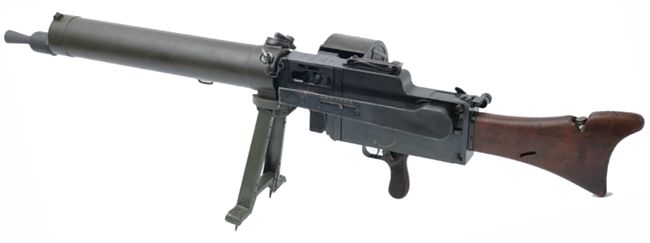
The machine guns of World War 1 were almost all basically the same, being heavy, tripod-mounted, water-cooled Maxim machine guns of one variant or another. (The primary outlier being the French Hotchkiss 1914, which was air-cooled but capable of roughly the same rate of fire.) They were all generally versatile guns, and their main uses centered around keeping men hunkered down in their trenches with the odd burst of fire, and cutting men down when they went over the top. The one big drawback to early-ww1-era machine guns was their weight; on their tripods the guns tended to weigh anywhere between sixty and a hundred pounds, making them basically immobile. Later on in the war the Germans would improve the Maxim into the 08/15 variant, which weighed "only" 50 pounds and was functionally a fixed machine gun that could be moved if it really had to. While I'm on the subject, the Germans also had a couple thousand captured Danish Madsens, but had none of the spare parts and were forced to stop using them as the guns broke down from heavy use.
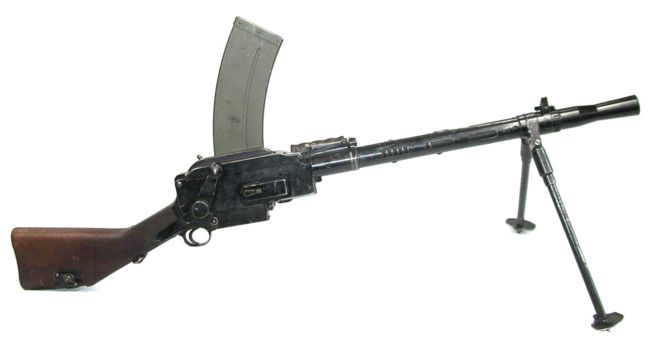
The Brits also had a light-ish machine gun of their own in the Lewis gun, which was one of the first machine guns in widespread use to be truly mobile. They weigh somewhere around 30-35 pounds, which while not being light is certainly better than sixty, and with a fixed bipod they could be deployed far faster than the tripod-mounted Vickers guns. In Commonwealth (particularly Canadian) use the Lewis tended to be used something like light machine guns today are, providing short bursts of fire to help cover the advance of troops. The French had a rough equivalent with the infamous Chauchat, which, although it wasn't quite as bad as its reputation suggests, was still a weapon unsuited for combat in the trenches. Big holes in the magazines and all.
For a more detailed look at machine guns of the war, I'd recommend Gun Jesus's video on the subject if you've got 20 minutes to spare. He's also got a video on the Chauchat and the Vickers if you're interested.