AFAIK the area just out of the city walls was generally clean, so to not give attackers any hiding place (roman pomerium comes to mind). That said, cities can grow. What happens when there is no more room for people?
I'm talking up to middle-age, early modern era European cities, where the chance of a siege is on the table - maybe not very likely, but not impossible.
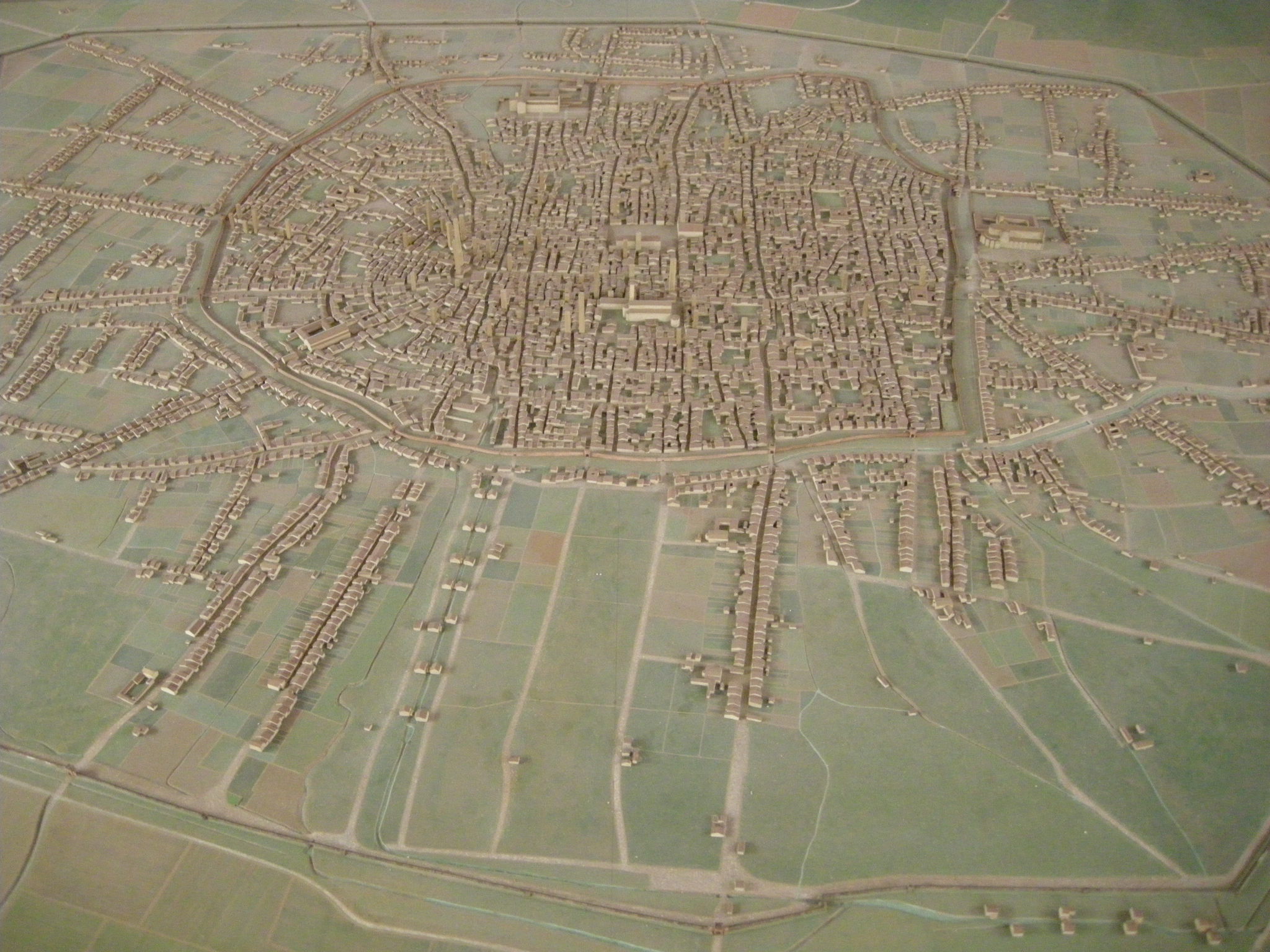
A common misconception about walled cities is that dense constructions were built right up against the walls. Although the city centers were almost always dense and crowded, it was common for there to be open spaces like gardens and orchards between the city walls and the inhabited center, in addition to communities outside the walls. You can see the way cities walls could grow in this representation of the growth of the city of Bologna, the Roman walls are traced in red, the annexed Lombard castle in green, the walls constructed around the year 1000 in yellow, and the walls constructed in the 14th century in purple (the image also shows the modification of the city's waterways, an extremely important but often overlooked feature of urbanization). In this modern reconstruction of Bologna as it appeared in the thirteenth century, you can see that as construction has pressed against the medieval walls (the yellow ones in the previous picture) communities that have sprung up along the major roads leading out of the city have been encircled by a palisade, which one hundred years later would be built up in stone; there is not only ample room between the two rings, but you'll notice that there are still some open spaces in the old ring.
I wrote about population density within the walls of Renaissance Florence here and also wrote about wall construction in some Italian cities here.