(The historicity of Jesus as a real person aside, I am asking about the Gospels as written texts)
I remember being taught that the reference to Jesus as Shepard was an attempt to portray him humbly in comparison to other rulers: in the same vein as his manger birth and common upbringing.
However, I've recently discovered that the Code of Hammurabi refers to himself in an almost identical way: as a "salvation-bearing shepherd" of the oppressed.
Was it common for rulers to be referred to in this way? Is it intended as an expression of humility, and of their being 'down to earth' with the roots of their people? How recently have rulers still relied upon this image?
Yes, it was very common for kings to portray themselves as shepherds of their people. For example, it appears in a hymn of praise for King Šulgi of the Ur III ("Neo-Sumerian") period.
Enlil gave him a good name: 'A lion's seed, who provides the E-kur generously, the beloved one of Ninlil; the one granted authority in the E-kur; the king of Urim, the one with shining heart, the shepherd, the protective genius of the Land'. Enlil chose Šulgi in his pure heart and entrusted the Land to him. As the shepherd of all the countries, Enlil leant the crook and the staff against his arm, and placed the immutable sceptre of Nanna in his hand; he made him raise his head high, sitting on an unshakeable royal seat.
http://etcsl.orinst.ox.ac.uk/cgi-bin/etcsl.cgi?text=t.2.4.2.07
Egyptian kings were also portrayed as shepherds of their people. From the Admonition of Ipuwer:
Let him but bring coolness upon their passion, and men will say: ‘‘He is the shepherd of all mankind, and there is no evil in his heart.’’
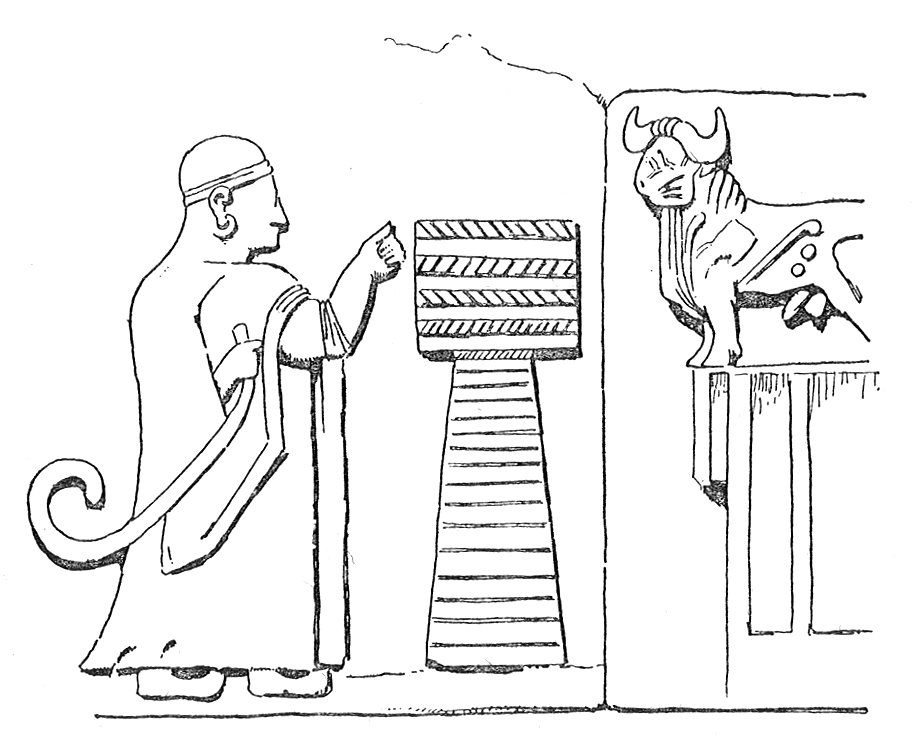
Note that Egyptian kings carried a shepherd's crook. It's been plausibly suggested that the kalmus carried by Hittite kings was likewise a shepherd's crook.
As for the biblical tradition, note that Saul found David among his sheep (1 Samuel 16:11), and later the tribes of Israel declare David shepherd of the people of Israel (2 Samuel 5:1-2).