Or am i just regarded armour too highly and in reality they generally can be penetrated? Also, if can please provide anti armour tactics/methods in the medieval era
This is a complicated question and can be answered in a huge variety of ways (I hope to see some of the medieval and early modern experts weighing in here eventually). I'll stick to what I can tell you though, which relates to why swords were so popular in the medieval period, and why it may not have much to do with battles at all.
Swords were used a great deal in judicial duels in the medieval period, and as such were often used in "blossfechten" or open/unarmored fencing. A sword was one of the most versatile and useful weapons available for judicial duels, and wer the subject of a great deal of scholarly and martial study, which took the form of fechtbucher or "fighting books."
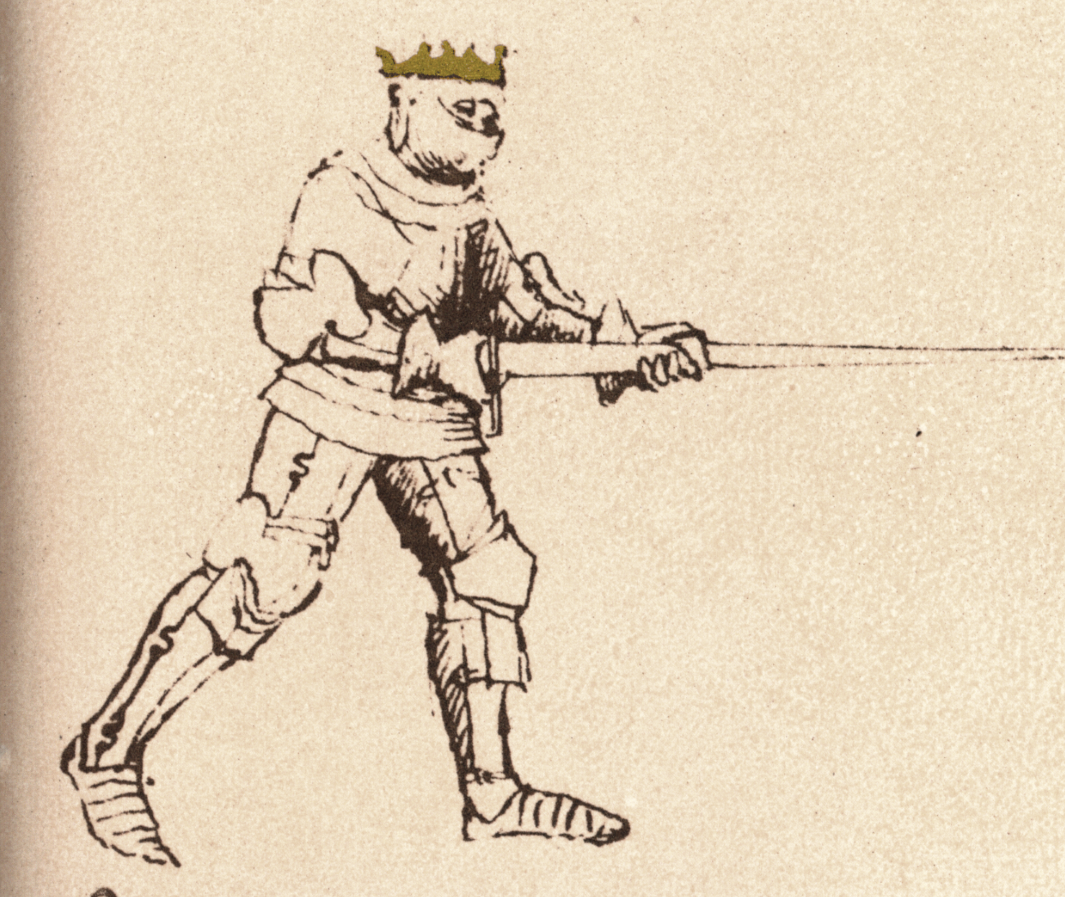
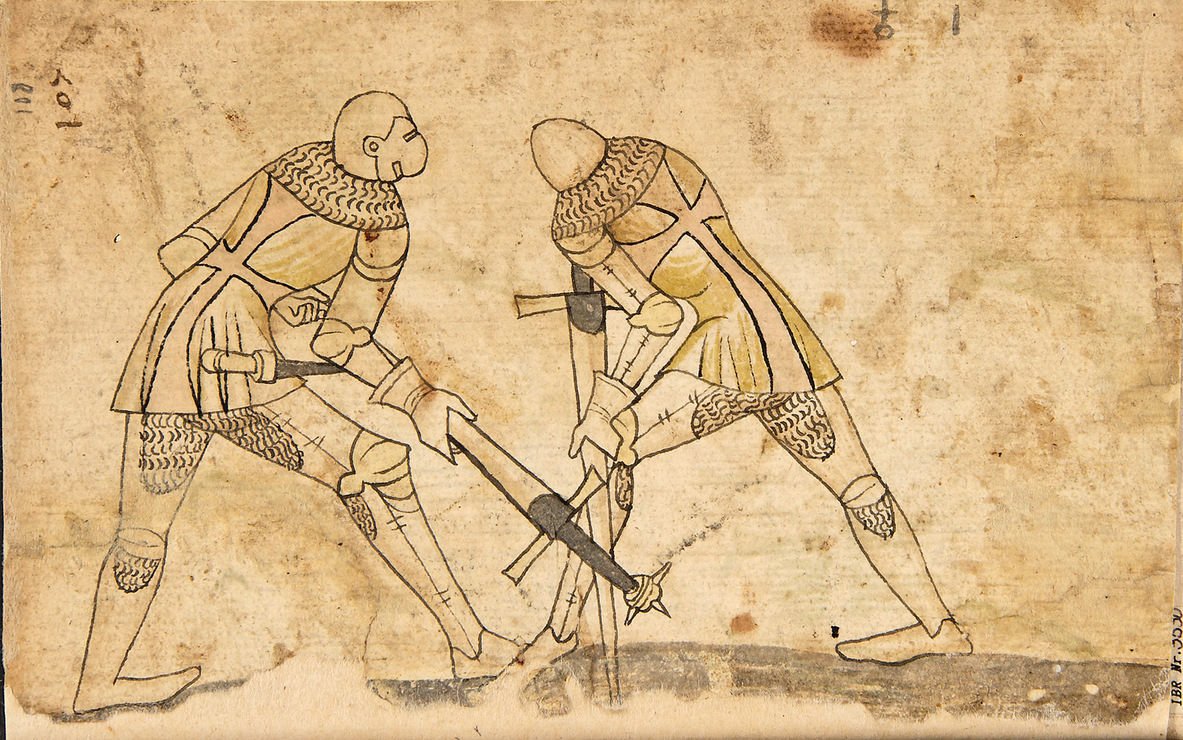
Chronologically, the first fechtbucher we're aware of is MSS. I.33, otherwise known as the "Walpurgis Fechtbuch." It dates to around 1320, and covers the use of the arming sword and buckler. Slightly later was the treatise of Fiore dei Liberi, an Italian fencing master, who described fencing with the longsword, a two-handed cut-and-thrust sword known in pop-culture as a "bastard sword." Think of Aragorn's sword in Lord of the Rings. Around the same time, Johannes Liechtenauer wrote (or someone else wrote down) his Zettel or recitation, a mnemonic poem that described not only a selection of "master" techniques, but gave a pedagogical outline of how they might be used and trained. Dozens of fencing masters followed Liecthenauer, and wrote additions, glosses, and commissioned artwork that illustrated various techniques.
Although many of these treatises covered the use of the longsword, most of them also included sections on other weapons, as well as fighting on horseback, with polearms, and with dagger and wrestling. Many of them also included sections where they explored techniques that are suited to fencing in full plate armor, and the difference between techniques used in blossfechten are quite striking. Rather than engaging with the edge of a sword, armored fencing techniques relied on the pommel and quillons as striking surfaces, holding the sword on the handle and on the blade, called halfswording, and using wrestling and grappling techniques. Some techniques involved using the quillons as a hook, to catch along a protruding piece of armor (say, at the knee), and pulling for a leg sweep.
So the sword was a relevant piece of equipment for a member of the knightly class to be thoroughly trained in, in the event that they'd have to participate in a judicial duel, to say nothing of general combat. This was, given the sheer number of fencing treatises that have survived to this day, clearly something that was taken seriously by people. The variety of techniques made possible by the sword was enviable in a weapon that could also be easily transported. Other weapons, like pollaxes, may have been more useful against a man in armor, but fights in armor were seldom surprising events, and so for daily carrying, a sword was a good all-around-applicable weapon.
Some judicial duels, too, were fought with a set number of passes with specified weapons. Say, three passes on horseback with a lance or spear, then three on foot with a pollaxe, then three with a sword, or what have you. There was as much variety in rules for judicial duelling as there were judicial duels.
And for fun, here's a video of some fencers at a HEMA club cutting through a modern gambeson. It's not historically constructed, so don't take this as definitive proof that gambesons are useless or anything, but it's pretty interesting nonetheless. Blood and Iron Cutting.
Wiktenauer contains much of the information I've written, here, including translations of some treatises, and scanned images of many of the fechtbucher.
Primarily, I took info from the Walpurgis fechtbuch (above linked), the Cluny Fechtbuch, Hans Talhoffer's fechtbuch, Codex Wallerstein, Fiore Dei Liberi's treatise, and Johannes Liechtenauer's zettel
In addition to the notes from u/PartyMoses about judicial and sport combats, swords were also still useful on the battlefield (they were extremely adaptable weapons!) and for civilian use (such as when travelling); in the 16th century swords became if anything more common as wearing swords in civil situations became more customary and accepted.
I write about swords in battle here and about their large place in late medieval society here.