The word "hillbilly" had spread far enough to make its first known appearance in print in 1900, though perhaps not quite far enough that it didn't need defining:
A hill-billie is a free and untrammelled white citizen of Alabama, who lives in the hills, has no means to speak of, dresses as he can, talks as he pleases, drinks whiskey when he gets it, and fires off his revolver as the fancy takes him.
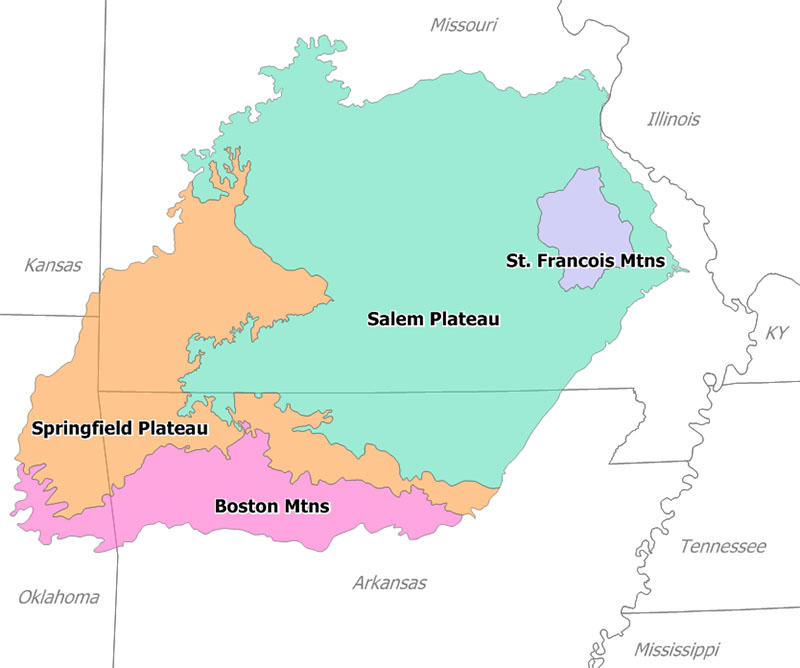
This is useful for two reasons. First, it sets out 1900 as the point by which the image of the hillbilly/redneck/poor white southerner had gelled in the American imagination (the quote is from a New York publication). Second, it focuses our attention on a particular sub-region of the American South, that is, on Appalachia (and as John Otto points out, the oft-overlooked/morphed into 'western Appalachia' Ozarks). The place of Appalachia in American settlement and economic history, and its function in 19th century literature, roll into the stereotypes we know today--including the myth of rampant incest.
Already by the early 19th century, Appalachia was developing a reputation as the "backwoods" of America from the eastern seaboard. Part of this was emotional: as white Americans geared up to force Native Americans further and further west, the backwoods served as a buffer zone or no man's land of protection. Part of this was geographic: duh. But part of this was economic, and on its way to becoming an enduring culture.
Scholars following Otto use the term "plain folk", and sometimes "plain folk agriculture" to stress its economic origins. Characteristics included small-scale farming in forest clearings, free-ranging pastoralism, and geographically isolated homesteads. But not socially isolated:
Each farmstead belonged to a dispersed rural neighborhood, or community, whose members were united by friendship, marriage, and kinship. Though dispersed over several square miles, the members of a community called on their friends, relatives, and in-laws for aid in clearing land, gathering crops, shucking corn, collecting livestock, slaughtering animals, and building log houses.
Frequently, a church was the focus of a community, and many communities adopted such Biblical place names as Pisgah, Hebron, and Gilead. The county seat towns, the churches, the schools, and the rural neighborhoods were the physical setting for social and recreational life. The simple pleasures of court sessions, church meetings, and neighborly socializ- ing did much to overcome the spartan material conditions of life. Folks owned modest amounts of property and pursued a self-sufficient life style which left little room for material luxuries. They fashioned their own agricultural tools, household furnishings, and clothing, and they bought little more than salt, ammunition, ironware, and the occasional book.
This is rather a vision or a version of the "yeoman farmer" stereotype, almost pioneer-like, and before the Civil War its presence was hardly limited to Appalachia (and, again, the Ozarks). But by 1820, eastern writers were recognizing that the urbanizing North and turn towards plantations in the south were crafting a divide. As Anne Newport Royall, editor of the Maryland proto-feminist magazine The Huntress wrote in 1826:
On the bosom of this vast mass of mountains . . . of Virginia . . . there is as much difference between the people of the western states and those in the east as there is between any two people in the union...these present a district republic of their own, every way different from any people.
The impression of difference was being communicated eastward by the pens of travelers, but even more so by the propaganda of revivalist missionaries seeing the backwoods as fertile ground for evangelization. As America spiraled towards civil war, too, northern antislavery writers crafted an view of Appalachia as a bastion of white abolitionism. Not entirely unrooted in reality, at least through the 1830s, this highly charged image depended on Appalachians as poor white people either victimized by slavery or opposed to it with fiery religious zeal. (To say nothing of, you know, black Appalachians and slave-owning whites...)
Around and after the Civil War, two economic developments isolated the Appalachian backwoods both physically and culturally. First, the construction of railroads created, you might say, "winners and losers" out of Appalachian towns. Where the tracks went, David Hsiung argues, residents stayed both economically and emotionally connected to both Northern and deeper-Southern culture. In the deeper South, plain folk agriculture evaporated with the evolution into larger cotton-farming "post-plantation" plantations, essentially. But the mountains of Appalachia are not conducive to that pattern of planting. Plain folk agriculture and the society/culture that accompanied it, described above, lived on in the mountains.
The over 100 known accounts of outsiders Describing And Defining Appalachia from before the Civil War show their influence in the fiction of the day, and even the titles are revealing: Wooing and Warring in the Wilderness, Fallen Pink, or a Mountain Girl’s Love, Sut Lovingood’s Yarns. By 1860, writers are already trafficking quite profitably in the uneducated, backwoods, raw, yokel stereotype.
One thing that almost never comes up on AskHistorians is the impact of the Civil War on American culture. In fact, the expanding rift leading up to the war and then the war itself caused Americans to pretty seriously reassess what "America" was in all its (white) diversity and regional cultural pride. (You can tie this into the broader nationalist-imperialist movements in the late 19th century west, too). Literary scholars call one result of this, awesomely, the "Local Color" body of literature; Mark Twain is probably the most famous writer who gets retroactively caught in this net, but you can also think of all the pioneer literature, too. Sut Lovingood's Yarns and its ilk paved the way for the particularly Appalachian vein of Local Color.
John Fox and Mary Murfree (writing, of course, as Charles Egbert Craddock; a lot of Local Color authors are women writing under men's names) were two of the major names driving home the culture of backwoods Appalachia at the end of the 19th century. In 1800, plain folk and their isolated homesteads with a strong central community had been somewhat distinctive but also normal. By 1900, railroads and changing economy had not only made the way of life an aberration, but had highlighted the isolation of it all. Geographically (railroads bypassed; terrain hard to travel), economically, and culturally isolated from the rest of the US...which focused even more attention on the isolation of individual farmsteads from each other. Fox's enormously popular body of work, in particular, highlighted the effects of this isolation enduring over time: depravity, drunkenness, slovenly personal hygiene, and incest.
Writers told stories of large, isolated families struggling through romanticized but dire poverty that audiences across the rest of the U.S. ate right up. Allen Batteau's The Invention of Appalachia, sees this time period--leading up to that first mention of "hillbilly" in eastern print--as the rest of America using the (white) poverty, perceived simplicity, and lack of morality in backwoods Appalachia to define itself against: this is what we don't want to be.
The evolution of Appalachia and the Ozarks into the internal white American other was long in the making. And once fully formed, it managed to revitalize with each generation. 1910s-30s scholarship on the folklore, religion, lifestyle that painted Appalachia as almost a foreign land sometimes. The resulting Depression-era turn to Appalachian music, arts and crafts, dancing, old women's wisdom, as America's "old-fashioned, original" folk tradition that modernity had wiped away elsewhere. Complaints about white migrants' "strangeness," their too-tight family ties and inability to integrate into wider communities, and their inability to understand laws and how to follow them arose with major migration north after World War II. The war on poverty from the late 1960s highlighted the "white working class" of Appalachia as its balance on the "inner city." In the early 1970s, CBS had the sterling lineup of Beverly Hillbillies, Green Acres, and Hee-Haw to communicate the (more family-friendly) stereotypes of Appalachia to audiences on an unprecedented scale.
By the 1990s, Anne Shelby argues, the descent of the Appalachian stereotype (including that other type of "family friendly") into mass-comedy derived its staying appeal both inside and outside Appalachia from four basic points:
And so the stereotypes consolidated in the late 19th century of backwoods Appalachia as isolated, poor, too-close families live on as the nonexistent white America that makes actual white America feel a little bit better.
Hello everyone,
If you are a first time visitor, welcome! This thread is trending high right now and getting a lot of attention, but it's important to remember that those upvotes represent interest in the question itself, and it can often take time for a good answer to be written. The mission of /r/AskHistorians is to provide users with in-depth and comprehensive responses, and our rules are intended to facilitate that purpose. We remove comments which don't follow them for reasons including unfounded speculation, shallowness, and of course, inaccuracy. We also remove them when they misunderstand the question, so please note: the OP asked about the stereotype of incestuousness, not other stereotypes relating to southern America. So please, before you try your hand at posting, check out the rules, as we don't want to have to warn you further. (Making comments asking about the removed comments will simply compound this issue, so please don't do that either.)
Of course, we know that it can be frustrating to come in here from your frontpage or /r/all and see only [removed], but we ask for your patience and understanding. Great content is produced on this subreddit every day though, and we hope that while you wait, you will check out places they are featured, including Twitter, the Sunday Digest, the Monthly "Best Of" feature, and now, Facebook. It is very rare that a decent answer doesn't result in due time, so please do come check back on this thread in a few hours. If you think you might forget, send a Private Message to the Remind-Me bot, and it will ensure you don't!
Finally, while we always appreciate feedback, it would be unfair to the OP to derail this thread with META conversation, so if anyone has further questions or concerns, I would ask that they be directed to modmail, or a META thread. Thank you!