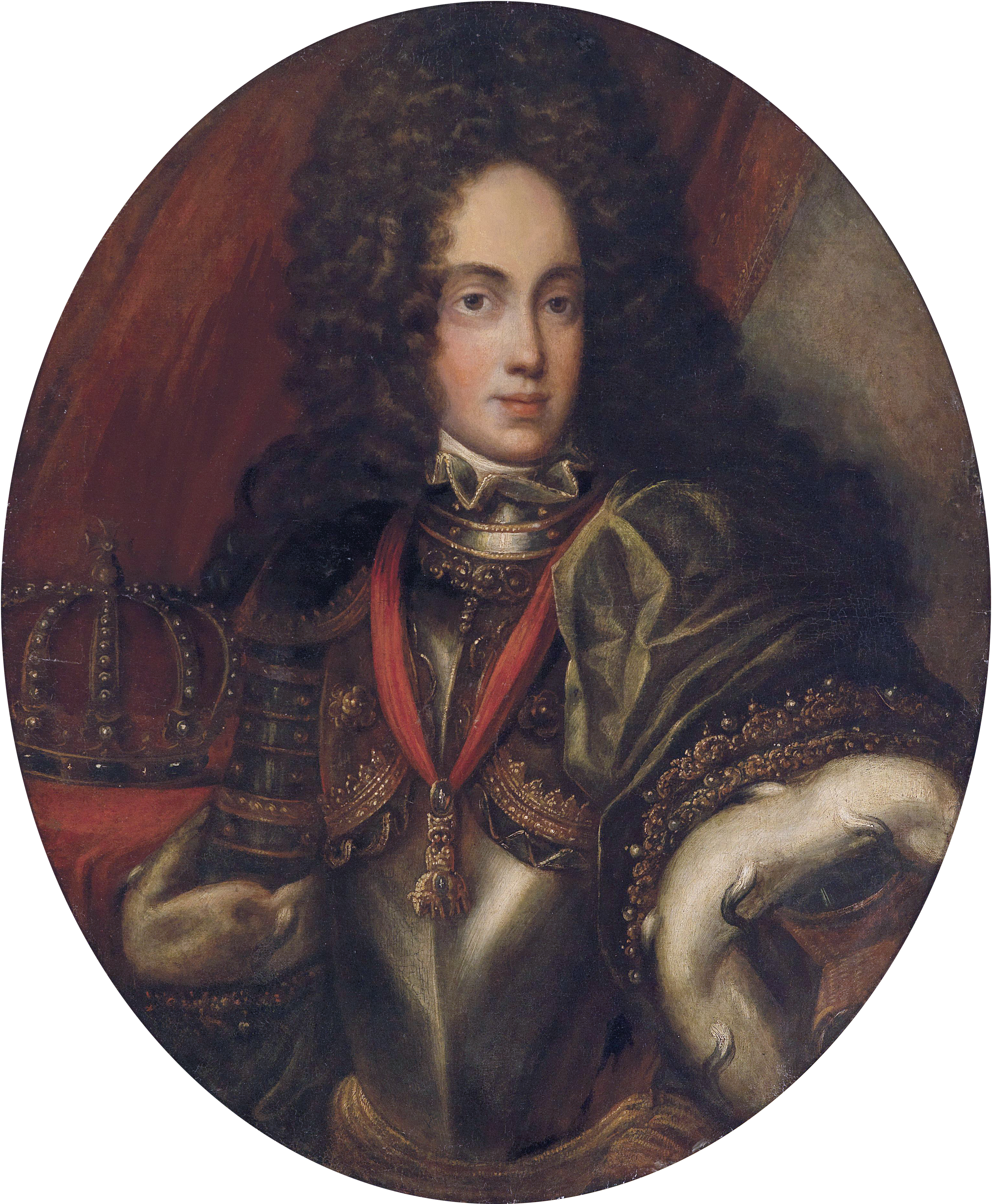
Hello,
I've noticed that across many different royals that there appears to be a common theme where a dead (canine of some sort) pendent is draped around the wearers neck. Does anyone know the background behind this? (Edit: upon further inspection it appears to be a capra of some sort)
Examples:
[2] https://en.wikipedia.org/wiki/Charles_V,Holy_Roman_Emperor#/media/File:Barend_van_Orley-Portrait_of_Charles_V(1519)_-_Google_Art_Project.jpg
it is not a dog, but the Golden Fleece from Greek mythology which was a symbol of the titular order. This photo of the Spanish order shows clearly the sheepskin (and why it sort of looks like a doggo at a distance!). The headship of the Order of the Golden Fleece was the Habsburgs' patrimony from the Burgundians. Both the Spanish and Austrian Habsburg rulers were the head of the respective orders and various elite and other grandees became Knights of the Golden Fleece such as Wellington- Goya's portrait of the Iron Duke shows the Order's pendant. Much like the Order of the Garter or the Order of the Black Eagle these baubles and chivalric titles were the preserve of the monarchy to reward, even after the loss of political power such as the Austrian Habsburgs, who remain the head of their order even though they lack a state.