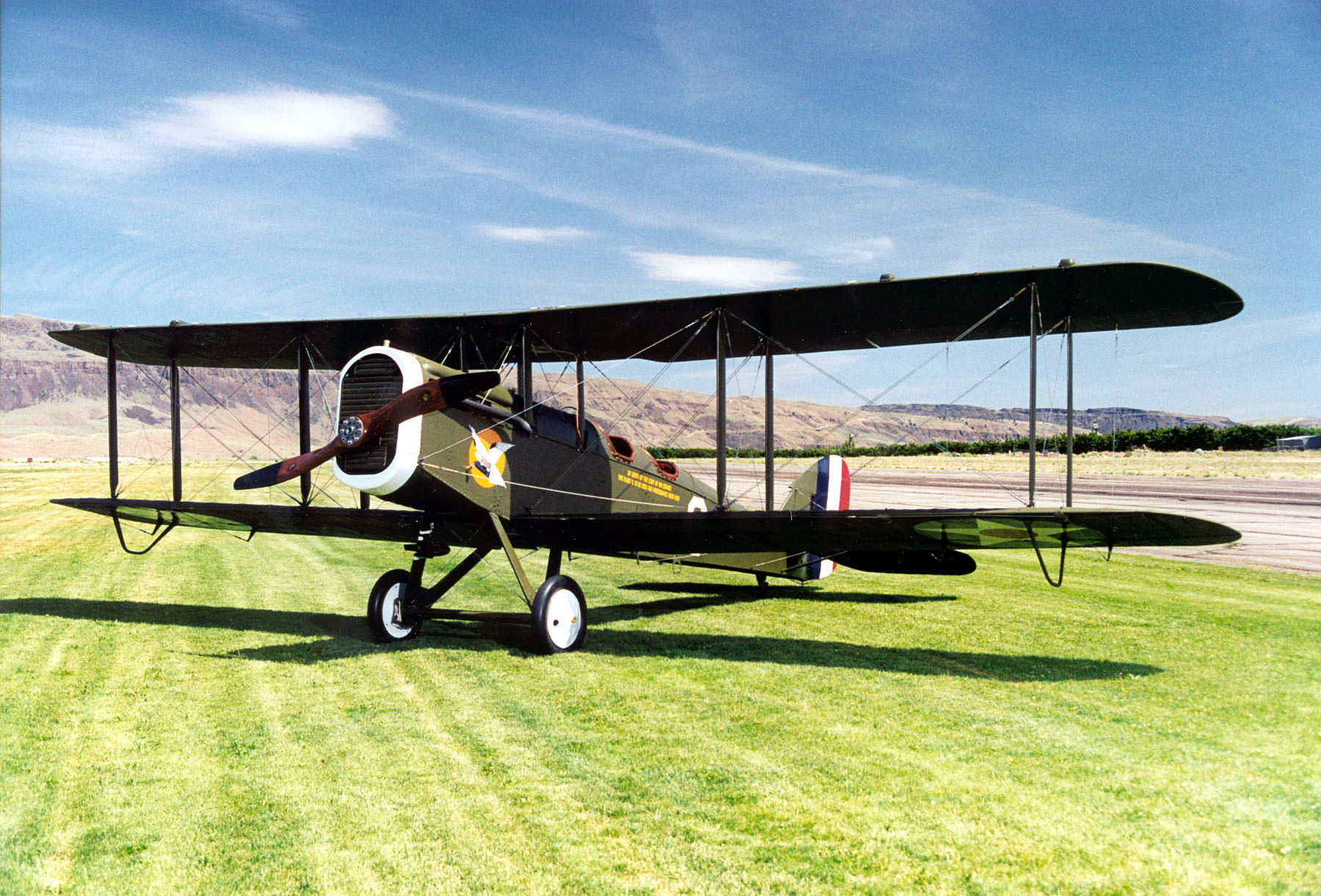
Aircraft were used during the First World War to drop supplies of ammunition and grenades to advancing infantry. While limited in the amount of material they could deliver, when used in sufficient numbers, the amount of ammunition they could drop could mean the difference between infantry successfully holding captured ground or being forced to withdraw. One of the most notable use of aircraft dropping ammunition was during the Battle of Le Hamel on 4 July, 1918 when Australian and US forces launched a highly successful limited attack on German positions around the town of Le Hamel. Aircraft played an enormous role during this battle and dropped ammunition was key to keeping advancing units supplied. Tanks were also used to carry material and kept forward positions well supplied, allowing Australian and US infantry to fend off German counter attacks.
Interesting question. It seems you are focused clearly on the "supply delivery" aspects of military aviation (not delivery of bombs or it being used for direct military strike usage, or for reconnaissance/photo recon aspects).
Supply delivery via aircraft was something that took a bit of time to get into effect in the military realm, chiefly because it was simply not very effective or efficient given the fact that early airframes lacked the engines capable of providing the required power to lift decent-sized loads. Very early on, the thrust-to-weight ratio of aircraft was pretty darn low, meaning that they essentially had enough trouble just supplying enough power/thrust to get off the ground and maintain stable flight with just a pilot (and perhaps a few bombs aboard) due to the engines available, let alone having them actually having enough power to take off and carry a decent load of supply/cargo in the hold.
Now, how do we define "supply movement"? Mail or written letters/correspondence/orders (very lightweight "cargo") were certainly the first "cargo" carried by military aircraft, but I suspect you are considering cargo/supply to be more than that.
To my knowledge, the first real supply/cargo usage of military aircraft - by aircraft utilized by and for military operations - would have been back in Serbia in November of 1915. Back at that time, the Serbian Air Force, which had been established about three years prior on December 24th, 1912, used several aircraft to ferry wounded troops on the very first "medevac" mission from Serbia to Corfu, but again, I have a feeling you are not asking specifically about that kind of "troop supply-type movement", but rather are focusing on the transportation of things like ammunition, fuel, food, logistical gear, assorted other military hardware, and the like.
In June of 1922, the US military (via what at the time was called the US Army Air Service) began utilizing what they called the Model Airways network, which was a government-designed and funded nationwide network of airports (many quite rudimentary) to allow for the ferrying/transport of equipment around America via aircraft. Depending on the speed requirements and size of cargo, this method of aerial transport could allow for the more rapid movement (more rapid than traditional rail-based land transport) of certain military-specific hardware, like aircraft engines and other military gear, to different bases around the nation.
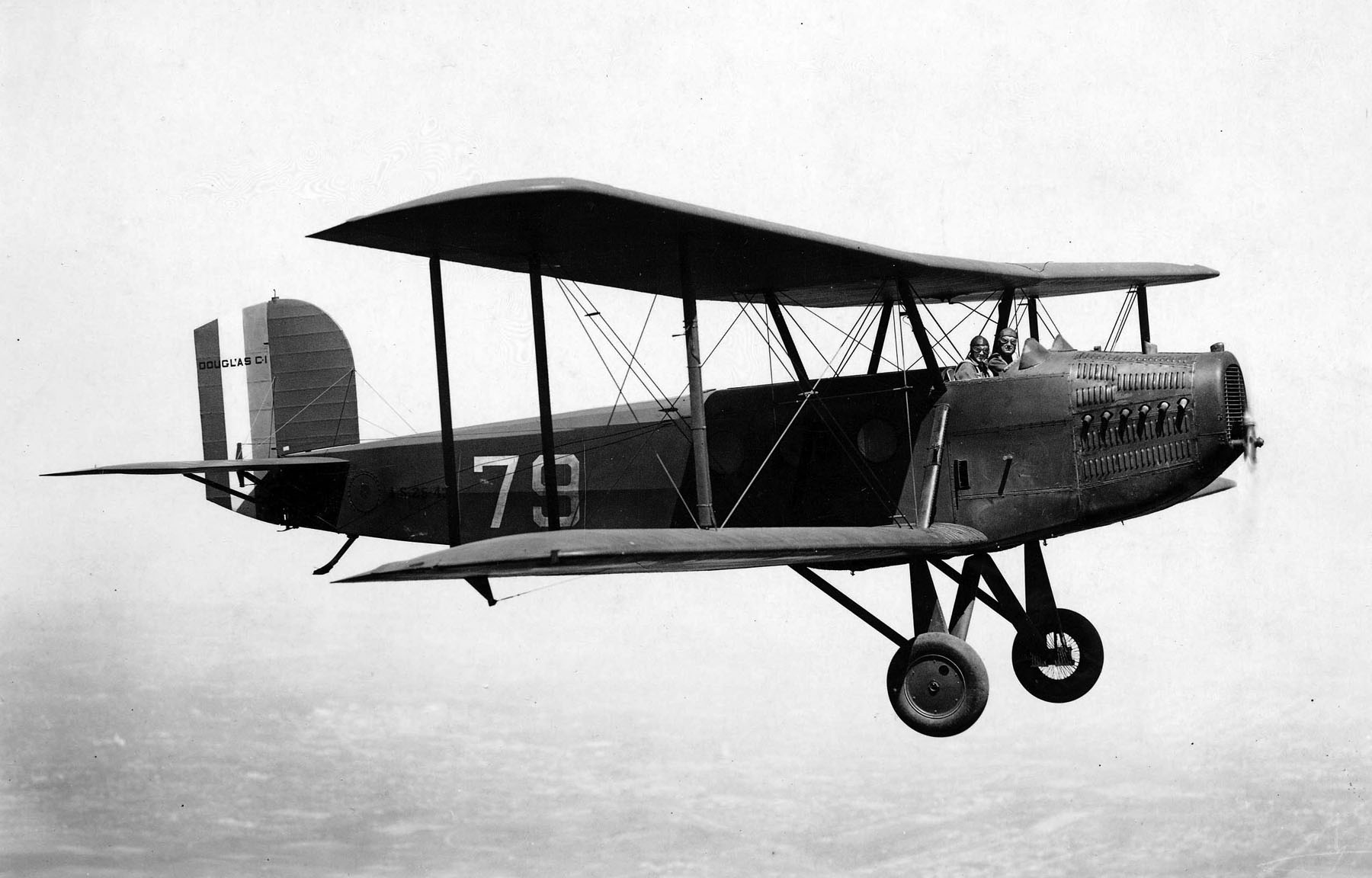
Officially, the first real aircraft specificially designed and designated for military supply transportation was the Douglas C-1/C, which was introduced/adopted by the US military (specifically, by the US Army Air Service) back in 1925. That biplane, with a cargo/human lift capacity of about 2500 pounds, was the first military aircraft to be officially recognized and used primarily as a military cargo/supply aircraft, and was the first to carry the "C" (for "Cargo") designation in its name.
The C-1/C was based on earlier Douglas designs - chiefly the Douglas/DT World Cruiser, which was an earlier Douglas torpedo bomber aircraft design that, when modified, also was the first aircraft to complete a circumnavigation of the globe in 1924. The US military adopted the C-1 (and the improved C-1/C variant which came along a year or so later) in the mid-1920s as a specific cargo and troop-carrying aircraft. Its single 425 HP Liberty L-12 engine and the rudimentary aerodynamics of the airframe reflected what was approaching the cutting-edge designs of the time, which from today's standpoint of course were not really that great, as aviation was still in its infancy at that time (though that understanding was rapidly advancing). Still though, the C1-C was the first of the early aircraft designs specifically built and adopted for military cargo/supply transport usage, with the US military purchasing 17 C-1/C's for cargo/troop transport usage in that time period. Prior to that, aircraft like the De Havilland DH-4 bomber were occassionally used as ad-hoc cargo planes, but it really was the Douglas C-1/C that was the first purpose-built cargo aircraft built for military use.
It was really in that period after the First World War that military cargo transport became recognized as being a viable method of moving supplies around quickly. C-1/C's were used in that post-WWI era to ferry supplies between military bases in peacetime operations (the C-1/C was actually specifically designed to carry a spare engine in its cargo hold, and the airframe was used in the late-1920s and early 1930s to, among other cargo, ferry engines around to different airbases at that time).
As for the evolution of aerial supply movement for military purposes, I would really recommend the book Airlift Tanker: History of U.S. Airlift and Tanker Forces, as it does a great job of covering the rather complex history of military cargo airlift and aerial refuelling tanker forces, from the first small biplane days in the early post-WWI era right up to the much more modern (and in many cases massive) aviation assets in the military inventory that exist and are relied upon today to fulfill that very important role.