http://time.com/4758285/clergy-consultation-abortion/
This was a really eye opening read for me.
I had no idea that members of the clergy were such a driving force behind providing abortions when they were illegal, as well as working to legalize it.
Was this a small but vocal minority? Or was this fairly in line with protestant values of the time?
I can't seem to find a lot of information to indicate that outlawing abortion was ever a religious issue back in the early 20'th century. It just seemed to be the prevailing social attitude of the time.
Is this still largely in keeping with main line protestant values? Are the abortion opponents the loud minority now? Or has the church done a 180? If the church has done a 180, why did that happen?
I realize that speaking about "the church" as one unitary body is flawed, but as I non-religious person I'm trying to understand this history better.
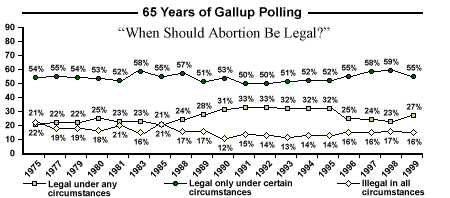
To really discuss the role of religion in legalizing abortion in the US, we need to clarify a couple of things—apologies if this first part of my answer covers material you already understand. As you noted, referring to Protestantism as a single church is a significant mischaracterization, especially when it comes to abortion. Several strains of Protestantism in the US could be considered largely “pro-choice” (used here to mean they hold a position somewhere between “allowable in any situation” and “it’s wrong, but anti-abortion legislation should be opposed”): American Baptists, Episcopals, the Evangelical Lutherans, Presbyterians, Unitarians, the United Church of Christ, and even the United Methodist Church to a certain extent. If you check out each of those links, you’ll find that for the most part, these aren’t exactly new beliefs for these denominations. Explicitly pro-choice Protestant churches (and this is hardly an exhaustive list) make up about half of the Protestant population in the US, and that's not even considering pro-choice Christians in less explicit (or even anti-choice) churches. It’s also important to note that historically, American opinions on abortion have been fairly stable for the last 40-50 years; there have been some fluctuations, but only about a quarter of Americans have ever believed that abortion ought to be illegal in all circumstances.
With all that said, the article makes a good point that despite popular opinion, to be religious is not necessarily to absolutely oppose abortion. Certainly, the most ardent opponents of accessible abortions consider themselves very religious; of course, that doesn’t necessitate proponents be areligious. Now that I’ve nearly put my neck across this sub’s “20-year-rule” line to give some context, let’s look at the actual history stuff.
Long before Roe v. Wade, Christianity has had some very complex and nuanced struggles with the issue of abortion. It has widely been held as sinful to abort a fetus, but theologians have debated for centuries about whether it should be considered as severe as murder. As /u/sunagainstgold’s answer references, there was also significant questions about ensoulment and whether a fetus has a soul at conception. On top of the theological side of the issue, there is also a big practicality piece: is there an effective enough argument against abortion to convince women to live with the consequences of not seeking an abortion? It’s one thing to wax poetic on the esoteric questions of life itself; it’s another to deal with the reality of being a woman who is pregnant with an unwanted fetus.
In the early 19th century, Americans generally didn’t really have a problem with abortions provided that they took place before the “quickening”. Connecticut became the first state to pass an anti-abortion statute in 1821 and it was largely directed at the apothecaries/physicians selling abortifacient poisons to women and treated women as the “victims of their own moral weaknesses who needed state protection, rather than felons” (Alford, 2003). As you alluded in your post, compared to the arguments about abortion we normally hear today, there is a glaring absence of religious language and justification for the anti-abortion arguments of the day. The reasoning behind anti-abortion legislation passed in the US in the mid- and late-19th century is extremely interesting but quite a departure from the main point of your question (not to mention a bit out of my expertise), so suffice it to say that it is largely secular rather than religious (in part, it has to do with physicians at the time struggling to justify their elite status while also attempting to codify their profession—James Mohr’s book really dives headfirst into this topic). By 1900, abortion was de facto illegal in every state if not de jure. These laws basically stayed in place until the 1970s.
There is a popular narrative about how the “religious right” in America got started in the 1970s entirely due to manufactured fury over the Roe v. Wade SCOTUS case. While that isn’t exactly implausible, I find a more convincing argument that the real kickstart to the movement was the issue of segregation—but I digress. Whichever way you want to look at it, though, the anti-abortion religious groups (largely a union between Evangelicals and Catholics) did not (and do not today) represent the majority opinion of religious Americans. It is unfortunate—but not surprising—that you might be confused to hear about American religious leaders vocally supporting access to abortion, but that may also be partly due to the nuanced nature of opinions on abortion. Most of these religious groups throw the line about being against “using abortion as birth control” in their official statements on the topic, apparently as a kind of buffer; they will also often emphasize how the decision to get an abortion is a personal one in which individuals ought to seek ministry with their clergy. That kind of detailed opinion mixed in with the private nature of abortion makes it difficult for pro-choice religious groups to advertise their positions in the way that anti-abortion groups can.
To attempt to make sure I’ve hit on everything you asked directly, let me go down the list here:
Was this a small but vocal minority? Or was this fairly in line with protestant values of the time?
The members of the CCS may have been in the minority insofar as their level of activism but their views on the accessibility and legality of abortion would have been in line with their respective churches.
I can't seem to find a lot of information to indicate that outlawing abortion was ever a religious issue back in the early 20'th century. It just seemed to be the prevailing social attitude of the time.
Yes, I would agree with your assessment that it was not so much a religious concern to pass the legislation outlawing abortion in the late 19th century. It’s worth mentioning that much of that anti-abortion legislation was passed under omnibus statues in which they could be buried—people weren’t exactly rallying around bills as much as they were sneaking them into bigger sets of bills and hoping nobody would read it before it passed.
Is this still largely in keeping with main line protestant values? Are the abortion opponents the loud minority now? Or has the church done a 180? If the church has done a 180, why did that happen?
As far as “mainline” Protestantism goes, being pro-choice is quite common (even if it is just the opinion that the government shouldn't legislate against abortion). The anti-choice Evangelical community overlaps in some interesting ways but in this context, I think it’s safe to distinguish the two. I wouldn’t want to push my luck with this sub’s 20-year rule any more than I already have by speculating too much on the current state of affairs, though.
I hope I've answered your questions adequately! I am happy to try to field any follow-ups as well.
Sources/Further Reading:
Alford, Suzanne M. 2003. “Is Self-Abortion a Fundamental Right?” Duke Law Journal 52 (5): 1011–29.
Balmer, Randall. 2014. “The Real Origins of the Religious Right.” Politico, May 27.
Dirks, Doris A., Relf, Patricia A. 2017. To Offer Compassion. University of Wisconsin Press.
McGrath, Alister E. 2004. The Blackwell Companion to Protestantism. Blackwell Publishing, Ltd.
Mohr, James C. 1979. Abortion in America. Oxford University Press.
You might be interested in this earlier answer of mine:
that discusses how and why the virulent conservative-Protestant opposition to abortion seems to come out of nowhere in the 1970s. It has surprisingly (or not?) little to do with abortion itself.