Were there cities like tenochtitlan in the midwest, and if not, why?
To begin with, you might want to take a look at this section of FAQ, and in particular this post by user /u/Reedstilt.
To this I would like to add two points. First, that what we consider urbanism needs to be reevaluated to a degree for societies north of Mexico. Second, that we should ask "why would they" and not "why not"?
To the first point, I would argue that there are many large population centers north of Mesoamerica that are very interesting and noteworthy despite not looking exactly like a Mesoamerican, Andean, or Old World city.
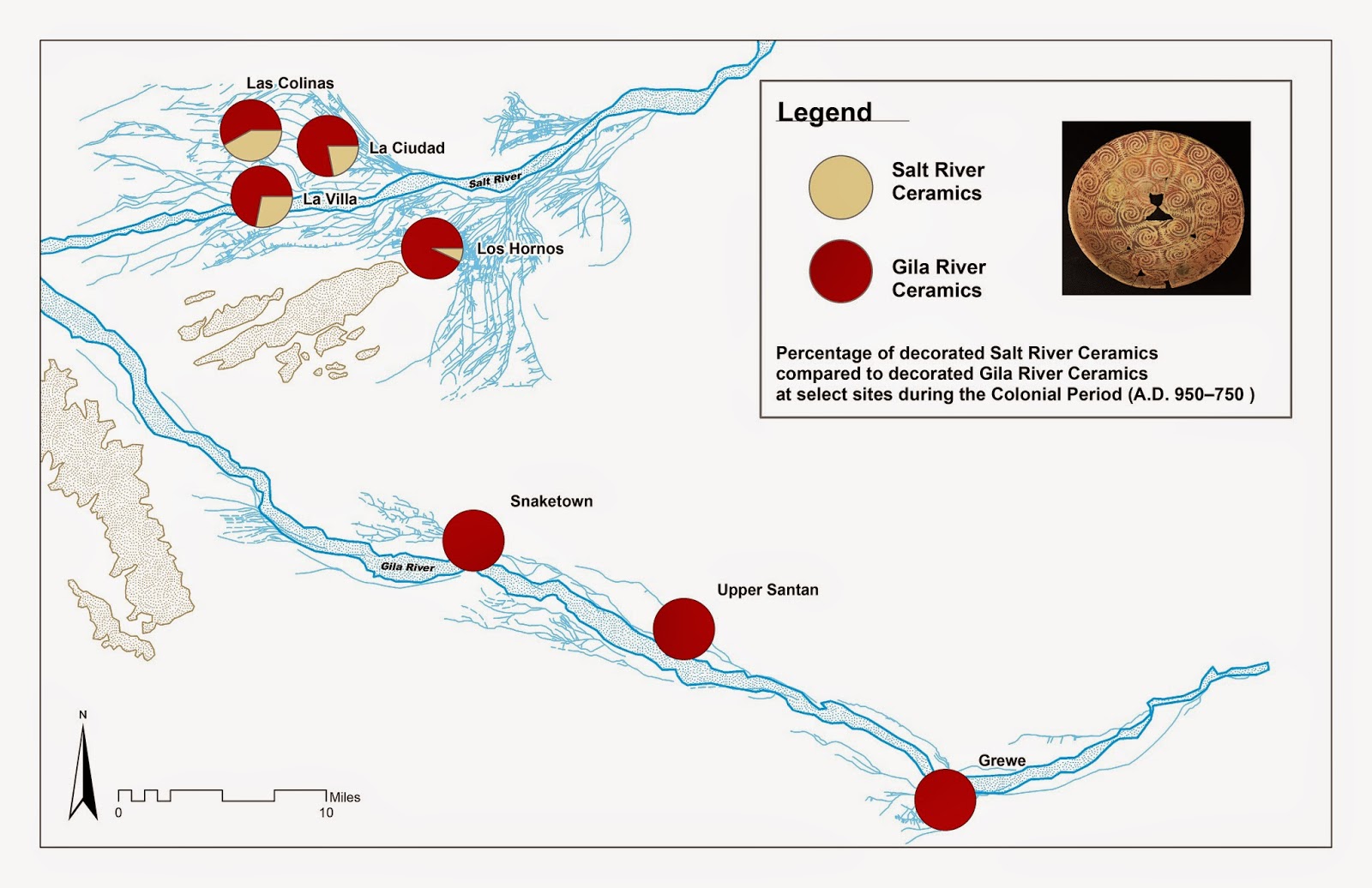
My favorite example would be the Phoenix Basin in Arizona (home to modern-day Phoenix). Between about A.D.500-1450 the Phoenix Basin was one of the most highly populated regions on the continent north of Mesoamerica. Estimates put the population of the Phoenix Basin around 20,000 people in A.D.1300. This population was fed by the most extensive system of irrigation canals north of Mesoamerica (and that map doesn't even cover all of them). The population would have been scattered across the basin in separate villages, but the sheer density of people meant these villages were in relatively close proximity to each other. The necessity of using the canals for farming also meant the population was relatively concentrated around these canal structures.
In addition, the entire basin was relatively well integrated across villages. The economy in particular was highly integrated at the regional scale, with only a few villages specializing in the production of the majority of the pottery used by the rest of the population in the basin. Similarly, many archaeologists hypothesize there must have been significant intra-village cooperation along canal systems in order to maintain the massive irrigation canals. While a single village might only use a small portion of the massive canal systems, the labor and coordination necessary to keep the system working would have exceeded what any one village could provide.
All this is to say that while there isn't a city in the Phoenix Basin in the traditional sense, the area was far from "rural" either. While cities in the traditional sense are largely unheard of north of Mesoamerica that doesn't mean there weren't significant population centers (and this isn't taking into account the many significant villages and pseudo-cities of the Eastern Woodlands, or the many tightly aggregated village clusters of the Pueblo world in the American Southwest).
To the second point, there isn't any particular reason we should assume cities and urbanism as an eventuality of all societies. Very minimally, urbanism requires surplus food production (typically through agriculture). This condition is met by agricultural societies in both the American Southwest and the Eastern Woodlands. The potential is certainly there for urbanism, however there are a lot undesirable correlates of urbanism (and state societies in general) that a society could conceivably reject or that might not work effectively in all cases, leading to a failure or rejection of urbanism and state societies.
In particular, cities and states are highly correlated with increased social hierarchy (e.g. kings and queens and general elites). This is true in the U.S. as well. In both the Hohokam region (including the heartland of the Hohokam area, the above mentioned Phoenix basin) and in the Eastern Woodlands, increasing populations and aggregation into not-quite-cities correlates with archaeological evidence for increased hierarchy. In both cases (though I can't really speak to the case of the Eastern Woodlands) there seems to have been a conscious rejection of this increasing hierarchy in favor of more (though not completely) egalitarian systems.
The failure of these increasingly complex and hierarchical social systems to manage both environmental and social stresses and disasters may have also contributed to a rejection of incipient urbanism and statehood by these societies. The question is not then why don't we have cities and states north of Mesoamerica, but why would cities and states exist anywhere? Humans are decidedly non-urban, with the vast majority of our history being lived both outside cities and outside state societies. In fact, the majority of the world's population only became urban in the last few years (in 2008, give or take). Basically, cities are the exception and not the rule and just because the potential exists doesn't mean it has to happen.