France colonized a large area in North America known as the "New France." The Midwest, Louisiana, and Quebec were all once parts of New France. Montreal, being the capital of New France, and the rest of Quebec seem to still be affected heavily today, exemplified by the large French-speaking population in Quebec. But why does there appear to be so little French significance in the American Midwest except for names of places? Illinois, Des Moines, Detroit obviously are names that came from French. Other than that, do you think there is any more evidence that shows the existence of New France in the Midwest?
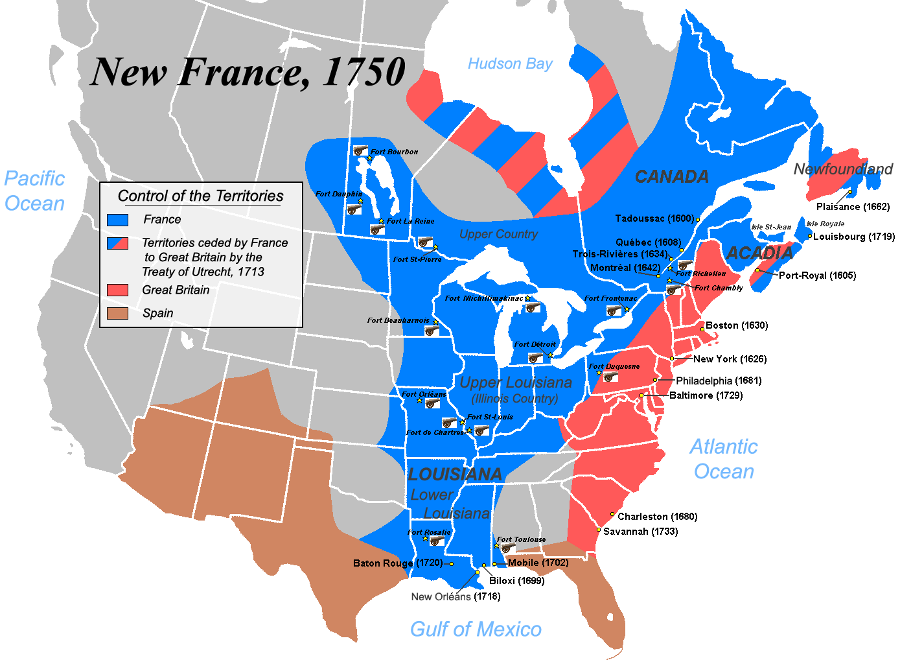
France didn't establish many major trading posts or cities in the Midwest, so cultural influences didn't stay strongly tied to the land. Look at this map:
http://www.virginiaplaces.org/settleland/graphics/newfrance1750.png
There aren't any significant French settlements in the Midwest, but in the Louisiana area we see New Orleans, Baton Rouge, and Mobile, and in the Quebec area we see Quebec City and Montreal. These population centers that were not only a place to expand French influence but also a place for French people to live (especially Huguenots) have maintained some amount of French influence and culture to this day. However, when forts were taken in the Midwest, the garrison was just replaced. That typically is not what happens when a city or town is taken; rather, the population becomes subjects or citizens of the new governing entity.
Also, I wouldn't say that place names are an insignificant influence. Those are some of the longest surviving testaments to a past culture or history, and I think they are wonderful in the way that they turn our attention to the history of the area.
Bonus fun fact: Grand Tetons means "big boobs," so that's a fun influence that remains to this day.
From the time before the formal existence of Quebec into the modern day there has been friction with the English speaking parts of Canada. This friction has lead to a fierce attempt to preserve french heritage. More so than in other french speaking regions of N.America. Some examples of this include:
The Quebec Act:
The British Parliament passed the Quebec Act which preserved French civil law for private law while keeping and reserving English common law for public law including criminal prosecution. This was certainly a compromise. This would give rise to the Civil Code of Lower Canada in 1866 and later the Civil Code of Quebec in 1994. As a comparison the rest of Canada uses British Common Law as a basis for their justice systems.
Bill 101:
The Charter of the French Language is a 1977 law that states that French is the official language of the province. However it also created a defacto language police that even today fines people and companies that do not comply with some of the Charter's finer print.
Votes for independence:
Since confederation there have been votes for independence in 1980 and 1995. Obviously neither vote was successful but the 1995 vote was a very close vote at 50.58% opposed to independence.