With the exception of anthems and hymns which are explicitly religious or political in nature, and ethnic music that is associated with certain cultures music seems to have been pretty neutral throughout history. But nowadays genres like hip hop, rock, New Age and country have cultural values attached to them and are associated with subcultures (punk, hippie, rap, rave, country, emo, metal etc).
How did genres and even styles of music become such a powerful means of defining identity and symbolizing countercultural movements?
Exactly what counts as 'subculture' or 'countercultural movements' is a bit of a difficult question to answer, but the literature on 'subcultures' (which begins in 1950s criminology's concern with juvenile delinquents' criminal behaviour and becomes more of a sociological term in the 1970s with works like Hebdige's 1979 Subculture) implicitly discusses subcultures as being about (usually white, masculine) youth culture specifically. As such, there's a relationship between the idea of the subculture, and the post-World War II promotion of the social construct of the 'teenager' as a demographic with specific desires, in the wake of the Anglosphere baby boom.
As such the 1950s seems to be ground zero for the first musical genres that are very clearly like the modern idea of the subcultures: there's the beats or beatniks, influenced by the writing of Jack Kerouac, Allen Ginsberg, and William Burroughs, for whom bebop jazz was an important part of their identity, and which reflected their subculture's worldview. See Kerouac's tribute to Charlie Parker:
This was what Charlie Parker said when he played: all is well. You had the feeling of early-in-the-morning like a hemit's joy or like the perfect cry of some wild gang at a jam session Wail! Whap! Charlie burst his lungs to reach the speed of what the speedsters wanted and what they wanted was his eternal slowdown. A great musician and a great creador of forms that ultimately find expression in mores and what-have-you.
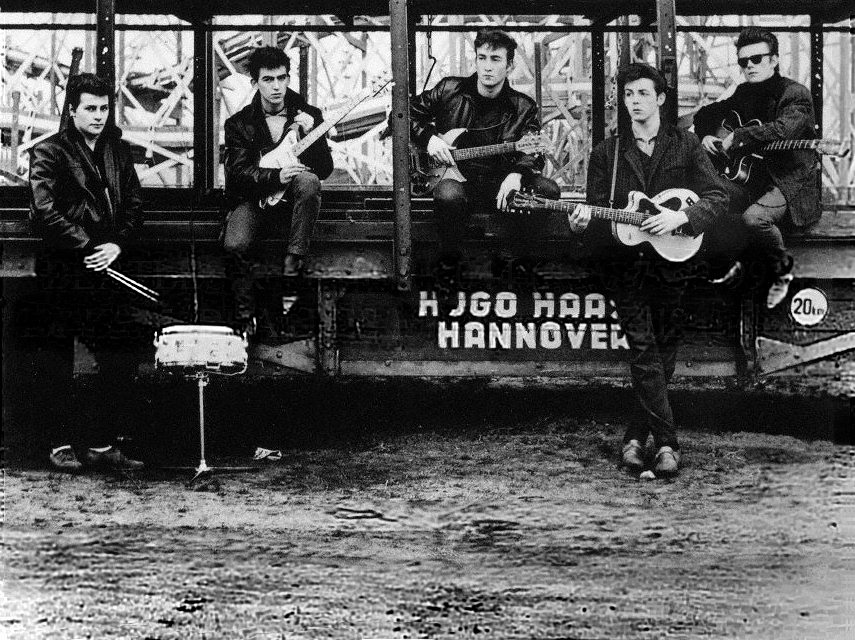
Similarly, rock and roll was associated with subcultures in the 1950s; in the UK there was a famous divide between teddy boys (who wore second-hand Edwardian suits) and rockers (who greased back their hair and generally tried to imitate James Dean - the famous photos of the Beatles in Hamburg see them very clearly dressed as rockers). Both groups were generally associated with rock and roll, though the teds took a little longer to get into rock and roll.
However, countercultural movements, which aren't necessarily associated with youth culture, go back considerably further in time. Electric Eden by Rob Young is about how English pastoralism is expressed in music form. Pastoralism in Young's eyes is that longing to escape industrial megacity drudgery and return to a purer, more rural farming life (for an obvious example of pastoralism compare the contrast between the beauty of The Shire and the horrors of Isengard in Lord Of The Rings). Electric Eden draws links from the classical music of Vaughn Williams of the 1910s to the late 1960s/early 1970s British folk rock of Fairport Convention and Steeleye Span, and clearly portrays Vaughn Williams as countercultural in his pastoralism.
In fact, it might depend on your definition of counterculture, but if Romanticism was a counterculture - and it was certainly a social movement with cultural values attached to it that was clearly a reaction to the Industrial Revolution, which prioritised intuition over the rationalism associated with the period - well, Romanticism dates from the late 18th century (and which is associated with some mildly famous composers like, you know, Beethoven and Chopin).
Sources: