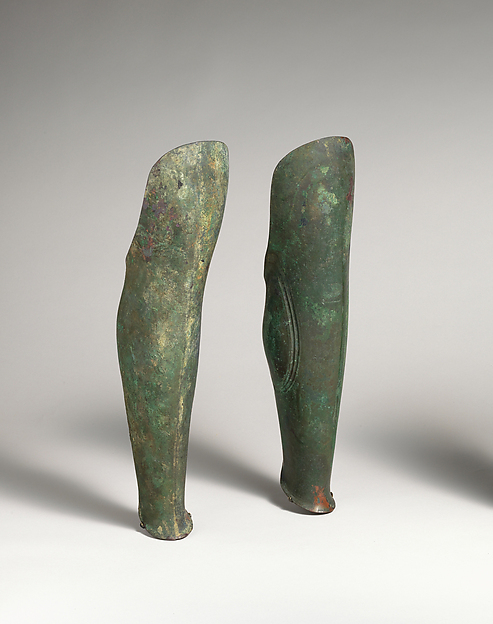
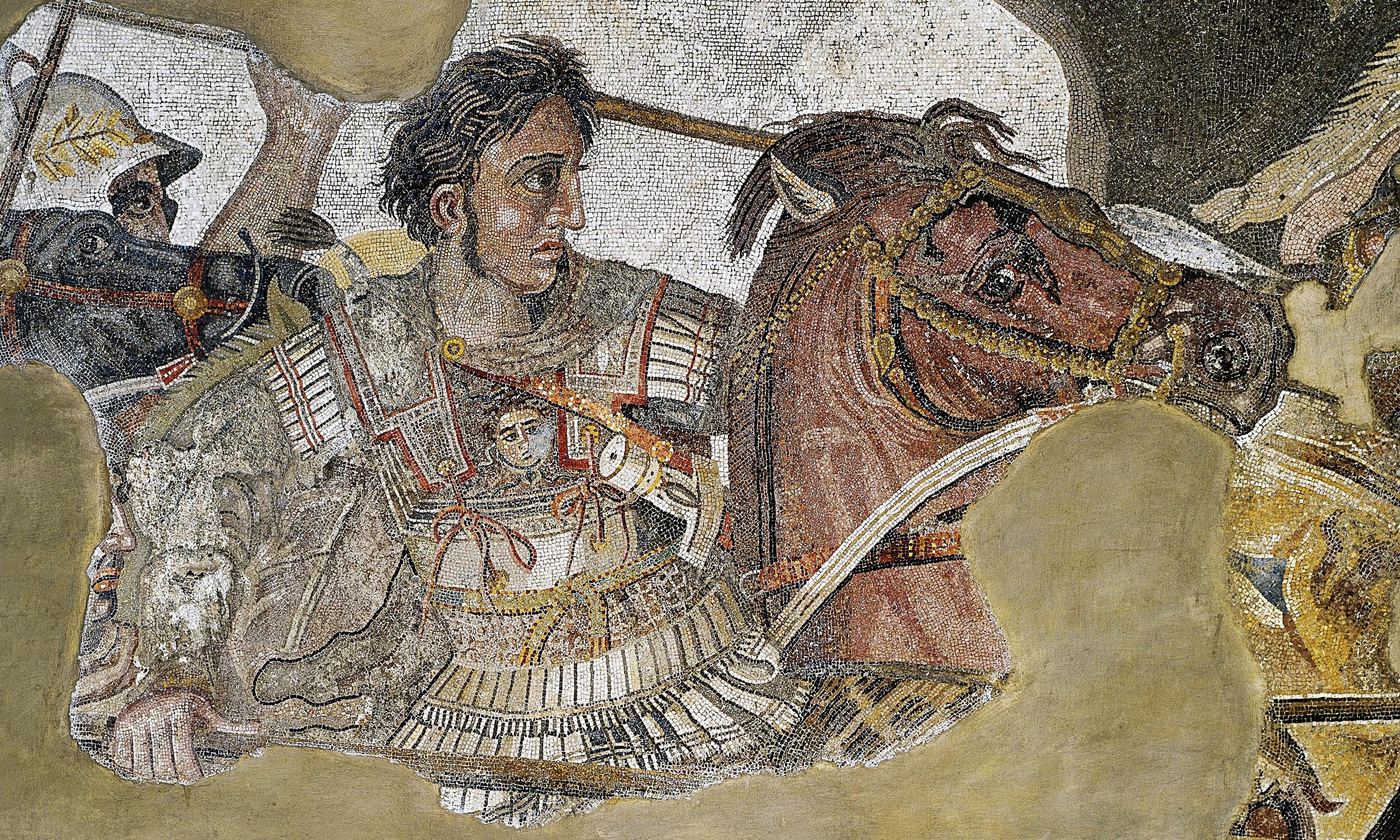
If your funds are pretty much unlimited, it all depends on what you want to buy for them! Depending on where your mercenaries are coming from, they might prefer to use different equipment, and a good paymaster would take this into consideration:
As for the armour, [Dionysios of Syracuse] distributed among them models of each kind, because he had gathered his mercenaries from many peoples; for he was eager to have every one of his soldiers armed with the weapons of his people, conceiving that by such armour his army would, for this very reason, cause great consternation, and that in battle all of his soldiers would fight to best effect in armour to which they were accustomed.
--Diodoros 14.41.4-5
In addition, you might want to worry about what sort of troops you need for the mission you have in mind. If you're really looking to invest, and you're planning on a land campaign, equipping your men as cavalry and furnishing them with horses would yield by far the most powerful force. Only the richest men would be able to support such a unit:
[Agesilaos of Sparta] therefore enrolled the wealthiest men in all the cities thereabouts as breeders of horses, and issued a proclamation that anyone who supplied a horse and arms and an efficient man should be exempt from personal service. In this way he brought it about that every one of them carried out these requirements with the zeal of a man in quest of someone to die in his stead. (...) He made the whole city in which he was quartered a sight to see. For the market was full of arms and horses of all sorts on sale, and the coppersmiths, carpenters, workers in iron, cobblers, and painters were all busy making weapons of war, so that you might have thought that the city was really a war factory.
-- Xenophon, Agesilaos 1.23-26
For cavalry, the horses are by far the most expensive item. However, horsemen also tend to fight in full armour, since they carry no shields. Open-faced helmets (the Boiotian helmet is particularly popular with cavalry), cuirasses and greaves are essential - all usually made of bronze. Iron helmets and cuirasses are known, but less favoured, because they are not smooth steel and don't shine quite as fiercely and intimidatingly as bronze. A man of your resources would be able to get each man a personally fitted muscle cuirass:
We say, then, that in the first place his breastplate must be made to fit his body. For the well-fitting breastplate is supported by the whole body, whereas one that is too loose is supported by the shoulders only, and one that is too tight is rather an encumbrance than a defence.
-- Xenophon, On Horsemanship 12.1
With the addition of fine cornel wood javelins, iron slashing swords, and armour for the horses themselves (a face plate and poitrail of bronze or iron would do nicely), you will soon have put together the finest cavalry money can buy.
On the other hand, if you're planning to mount a naval campaign or seize a city, your best troops are likely to be heavy infantry. In thise case it's worth bearing in mind what fighting style your troops are accustomed to. The peoples of the Western Mediterranean, from Celtiberians to Latins, broadly share a fighting style that involves long, oblong, single-grip shields like the scutum, iron-shafted javelins, and swords. The shield is often fitted with an iron boss and rim. Armour in this period still tends to consist of bronze plating, often made up of separate plates held together with hinges. Helmets are large bronze bowls, unless they are inspired by Greek examples; the Etruscans and Romans in particular seem to have had a fondness for faux-Corinthian helmets with ornamental eyeholes. The most lavish examples of course come fitted with one or mutiple crests and feathers, so as to make your men look as intimidating as possible.
If your mercenaries are not from Celtic or Italic lands, but from the Greek world (as heavy infantry mercenaries often are), you will be able to spend big on the finest hoplite equipment. It will be worthwhile to buy uniform clothing and equipment, so as to make your men appear like a single mass. Their psychological impact will be much greater for it:
Kyros inspected the barbarians first, and they marched past with their cavalry formed in troops and their infantry in lochoi; then he inspected the Greeks, driving past them in a chariot, the Kilikian queen in a carriage. And the Greeks all had helmets of bronze, red tunics, and greaves, and carried their shields uncovered.
When he had driven past them all, he halted his chariot in front of the centre of the phalanx, and sending his interpreter Pigres to the generals of the Greeks, gave orders that the troops should advance arms and the phalanx move forward in a body. The generals transmitted these orders to the soldiers, and when the trumpet sounded, they advanced arms and charged. And then, as they went on faster and faster, at length with a shout the troops broke into a run of their own accord, in the direction of the camp.
As for the barbarians, they were terribly frightened; the Kilikian queen took to flight in her carriage, and the people in the market left their wares behind and took to their heels; while the Greeks with a roar of laughter came up to their camp.
-- Xenophon, Anabasis 1.2.16-18
The colour of the tunics will of course be red, and their shields - though made of wood - will be coated in bronze:
In the equipment that [Lykourgos of Sparta] devised for the troops in battle he included a red cloak, because he believed this garment to have least resemblance to women's clothing and to be most suitable for war, and a bronze shield, because it is very soon polished and tarnishes very slowly.
-- Xenophon, Constitution of the Spartans 11.3
The helmets you'll be buying for these men will be quite simple, usually of the pilos type; by this time, the Corinthian helmet has gone completely out of style. Their greaves will be of bronze, soft, so they can be clipped directly around the leg - in the same fashion the Greeks have used for centuries. For their cuirasses, you could splurge on fitted bronze breastplates like you'd get for the cavalry. However, you could also opt for high-quality linen cuirasses, which are said to be just as protective as bronze, and lighter and easier to wear in hot weather. Linen of a fine weave, quilted, stitched or glued together (the method is controversial), makes armour fit for a king. Add to these iron-tipped ashen spears and short swords, and your phalanx will surely send any opponent running without even striking a blow.