Also: with all the fancy spinning they do in movies - does spinning a staff in a circle parallel to you actually do anything? it feels really easy to stop
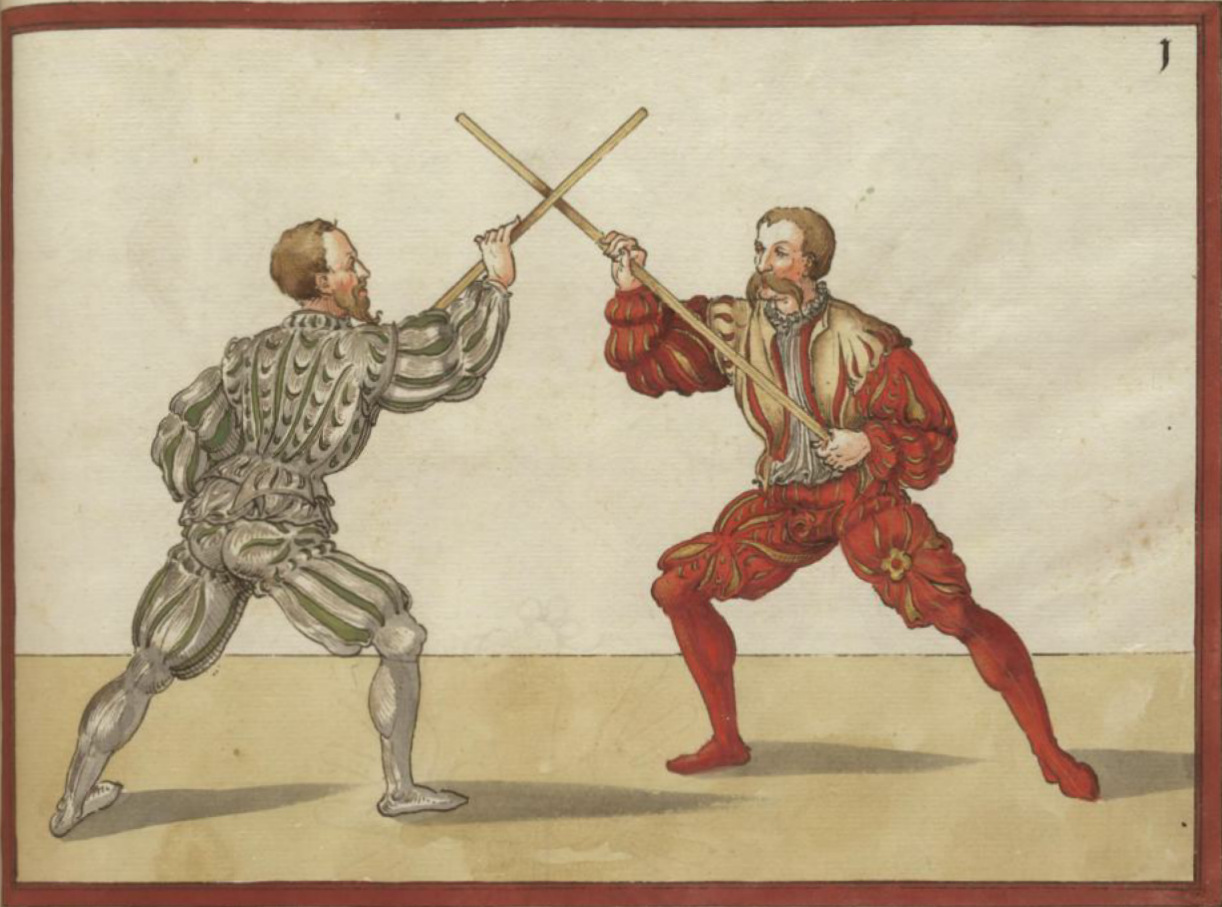
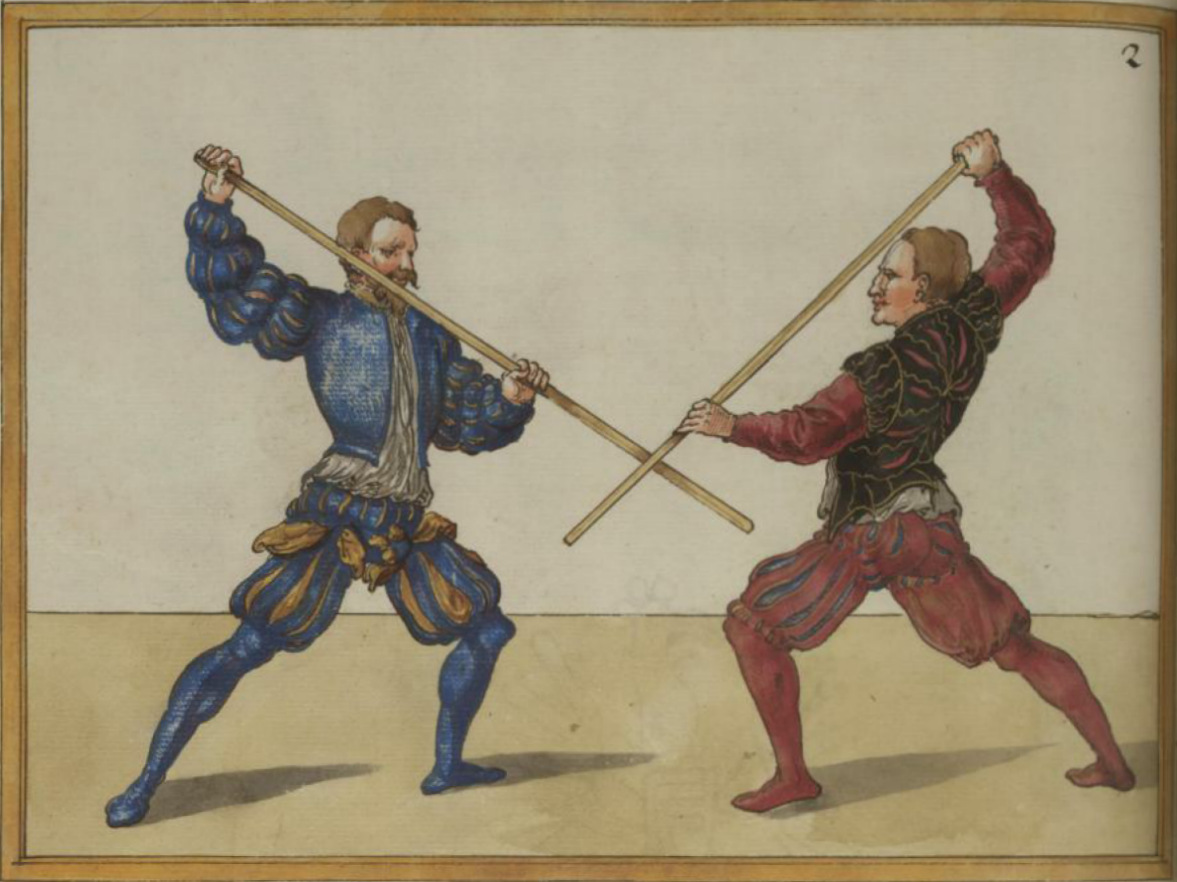
First, it's important to note that almost all stave combat shown in films is completely fictional. Though there are a handful of techniques that use a more-or-less middle grip, it is usually in a specific circumstance (such as in the middle of a throw), and in general, the staff would be gripped with one hand on the end, and the other about halfway down, with the far end sticking out almost like a spear. See Paulus Hector Mair's "short staff" and Joachim Meyer's polearm treatise plates for example.
The reason behind this is practicality - the staff is a weapon which gives its user extensive range, and even a blunt thrust delivered with force to the face is going to do a great deal of damage. In this stance it is also easy to ward away incoming thrusts while preserving the threatening potential of that face-crunching thrust of your own, while keeping your hands far enough back to preclude any easy attempts to smack them.
Holding the staff that way also allows its wielder to use progressive threats as one or both combatants closed range. The end threatened a thrust or a powerful concussive swing, the midpoint was useful for clinches and grapples, and the butt end could be swung forward to threaten impact, thrusts, or grapples. Both Mair and Meyer describe techniques that utilize all three ranges.
For example, Mair, 1542:
If he stabs to your face like this and you stand with your left foot forward, set aside his stab and step inside with your right foot and at the same time thrust your foremost point to his face. If he sets this aside, then change through immediately and thrust to his left side. If he sets this aside, then follow after with your left foot and at the same time wind nimbly double with your foremost point and rearmost point to his face. Relevant Image.
From Meyer, 1570:
Or after you have fallen into the Right Lower Guard after this blow, and he has thrust at the opening offered, then tear out his flying staff upward with the half edge toward your left shoulder; at the same time drive your staff above around your head, and strike him outside over his left arm from your right; you should also drive this blow around with both hands; herein beware that he (while you thus drive your blow around) will thrust to the face; as soon as he does so, move the butt of your staff around lower before your face, and let the blow fly the faster. If he parries your blow with hanging staff, then mark the moment your staff lands on his or misses, then at once turn the butt end upward, and thrust above or below his staff to the body.
Meyer mentions defending with the butt end of the staff quite frequently, and he uses it to offset incoming attacks to clear the way for sweeping strikes with the business end, and both describe using binding on the opponent's staff as a means of sensing or feeling the intention of an attack in order to properly respond to it. Neither mentions twirling the staff around in front of you, as a well-placed thrust would either go right through it and hit before the staff could bear it away, or would just use the impetus imparted by the hard parry to swing the staff around for a more powerful strike to the opposite side. Holding the staff in that way would also make the hands an easy target without offering a meaningful threat.
Of course, it should not be assumed that the staff was in any way a "better" weapon than a spear, bladed polearm, or sword. It was very useful in self-defense against unarmored opponents, but it had no edge, lacked a concentration of mass which would allow it to penetrate armor (or concentrate concussive force on a smaller area), lacked any kind of hand protection whatsoever, and, unless made of exceptionally well-sourced wood, could break rather easily.
While I'm not convinced that any old peasant farmer was a match for an experienced sword-bearing knight - the various failed peasant uprisings of the late medieval and early modern period could attest to that as well, but a specific discussion of those conflicts may have to wait for another commenter - the staff itself was a very useful and undoubtedly effective weapon in the right hands. But like all weapons, it had strengths and weaknesses, and was ultimately only as effective as circumstances and its wielder would allow.
All descriptions and images can be found on the Wiktenauer, an open-source compilation of medieval and early modern fechtbucher.
More details on other masters traditions and staff work can be found on the staff weapons page itself.
What is TWoT?