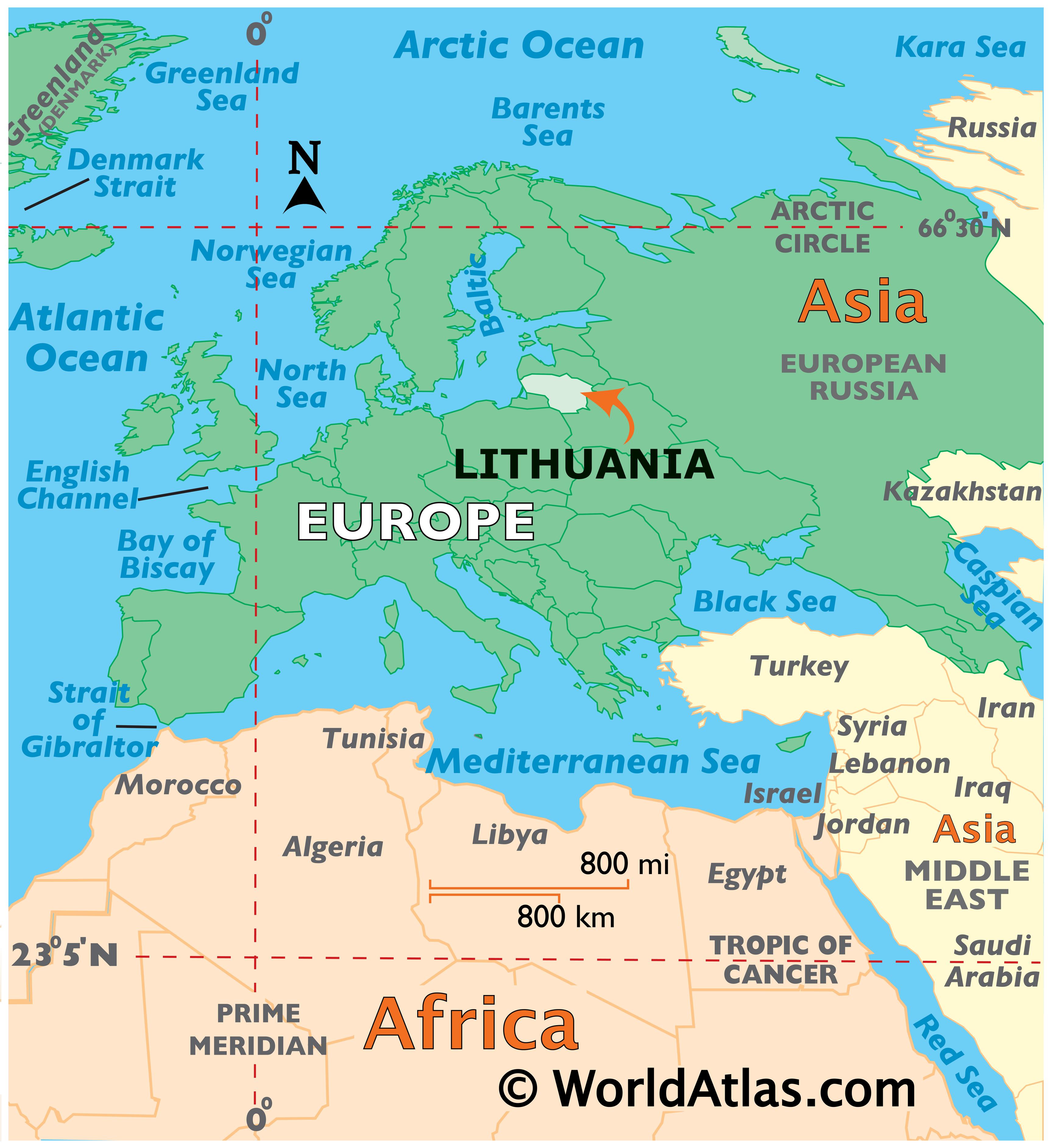
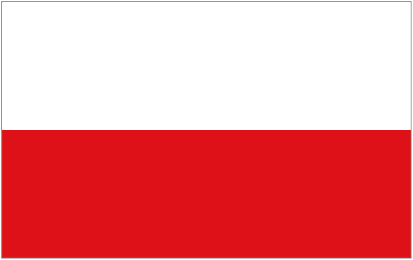
Lithuania is a country in Europe, bordered by Latvia, Poland, Belarus, and a Russian exclave. However their symbols are very different to what their location would suggest. At least to me.
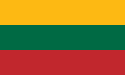
This is their flag. Compared to some of their neighbors (Poland, Latvia), and some in the more further region (Ukraine, Estonia, Slovakia), it's not really similar to any of those, and I think the comparison extends to the whole of Europe. However, it's remarkably similar to the flags of some African countries, like Ethiopia, Ghana, or Guinea. I know that flags are usually similar amongst neighbors countries, so it's particularly weird that a country in Europe would have a flag unlike their neighbors and like countries in other continent.
Also, I don't know if it's just me, but the name Lithuania sounds a bit like an African country. It's certainly not on the same vain as Poland, Latvia, Ukraine, etc. It's more reminiscent of Ethiopia, Guinea, Kenya, etc. Again this could be just me trying to link Lithuania to Africa that much more.
So this connection to Africa is weird, and much more so when you realize the majority of the population of Lithuania is white. I read on an unrelated thread once that some Lithuanians don't ever even see a black person until they're toddlers or they appear on TV. So, is there any historical link between this country and some place in Africa that I'm unaware of? Is there more to this, other than just being random coincidences? I'd love to know.
Also, hopefully no one is offended by this post. I'm genuinely curious about this subject and the intention of the question is a good one. Feel free to correct me if something is wrong.
First, I will provide some background history of flags so you can understand the Lithuanian flag. Lithuania uses a very standard French Tricolor. The French Tricolor design is by far the most popular in modern flags for both its simplicity and symbolism. Going back to the French, with the blue, red, and white design it not only captures the viewers attention with its lack of clutter it helps the viewer understand the flag. The three colors are a staple through french history, with white being France's royal color and blue and red the colors of paris.
To understand the similarities between the flags you have to understand the history of the country. Lithuania, similar to poland, has been under occupation of one form or another sense the seventeenth century. It is a country that has struggled for its independence from its various overlords for most of its history, with it only achieving full independence with the fall of the Soviet union. The flag its self was first adopted in 1918 during the fall of the Russian Empire and Lithuania become independent. With the establishment of a new republic Lithuania followed the trend of adopting a Tricolor design for their flag with yellow symblozing prosperity, green for nature, and red for the blood of the fallen. Also, as most other Tricolor designs the colors used are also often used in folk imagery such as weaving.
For African flags it is a similar story to Lithuania. An independent republic in the twentith century adopting the modern tricolor design. Not much is to be said beside a very standard tricolor flag design in modern republics.
It is simply a coincidence. The flags of Ghana, Guinea, and many other African countries repeatedly use the colors Red, Green, Yellow and Black because those are the pan-african colors, and Pan-Africanism was a vigorous intellectual movement through the 1960s while many African countries gained their independence.
The Pan-African colors are in turn influenced by the flag of Ethiopia.
according to the World Atlas the colors yellow, green and red evoke wheat fields, forests and patriotism, respectively. However, the flags of the world online flag enthusiast forum offers conflicting testimony, saying that the colors were chosen in 1918 to reflect different types of peasant dress. In any case, neither origin has anything to do with Africa.
Coincidences in flag design aren't unusual, given that flag designs are pretty standardized and use a limited color palette. Monaco and Indonesia have identical flags. Romania and Chad have nearly identical flags. Until 1936, Haiti and Luxembourg had identical flags. These things happen.
/u/Unipurpose gave a correct meaning of Lithuanian flag colors, I have no idea how he relates flag of Lithuania with French Tricolor, because there is no relation whatsoever- nor in composition, nor in design, nor in inspiration.
The first flag of Lithuania was Gules, knight courant argent (White knight charging in red field. The name -Vytis translates as "Pursuer"). Serving as the symbol of the ruling house from the second half of the 14th century at least (many of earliest depictions of Vytis are personaliest to signify specific member of Gediminid family), Vytis was used as national emblem from the early 15th century (in the battle of Grunwald (1410) GLD brought 40 regiments, 10 of them had Column of Gediminas banner, signifying Grand Duke's personal force and other 30 regiments marched with Vytis banner). In the Polish-Lithuanian commonwealth, Vytis most often was depicted in combination with the Polish Eagle. Official version was quartered, with fifth field in center showing kings arms, but other versions existed too.
In the 18th and 19th centuries new version appears: blue-red field with Vytis in center. However I only see few of such, hence i can't comment much on it.
Lithuanian national movement did not aimed to restore Grand Duchy of Lithuania. At first movement was purely cultural and did not had political aims at all,and then national movement began to rise as political force, it's aim was nation-state for ethnic Lithuanians (even if historical arguments were often employed). The first time Lithuanians raised political demands was during the First Revolution in the Great Seimas of Vilnius (December of 1905). While flag issue did not get in to final documents, the issue was debated. J. Basanavičius, leading figure of national movement, proposed to use historical flag- that is Vytis in red field. Proposition was opposed citing that it is to similar to the socialist red banner. Nothing else was decided then on the matter and with the end of the first Russian Revolution it become irrelevant.
Putting Vytis aside history of Lithuanian flag can broken down in 3 parts:
Lithuania Minor Eastern Prussia had a considerable Lithuanian population who used green-white-red design (according popular 19th century pseudohistorian T. Narbut it was ancient colors of- respectively- Samogitians, Old prussians and Lithuanians) first adopted by Lithuanian students corporation "Lituania" in 1829. It was dominant design during WWI, used by Lithuanian refugees in Russia and by Lithuanian military units (Lithuanians succeeded-fallowing Latvian and Ukrainian examples- to establish few military units within Russian army).
USA Lithuanian emigree communities had a much wider possibilities for cultural activities than Lithuanians in Lithuania, but no unifying center, leaving every community to run free with it's own designs, hence-starting from late 19th century- we have entire galore of flags. Earliest and most popular designs was blue-white or white-blue, however others soon fallowed: red-yellow-blue (Brooklyn Lithuanian Fellowship, 1900), red-white-blue ( Fellowship of St. Mathew the Apostle in Chicago, 1905) and white-red-blue (King Jagiello Lithuanian-Polish Fellowship in Chicago), red-green-blue (Lithuanian Fellowship of Copernicus name, Baltimore) and so on. In March 14, 1918 Seimas of USA Lithuanians adopted green-white-red with Vytis in white field, but soon all these were suppressed by official heraldry of the Lithuanian Republic (however some organizations continued to use they'r own colors). What's important to notehere, is that there was few designs of yellow-green-red. The Fellowship of Saint John of Nepomuk the Martyr used red-green-yellow since fonding 1912. The proper yellow-green-red is first used during Lithuanian art exhibition in Watterbury, Conn (1909) and by Guard of the First Division of St. Prince Casimir in 1914. Many prominent figure of Lithuanian national movement were in contact with American-Lithuanians, also A. Žmuidzinavičius and J. Basanavičius visited USA before the war, so influence probably played a role.
Lithuania The question of flag was raised again by J. Basanavičius in summer of 1917, during the preparations for the Vilnius Conference. He once again proposed historic Vytis banner, and once again he was opposed, this time on the ground that Vytis is to complex and to hard to make to be used as national flag. The decorations of the Vilnius Conference was sort of compromise- historical Vytis banner was used alongside green-red flag newly design by one of leading painters of the time- A. Žmuidzinavičius.
Green-red was immediately under fire, as many participants of conference seen it as to dark and grim. Archaeologist and residing specialist of heraldry T. Daugirdas proposed to add a narrow line of yellow between red and green to symbolize the dawn. Instead of arguing over this, Conference voted to establish special commission to solve the issue, consisting of J. Basanavičius, A. Žmuidzinavičius and T. Daugirdas.
It took only about seven moths -from late September of 1917 till April 19, 1918- of debates within commission to reach the agreement that green, red and yellow are indeed most popular colors in Lithuanian traditional arts and decide on the final design of the national flag.
Ant that's- more or less- it. This is how current design came to be.
Debates were by no means over. Mstislav Dobuzhinsky, for example, was one of the most notable opponents of yellow-green-red flag. An it still have nay-sayers today, but they are in minority.
Literature:
Rimša E. Lietuvos heraldika. Vilnius, 1998.
Nezabitauskis A. Jonas Basanavičius. Vilnius, 1990.