France obviously played a fairly notable role both in terms of aid and direct military assistance, but what kind of assistance was coming in from other nations willing to stick it to the British a bit?
After France, the United States' other great ally was Spain. The Spanish crown was a more reluctant partner than his well-intentioned cousin in Versailles: Spain still had an Atlantic empire to preserve, and they were in the midst of a two century-long losing streak when it came to fighting the British. Aiding exactly the kind of colonial rebellion they were trying to stave off seemed like it would set a dangerous precedent for their precarious hold over a huge swath of the Americas (at this time, Spain controlled Louisiana - a gift from the French from the last time they dragged Spain into a losing war against Britain - so their empire stretched from the Strait of Magellan to the trackless wastes of the Canadian interior). Nevertheless, the French offered powerful support in retaking Gibraltar and campaigning in the Caribbean, and both the French and Americans swore not to make a separate peace until Spain had made significant territorial advances in Europe or the Caribbean. Spain entered the war and recognized American independence in 1779, a year after the French formalized their alliance with the United States.
Spain's main focus during the war was the Great Siege of Gibraltar. From 1779 to 1783, Spanish ships blockaded and bombarded the impregnable British-held fortress at the southernmost tip of the Iberian Peninsula. Superior British seamanship and Spanish naval incompetence - there's a common pairing! - meant that the British were able to send both numerous blockade runners and two whole fleets through the Spanish lines to resupply Gibraltar. In 1783, a British sortie destroyed the floating batteries that held the heaviest Spanish guns. The Spanish ended the siege shortly thereafter, and signed on to the peace treaty that the Americans had hastily put together with the British.
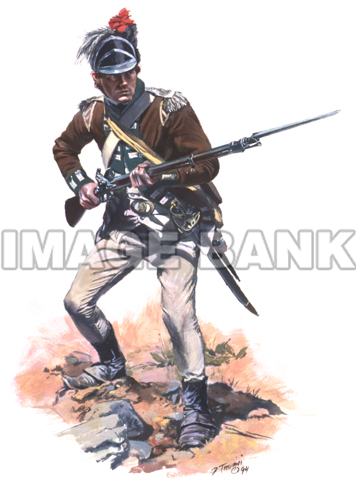
Elsewhere, Spanish arms fared better. Bernardo de Galvez, governor of Louisiana, led a successful campaign around the Gulf of Mexico, capturing British positions at Mobile and Pensacola, bringing the two Floridas back under Spanish control. Galvez also shipped beef to the Continental Army. The Continentals also received a captured shipment of British uniforms from the Spanish, taken off a convoy meant to resupply Jamaica. The Americans dyed them brown and issued them to the New York and New Jersey regiments of the army.
The Spanish and French also hit several British positions in the Lesser Antilles. When the war ended, the allies were preparing an invasion of Jamaica - an effort to seize Britain's largest sugar island.
The Dutch also went to war with Britain during this time, though the Fourth (!) Anglo-Dutch war remained mostly a separate conflict and the Dutch never formally allied with the US. This naval war put yet another strain in British shipping, already stretched thin by its need to defend the Channel, Ireland, Gibraltar, the Mediterranean, the Caribbean, and India.
British belligerence also brought them the bring of war with the Russian-led League of Armed Neutrality. In an effort to cripple the French economy, the British Navy had stopped and searched Russian, Danish, and Swedish ships at will for French contraband since 1778. To defend their shipping from interference, those three kingdoms formed the League of Armed neutrality in 1780. Per the terms of the League, they promised to respond with military force if Britain ever attempted to board a League ship. By the end of the war, Prussia, Austria, Portugal, the Ottoman Empire (!) and the Kingdom of the Two Scilicies had joined the agreement.The Royal Navy, so accustomed to having the run of seas, now found all of Europe's naval might either outright hostile or barring them from access to trade and resupply.
The book has its problems - the authors misplaced the Continental army a few times- but Thomas Flexner, The Perils of Peace) seem to have covered the international aspects of the war as well.