There is a cultural divide in many countries - North and South England, USA etc - was there any kind of cultural divide at all between the North and South in Korea pre 1950?
Regionalism has a long history in Korea and played a large part in its history.
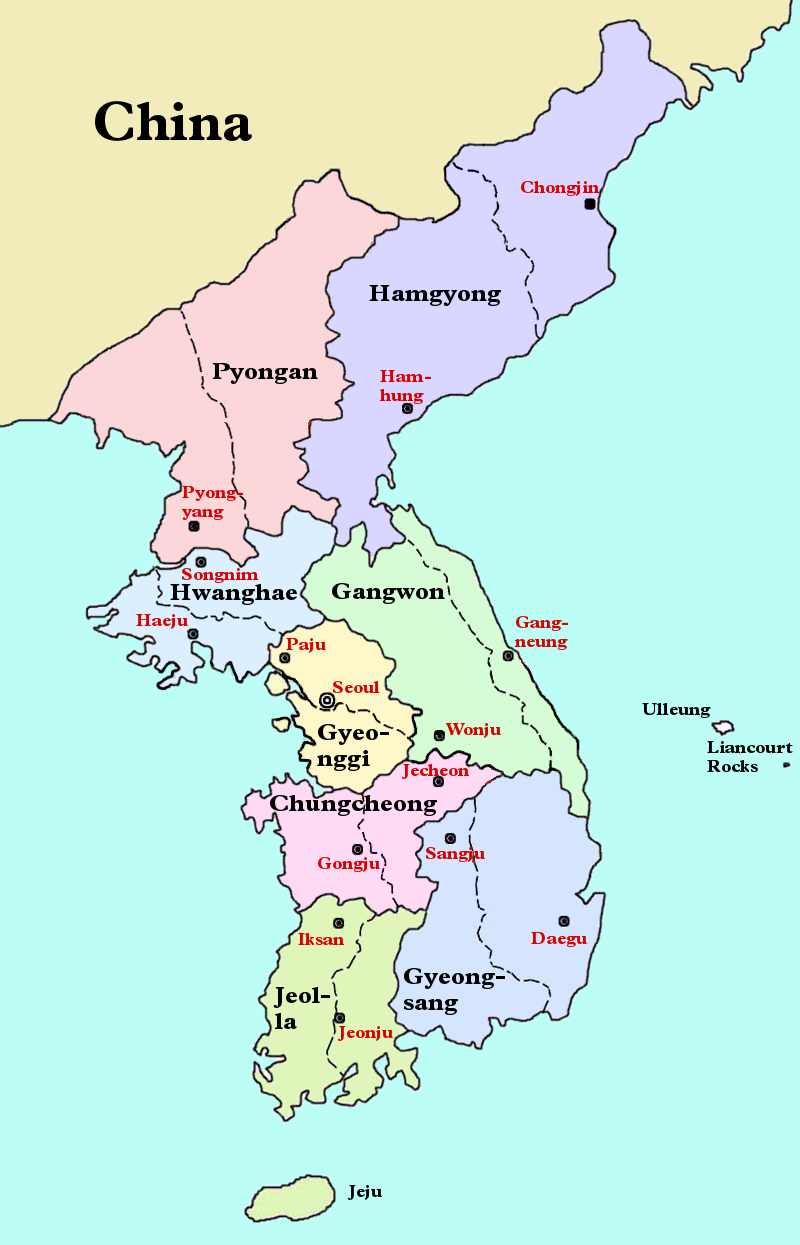
During the very long Joseon Period (1392-1897), the 팔도 paldo or "Eight Provinces" were demarcated and are still recognized by the average Korean person today.
They are all represented here.
Much of modern Korean regional cultures, languages, and traditions can trace their histories back to this time period after the Eight Provinces were created.
Regionalism played a large role in Joseon politics, with cliques and factions from different areas coming into power or falling from it in turns and cycles.
Northern provinces of Pyongan and Hamgyong in particular often saw themselves as being discriminated against. They were often subject to heavier taxes and by defacto were often limited from taking the civil service exams (the gwageo) which was nominally the preeminent path for upward social mobility in Joseon society.
Even during periods when discrimination against northern provincial gwageo applicants seemed to be lower, the northern regions produced fewer scholars and bureaucrats, which meant it was less likely for factions of those provinces/regions to come to power or have influence.
Indeed, there were many times when candidates from Hamgyong were rejected outright and simply not even allowed to take the exams.
Feelings of being discriminated against and abused by those in power through regionalism led to popular revolts such as the Hong Gyeong-nae rebellion of 1811, which took place in the northern province of Pyongan, sparked by extremely heavy taxation during a particularly severe famine in the region.
It should be noted that often the anger of northerners was directed toward the central authority of the capital and the bureaucratic system rather than southerners in general. The perception was that southerners were benefiting but the ones who had actually wronged them were those in power in the capital of Hanseong (modern day Seoul)
During the time under Japanese colonial rule, the regional culture differences between the north and the south of the peninsula was generally quashed in favor of promoting adherence to Japanese colonial policy and later on, Japanese cultural rule.
If you have more specific questions, feel free to ask!
EDIT: Someone pointed out to me that I largely missed the cultural part of the question so let me address that here.
The northern provinces of Pyongan and Hamgyong, particularly the northern reaches near the Yalu and Tumen rivers, were where the historical Goguryeo Kingdom (mostly located in the Pyongan region) of Korean history was founded and it's also an important site for the founding of the Joseon Dynasty as well.
Despite this historical significance, for much of the Joseon Period, the monarchs of Korea had difficulty keeping the areas developed and populated. This is because much of the area is rough and hilly where not mountainous. Hamgyong in particular is extremely mountainous and the entire northern region often suffered from harsh winters and difficulty farming combined with heavy taxes regularly lead to famine.
This relatively hostile land combined with the risk of raids by both bandits and foreign raiding parties that crossed the Yalu/Tumen rivers (they froze over pretty much every winter and could be crossed readily by both horse and foot, making it difficult to defend a porous border) meant that there was often a cycle of retreat and migration toward the south when times became difficult, then a (sometimes forced) migration back north at the behest of the central government.
During the Joseon Period, this created a cultural perception of poverty and disaster with both the northern provinces and the people who lived there themselves. Due to the Samin Policy (promulgated by the famous Sejong the Great) that organized and moved thousands of families, business owners, soldiers, scholars, officials, slaves, and more to settle the northern provinces, there was a sense that there was no one who lived in the north who actually wanted to be there. On the other hand, those who continued to live there certainly developed a regional culture of being able to abide by any hardships or unfavorable conditions and still create 'civilization' and persevere in the rough lands.
Exile of political opponents who fell from power was liable to entail a trip to the north which furthered the sense that undesirables ended up there.
On the other hand, the southern provinces in Korea were safer from foreign incursion (though coastal regions were still at risk to attack by pirates) and developed more stably. The regions of Gyeonggi (where the capital was located) Jeolla, and Gyeong-sang were some of the most well developed. Jeolla and Gyeong-sang were particularly famous for their agricultural productivity, and in a time period when land development was directly tied to a region's wealth and stability, these are good things to be known for.
Hi everyone!
If you've just popped in from r/all, welcome. This thread might not be your usual Reddit experience. This is because you're on r/AskHistorians. We require that answers be in-depth and comprehensive, ideally with sources cited. Any answer that engages in speculation or soapboxing, does not provide adequate context or critical insight, or is based on shallow source material, is promptly deleted.
This means it can take some time for an answer to appear.
But fear not! Top voted questions nearly always get an answer. We just ask for your patience and understanding while this magic happens. If you think you might forget about the thread, send a Private Message to the Remind-Me bot, and it will ensure you don't. Alternatively, just save the thread, frolic happily through the sunlit fields of reddit, and wait for that good stuff to get posted. It's coming. Oh yes it is.
What you should definitely not do is complain about removed comments, as 20 of you have done in this thread already. This only increases the number of [removed] that other visitors will see, and encourage them to complain more. It's not helping, so kindly cut it out.
Thanks!