Im going to note ahead of time, that Im working off the assumption that witch hats and wizard hats are interchangeable terms for the same artifact based off of wearer gender.
So the neat thing about pointed hats is that they are old, like unbelievably, ridiculously old. There were religious caps made of gold as far back as the Bronze Age. Some, like the Avanton Gold Cone, are brimless and more akin to the dunce cap; others, like The Golden Hat of Schifferstadt, had a full brim. Both are assumed to be related in some way with sun-worship.^1 But really this smacks too much of the priestly and less of the wizardly. So Im going to discard it as nothing more than a pre-cursor to the Wizard Hat. Also it looks really lame and Wizard Hats are cool.^2
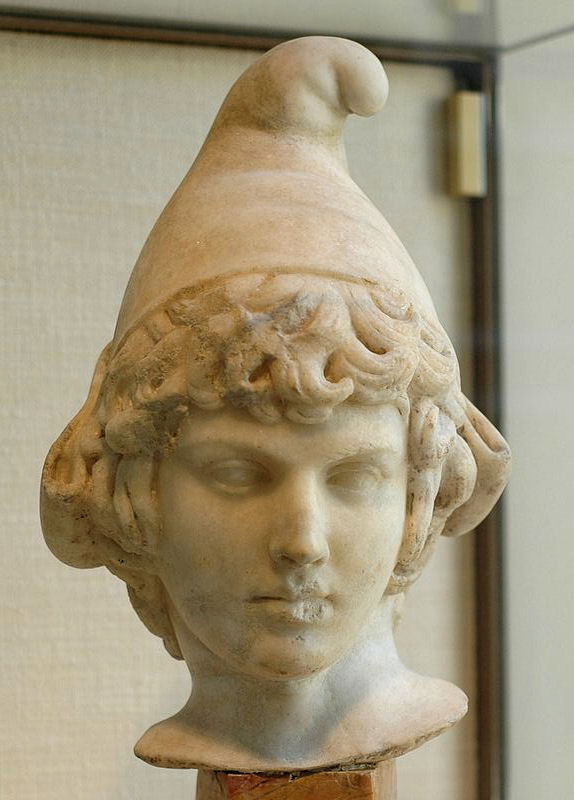
Now the Scythians had dope, conical hats, made out of felt or wool, called pileus. The pileus were short, brimless and conical in shape. They were pretty much universal in Mediterranean culture, becoming popular with the aforementioned Scythians and riding that out until sometime in the medieval period. The pileus was associated with freedom and the process of being freed in the Roman Empire
There was also the phrygian cap, a pointed, curved cap originating a little later than the pileus and was also associated with freedom (Due partly to the similarities between it and the pileus. But more importantly, it was associated with the cult of Attis, god of vegetation, life, death, and rebirth. All of which are principles preeminate in the study of arcane magic.
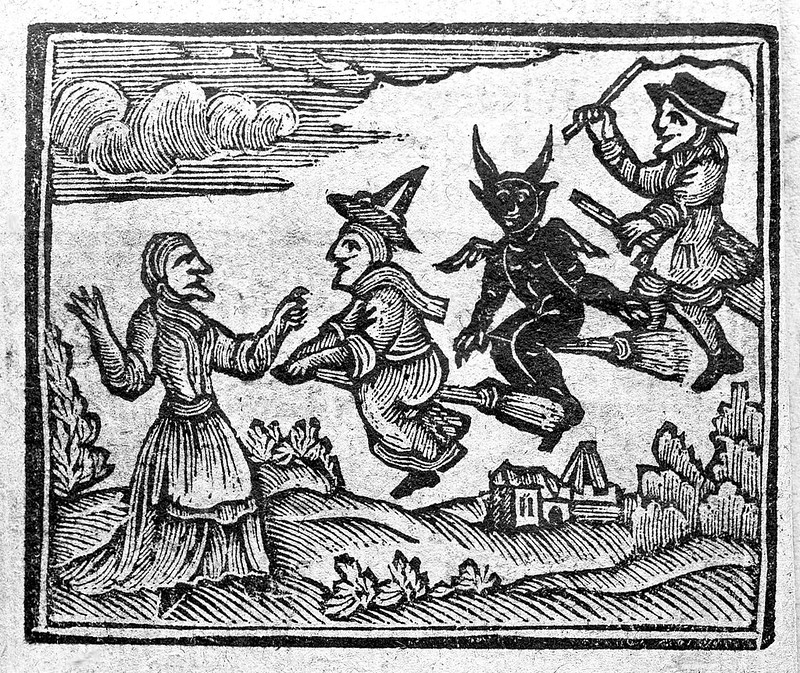
But there's a problem with all of the previous examples, wizard hats feature a large prominent brim. So how do we go from this to this.
One possible route comes in the form of the Jews. Their constant association with peoples of oriental heritage via the middle east influenced an adaptation of a flat brimmed conical hat. This stylized cap became an officiated marker of Jews with the Fourth Council of Lateran. In it the 68 and 69 canons formalized the Judenhut as a symbol to differentiate the Jews from the Christians.^3
There is some confusion as to when exactly did the Jew cap become associated with witches and wizards. The separation was still distinct in 1591 and in 1643 and in 1648. But by 1720, the image often associated with witches' hats had become tenatively rooted in Anglo culture as depicted in T. Norris's book The History of Witches and Wizards, 1720.