This is a pretty broad question both geographically and chronologically, so I'll limit my answer to Middle and New Kingdom Egypt and can provide comparisons with other regions and time periods if necessary.
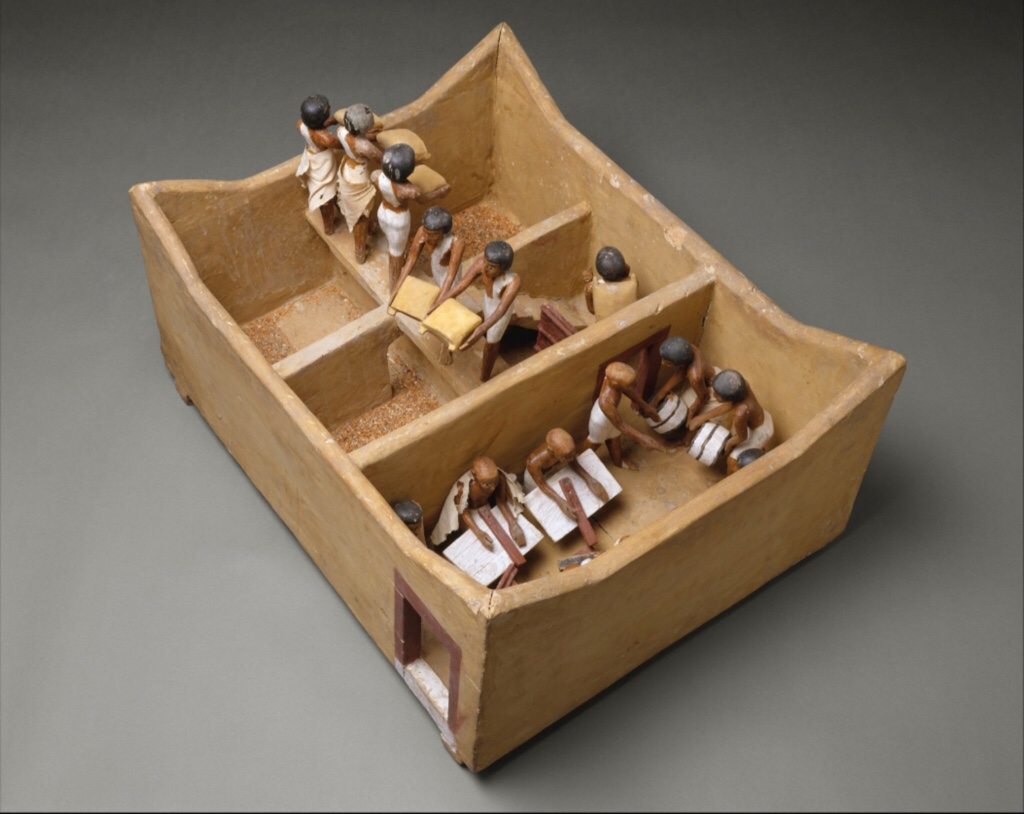
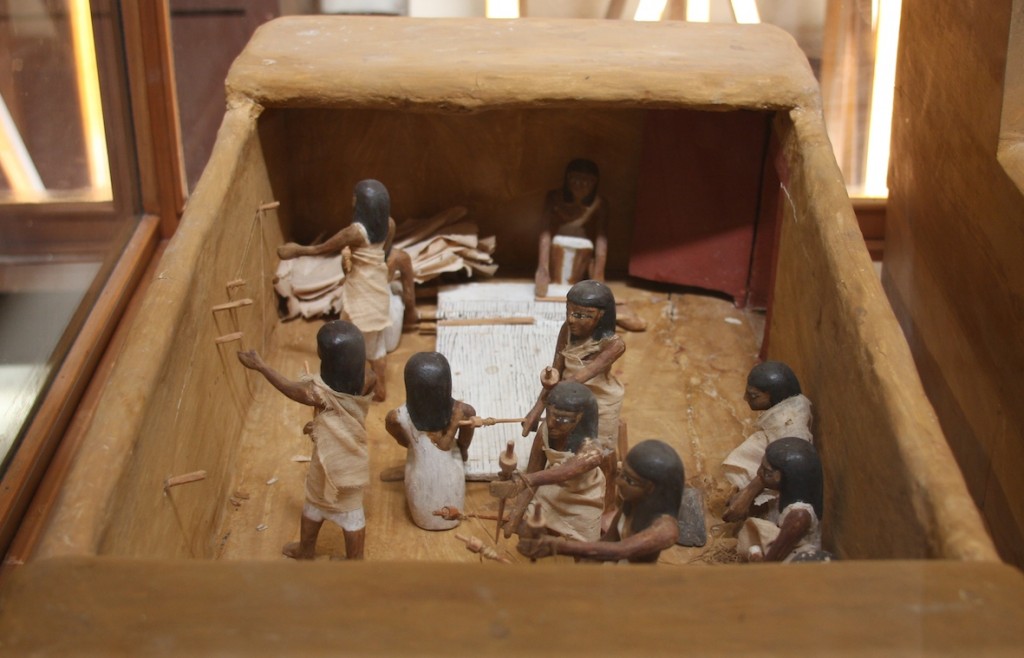
Turning first to houses, the site of Lahun provides examples of houses of different sizes and levels of complexity. Lahun was founded as a pyramid town of Senusret II and flourished during the Middle Kingdom; a town plan can be seen here. Domestic space at Lahun consists of the "mayor's house" on the acropolis, five northern mansions, three southern mansions, eastern housing, and western housing. The latter two were fairly simple compared to the mansions; comparative floor plans can be seen here. A mansion at Lahun consisted of a reception hall, sleeping quarters, an office, servants' quarters, and workshops and food preparation areas. Egyptian tomb models depict many of the parts of the house of an elite Egyptian family, including the granary, butchery, livestock pens, weaving workshop, baking and brewing facilities, and carpentry workshop. A garden and pool formed the center of the house. Finally, the exterior of the house contained porticoes used for public appearances and cattle counts.
Wealthy Egyptians had many different ways to entertain themselves. Banquets were quite popular, and musicians and dancers as well as harpists and storytellers were hired to entertain guests. To relax and escape the heat, wealthy Egyptians often took boat excursions into the marshes for fishing and fowling. These boating excursions often involved numerous people.
Ancient Egypt had several grades of linen, including "royal linen" (sšr nsw) and "fine linen" (šmat nfrt). Elite clothing was therefore distinguished from the clothing of commoners by quality as much as complexity. For a comparison of the clothing worn by commoners and the clothing of the Egyptian elite, see this New Kingdom tomb painting; note the quality of the sheer linen worn by Nakht, the tomb owner. Egyptian male nobles sometimes received the gold of honor from the king as a sign of favor, and elite Egyptian women wore elaborate jewelry and wigs as a mark of their status. The elite also used makeup and perfume, which was indicated in art as a cone atop the head.
Many, but certainly not all, wealthy Egyptians were literate. The Heqanakht papyri provide a rare glimpse of literacy within a middle class family during the Middle Kingdom. The papyri, written in a lovely hieratic hand, are the remnants of a correspondence between a priest and his family. Heqanakht seems to have been a rather irritable fellow, and his letters are full of indignation and criticisms on how the household is being run in his absence. One of his sons, for example, seems to have been harassing his father's new wife.
As this man lives for me - it's Ip l'm referring to - whoever shall make any sexual advance against my new wife, he is against me and I against him. Since this is my new wife and it is known how a man's new wife should be helped, so as for whoever shall help her, it's the same as helping me. Would even one of you be patient if his wife has been denounced to him? So should I be patient! How can I remain with you in the same community if you won't respect my new wife for my sake?
Egyptian status was in many ways tied to literacy, and the "Satire of the Trades" notes the benefits of being a scribe while denigrating other professions.
See, there's no profession without a boss,
Except for the scribe; he is the boss.
Hence if you know writing,
It will do better for you
Than those professions I've set before you,
Each more wretched than the other.
Elite Egyptian men were responsible for producing and copying almost all surviving Egyptian literature, such as the library of Qenherkhopeshef at Deir el-Medina.
When wealthy Egyptians died, they were buried in elaborate tombs that they prepared before their death. Burials typically consisted of a rock-cut tomb, a painted coffin, and canopic jars for internal organs. Elite burials of the 18th Dynasty often included food and furniture as well. Tombs often contained lengthy biographies outlining the career of the tomb owner. For example, the tomb of Weni contained an autobiography shedding light on Old Kingdom history. An excerpt:
When there was a secret charge in the royal harem against Queen Weret-yamtes, his majesty made me go in to hear (it) alone. No chief judge and vizier, no official was there, only I alone; because I was worthy, because I was rooted in his majesty's heart; because his majesty had filled his heart with me. Only I put (it) in writing together with one other senior warden of Nekhen, while my rank was (only) that of overseer of royal tenants. Never before had one like me heard a secret of the king's harem; but his majesty made me hear it, because I was worthy in his majesty's heart beyond any official of his, beyond any noble of his, beyond any servant of his.
When his majesty took action against the Asiatic Sand-dwellers, his majesty made an army of many tens of thousands from all of Upper Egypt: from Yebu in the south to Medenyt in the north; from Lower Egypt: from all of the Two-Sides-of-the-Houses and from Sedjer and Khen-sedjru; and from lrtjet-Nubians, Medja-Nubuians, Yam-Nubians, Wawat-Nubians, Kaau-Nubians; and from Tjemeh-land.
His majesty sent me at the head of this army, there being counts, royal seal-bearers, sole companions of the palace, chieftains and mayors of towns of Upper and Lower Egypt, companions, scout-leaders, chief priests of Upper and Lower Egypt, and chief district officials at the head of the troops of Upper and Lower Egypt, from the villages and towns that they governed and from the Nubians of those foreign lands. I was the one who commanded them - while my rank was that of overseer of royal tenants - because of my rectitude, so that no one attacked his fellow, so that no one seized a loaf or sandals from a traveler, so that no one took a cloth from any town, so that no one took a goat from anyone...
For further reading, I highly recommend High Culture and Experience in Ancient Egypt by John Baines.
Related question: would the Iliad and Odyssey provide a partial answer to OP's question? The events take place during the Bronze Age in Greece, and the main characters are wealthy people. The issue that remains is how accurate those depictions are.