Follow up question: were there any Russian "There was a turtle by the name of Bert..." style cartoons?
The USSR had an extensive civil defence organisation, which developed from Local Anti-Air Defence or MPVO (Местная противовоздушная оборона - МПВО) initiated in 1932. You might be interested to know that in autumn 1940, the MPVO was organised as part of the NKVD, the secret police, by order № 001378. They were especially active during the siege of Leningrad collecting firewood, organizing the evacuation of the disabled, assisting the victims of bombing, burying bodies, distributing gas masks and training the population in their use. The MPVO in Leningrad was commanded mostly by women (1,500 by the end of 1942). When the Axis were driven out of the USSR, they also assisted in minesweeping, according to the Russian Ministry of Emergency Situations [1].
When the original "Duck and Cover" film was being shown in the United States in 1951, the Volunteer Society for Cooperation with the Army, Aviation, and Navy or DOSAAF (Добровольное Общество Содействия Армии, Авиации и Флоту - ДОСААФ) was organised in the USSR. DOSAAF was a technically voluntary paramilitary organisation aimed at teaching skills of military value to the population, especially to the young - there was a lot of overlap between DOSAAF and the Komsomol, the political youth organisation of the USSR. Activities included fitness and sport, marksmanship, radio operation, driving, first aid, as well as military study. In 1952, it was estimated that 15 million people were DOSAAF members [edit: according to Leon Gouré in his work for the RAND Corporation in the US, rather than estimates closer to the USSR]. In 1955, there was reportedly a renewed push for membership and an emphasis on civil defence - physically fit men from 16 to 60 and women from 16 to 55 were liable for civil defence training in partnership with their school or workplace [2]. Also at this time, the MPVO was directed towards civil defence, with different services (for public order, firefighting, communications, etc.) drawn from police departments, fire departments, TV and radio operators, etc. There were also "self-defence groups" drawn on a compulsory basis from men between 16-60 and women between 18-55 who were not liable for obligatory military service or deferred from the draft. Exemptions were made for pregnant women, the sick and disabled, among others. In an emergency, the MPVO would be "supplemented by large numbers of ordinary citizens who have been trained by DOSAAF and can be instantly mobilised." [3] Edit: We'll never know how effective Soviet civil preparedness would have been in the event of a nuclear attack - this kind of mass mobilisation and organisation would likely not have been realistic. But certainly the idea behind DOSAAF was to instruct the population in civil defence skills.
Only in 1961 was the MPVO reorganised into the official Civil Defence of the USSR. The Bulletin of the Atomic Scientists in October of that year stated that there was little effort in actual shelter and evacuation plans, with the Soviets at that time relying on WWII-era shelters and subways in Moscow, Leningrad and Kiev. The Bulletin made a point that the difference in population density and industrial concentration with the US meant the USSR had less need of such plans. Osgood Caruthers of the New York Times reported from the USSR that "nowhere in Moscow or any other city visited by foreigners can one find signs pointing to shelters... no practice alerts are held... posters are extremely rare... [and there is] no such thing as an effort on a citywide basis to organize block crews or house wardens for civil defense" [4]. However, the CIA produced a report in May 1961 stating the USSR was spending between $500 million and $1.5 billion annually on civil defence, with a large part invested in shelter construction, in a program started 10 years beforehand [5]. According to the St Petersburg publication Fontanka, 4,003 bomb shelters remained in the city in 2010, 2,873 thereof located under residential housing [6].
In the later years of the 60s, Soviet Civil Defence had begun to produce short films similar to "Duck and Cover" advising citizens and schoolchildren what to do in the event of an attack, you can see cards at the electronic archive of the Russian National Children's Library (click one and then click "Перейти к просмотру") [7]. The film "Главное - не растеряться" ("Most Importantly - Stay Strong") in 1968 shows Soviet methods to withstand an atomic attack on a city, with Civil Defence leading people to designated shelters and evacuating to the countryside afterwards [8]. Another film made as late as 1989 goes into detail about the evacuation plans [9]. Civil Defence were also producing literature such as "Everyone Should Know And Be Able To Do This" (Это должен знать и уметь каждый) in 1983 [10]. Edit: Soviet film production for higher education also produced informative films in the late 70s-80s such as this.
According to a survey of Soviet emigrants in the 1980s, 41.3% remembered where the civil defence shelter closest to their job or school had been, 29.3% had gone to a shelter during a drill in the last two years of their time in the USSR and 8.1% had even taken part in an evacuation drill, leaving town temporarily [11]. The authors of the survey note that these are all in the minority, so preparedness was perhaps not so thorough in the USSR at the time.
[1] History and development of civil defence in Russia, Russian Ministry of Emergency Situations
[2] Civil Defense in the Soviet Union by Leon Gouré, University of California Press, 1962, pp. 39-42
[3] Civil Defense in the Soviet Union by Leon Gouré, University of California Press, 1962, pp. 17-32
[5] Civil Defense and Air Raid Shelters in the USSR, Central Intelligence Agency, 22 May 1961
[6] City Loses Bomb Shelters, Fontanka.ru, 2 February 2010
[7] Russian National Children's Library results for "Civil Defence" - under Фильтры, select Тематика and paste in "Гражданская оборона" and press Добавить - http://arch.rgdb.ru/xmlui/discover
[8] Главное - не растеряться, 1968
[9] Эвакуация и рассредоточение городского населения, 1989
[10] Это должен знать и уметь каждый, Гражданская оборона СССР, 1983
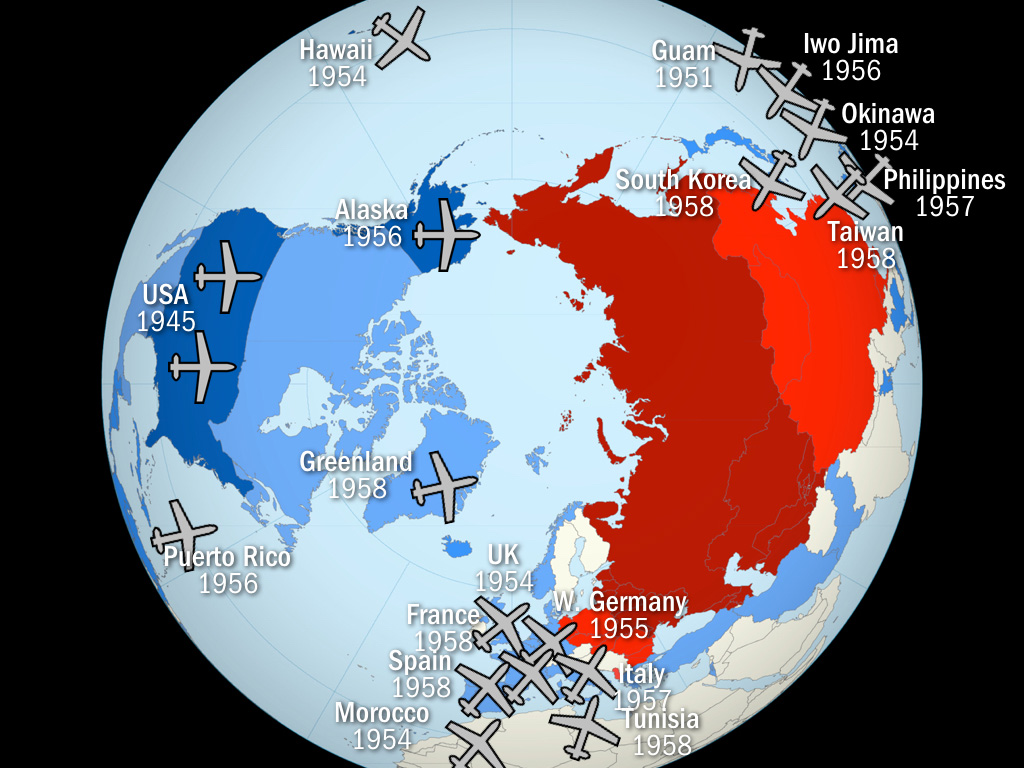
I wouldn't call it "hysteria" ("exaggerated or uncontrollable emotion or excitement") — the USA and the USSR both were threatened by the possibility of nuclear war. The USSR even more than the USA for most of it; the USA ringed the USSR with airbases full of nuclear-armed bombers by the 1950s, with war plans that would leave the USSR a "smoking, radiating ruin at the end of two hours," as one of the US officers involved in the planning put it. This was followed up by ICBMs, short-range nuclear missiles, submarine-launched missiles, atomic artillery, etc. Through the 1960s, the balance of nuclear strength was disproportionately in the US's favor; only in the 1970s was there a real "parity" in terms of both sides being able to inflict identical damage to one another, though even by the 1960s the USSR was capable of doing great harm to the USA.
I would not consider fallout shelters, duck and cover, etc., to be "hysterical" under those circumstances: they were part of the US Civil Defense program, the goal of which was to try and mitigate (as much as possible) the effects of a nuclear exchange that the politicians felt may not be preventable, to keep as much of the US "alive" after it so that recovery might be to some degree possible. It is easy to laugh at this stuff in retrospect when you do not respect the very real sense of danger that existed at the time, though I have found in recent months that Americans are getting a taste for that feeling once again. Many of the Cold War CD policies were flawed in many ways (e.g. city evacuation was just not going to work for major metropolises), many were only of relative help (e.g. they would not save everyone but would lower the number of casualties), many were very specific to their specific strategic moment (Duck and Cover is good advice for 1951, but it was inadequate by the 1960s, when the size and power of the Soviet arsenal was larger, and fallout the more pertinent "survivable" threat). It is unfortunately very misunderstood, having turned into a political hot potato in the US and Europe by both the left and the right in the 1980s.
That out of the way, your question comes down to, "were there Soviet Civil defense programs, public service announcements, etc.?" And the answer is: yes. The Soviet Union did have Civil Defense programs that were similar in many ways to the American ones. They had fallout shelters, public blast shelters, various forms of public education programs that were aimed at schoolchildren and adults alone, etc. I am not aware of anything quite as kitschy as Duck and Cover, which is extreme kitsch by any standard. The most famous Soviet Civil Defense document in the West is Grazhdanskaya Oborona ("Civil Protection"), a textbook of Civil Defense (this one from 1986, but apparently it was first issued originally in 1970), which is rather beautiful to my eyes, illustrated in the lubok style of a peasant woodcut.
The real historical question about Soviet Civil Defense was, how "for real" was it? In the 1970s and 1980s there were accusations by hawks in the US that the Soviet CD program was lightyears beyond the (always anemic) US program, and that Soviet strategists felt nuclear war was thus "survivable" and would be more willing to wage it. While the Soviet CD program was definitely better-funded than the American one — no great feat given how much of a low priority CD was (the US fallout shelter program was, ultimately, aimed at convincing people to build their own — indeed, much of the US program was no more than an information campaign, not a real infrastructure project), there is no evidence that they regarded it as any serious "hedge" or incorporated it into a more belligerent warfighting strategy, and how "useful" it was is rather debatable.
He will have a book out on this soon, I believe, but in the meantime, the best comparative history of the US and Soviet Civil Defense programs is Edward M. Geist, "Two World of Civil Defense: State, Society, and Nuclear Survival in the USA and USSR, 1945-1991," Ph.D. diss., University of North Carolina at Chapel Hill, 2013. For what it is worth, I think the most important aspect of Civil Defense in the United States is that it caused Americans to face up, with some sobering honesty, about the possibility of nuclear war; to this end, I am one of the launchers of the Reinventing Civil Defense Project which seeks to think about what Civil Defense might look like, and ought to look like, in the 21st century.
There are two parts of this question. “Cold War hysteria” (to take the term at face value for a moment) had a great many aspects and the worry about nuclear war was only one of them. In the United States, for example, we had McCarthyism, ideological propaganda, etc. Basically all of these things were also present in the Soviet Union. In both cases they were equally important or prominent features throughout the length of the Cold War, that stretched some forty-or-so years.
Although there was, in some sense, an ever-present threat of nuclear war,I’d be careful about calling a forty year stretch a sustained period of mass hysteria. The Cold War was a long, complex period and the importance of nuclear technology alongside the threat of nuclear war had far reaching consequences that stretched far beyond the need for bomb shelters and drills. Because you’ve already got a pretty good answer about the Civil Defense aspects of Cold War living, I’m going to focus on some of the social and cultural ramifications of nuclear technology in the context of the Cold War.
Let’s talk about ideological worries first. Under Stalin, ideological purity tests were hardly a new thing by the beginning of the Cold War, but they did take on a new urgency as the contest between the United States and the Soviet Union began to take on an increasingly ideological character.
In the Soviet Union, particular attention was paid to scientists and engineers. Although it is true that some scientists received relative freedom and privilege because of their central role in, for example, the Soviet nuclear program (see, for example, Soviet physicist Igor Kurchatov), who was told by Stalin in 1945 “If a child doesn’t cry, the mother doesn’t know what he needs. Ask for whatever you like. You won’t be refused” (Suny, The Soviet Experiment, 371) But that dependent on complete political subservience, which was sometimes scientifically limiting. Quantum Theory was considered particularly suspect under Stalin for example (Suny, 372)
Other scientists were not so lucky. Take for example, Iurii Zhdanov (not to be confused with Andrei Zhdanov), a biologist, who came under fire for comments about evolution. He wrote an apology letter to Stalin that provides us with a bit of a window into just how deeply the sciences were beholden to political ideology in the Soviet Union.
Appearing at a seminar of lecturers with a paper on the debatable questions of modern Darwinism, I undoubtedly committed a whole series of grave mistakes.
Nuclear and more conventional conflict were consistent topics on the minds of the Soviet leadership and the Soviet people, but the Soviet Union was not monolithic, nor was the United States. Aftter the death of Stalin and the election of Eisenhower, the Soviet leadership hoped that a relative peace could be established (This period is commonly know at “the Thaw”).
Nonetheless, as you know, the Cold War continued to the end of the Soviet Union in spite of the fact that periods of relative stability were established by the two governments. Of course, this was happening at the same that nuclear weapons became the focus of both militaries. Both countries saw conventional military spending go down, but saw spending on nuclear arms increase by 1960.
The Soviet Union had an extensive system of bomb shelters as well. The Moscow Metro, much of which served as bomb shelters in World War 2, was an ever-present feature of Soviet citizens living in Moscow, and was also to serve as a massive shelter in the case of a nuclear attack. Children had drills, and so forth. (As already answered)
The similarities went beyond that though. Kate Brown makes a compelling case about the similarities of Soviet and US “nuclear cities” in her book Plutopia, not to mention the cultural effects of plutonium disasters that occurred during the same period. The cities of Richland and Ozersk had quite a lot in common, down to government monitoring of the citizenry, health risks, etc, on the downside and access to consumer society (yes, even in the Soviet Union). Brown’s argument is interesting, in that these two cities represented the American Dream and the success of Soviet communism on the one hand and (later) the danger of the production of nuclear material.
In the end, perhaps, that’s the story here. The nuclear technology that accompanied the Cold War was at once a source of optimism and a source of worry. This was true in both the Soviet Union and the United States. The internal politics of the United States and the Soviet Union were radically different, so it is interesting to see how the Cold War and nuclear technology ended up manifesting in very similar ways in both places.
Not a subscriber; but can I ask a follow up question?
If so, are there any good videos (Doesn't need to be in English) of what the USSR did to teach people via media? Like in the US you see those videos of kids at school. Does the USSR have any?
God, I stop paying attention to my modqueue for like five minutes to watch cat videos do important work, and this thread immediately fills up with garbage. You can time it almost to the second when it started turning up on /r/all just from the flood of useless posts which all appeared at once.
Now that's out of the way: Welcome, everyone! Here on /r/AskHistorians we're not your standard reddit community. We have strict standards for depth and expertise. We expect comments to be on-topic, and we don't allow speculation or vacuous comments.
This is a really interesting question, and I'm looking forward to learning about it just like you all are. More than 90% of popular threads receive an answer, so if people are patient, polite and appreciative of the volunteers who give up their time to bring us the wonderful explanations /r/AskHistorians is known for, then things will be great.
Also food for thought: To those who post comments complaining, or asking, about the removed comments, you're the problem. Already about half this thread consists of nothing but people commenting on all the removed comments - which are, of course, removed, driving up the removed comment count.
Furthermore, as noted above, the people who write answers for us here on /r/AskHistorians are volunteers. It's extremely frustrating to see the entitlement of people complaining that there's no answer yet, because someone hasn't yet taken hours out of their Friday night (or Saturday) to sit down and write an essay for us all on no notice. Have some consideration, has some respect, and have some appreciation.
Thanks for your understanding!