Winter in some places like Scandinavia can reach temperatures as low as -30°C or even colder. It is not a trivial climate to live in, even with modern technology. How did those peoples managed to survive?
And indeed how did people in the Palaeolithic survive such conditions?
The short answer is fire, shelter, a hearty diet and lots of clothes. These things are no great challenge to humans of the Mesolithic. Bronze age and Neolithic people where likely born into communities who had been prepared culturally, and logistically for harsh winters for hundreds of generations.
I'll try to answer more in part with some ethnographic analogy, and archaeology rather than strict reference to any historical documentation, if the wise masters deem that allowable.
To begin I'd draw attention to the strategies of the Saami, of Lapland, Finnland, Norway, Sweden and Russia, who have lived in the far North of Scandinavia for at least five thousand years, well prior to the Bronze age (Broadbent 2004). Indeed there is some suggestion they are descendents of people who chased the Glaciers north at the dawn of the Holocene (Rankama & Kankaanpää 2004).
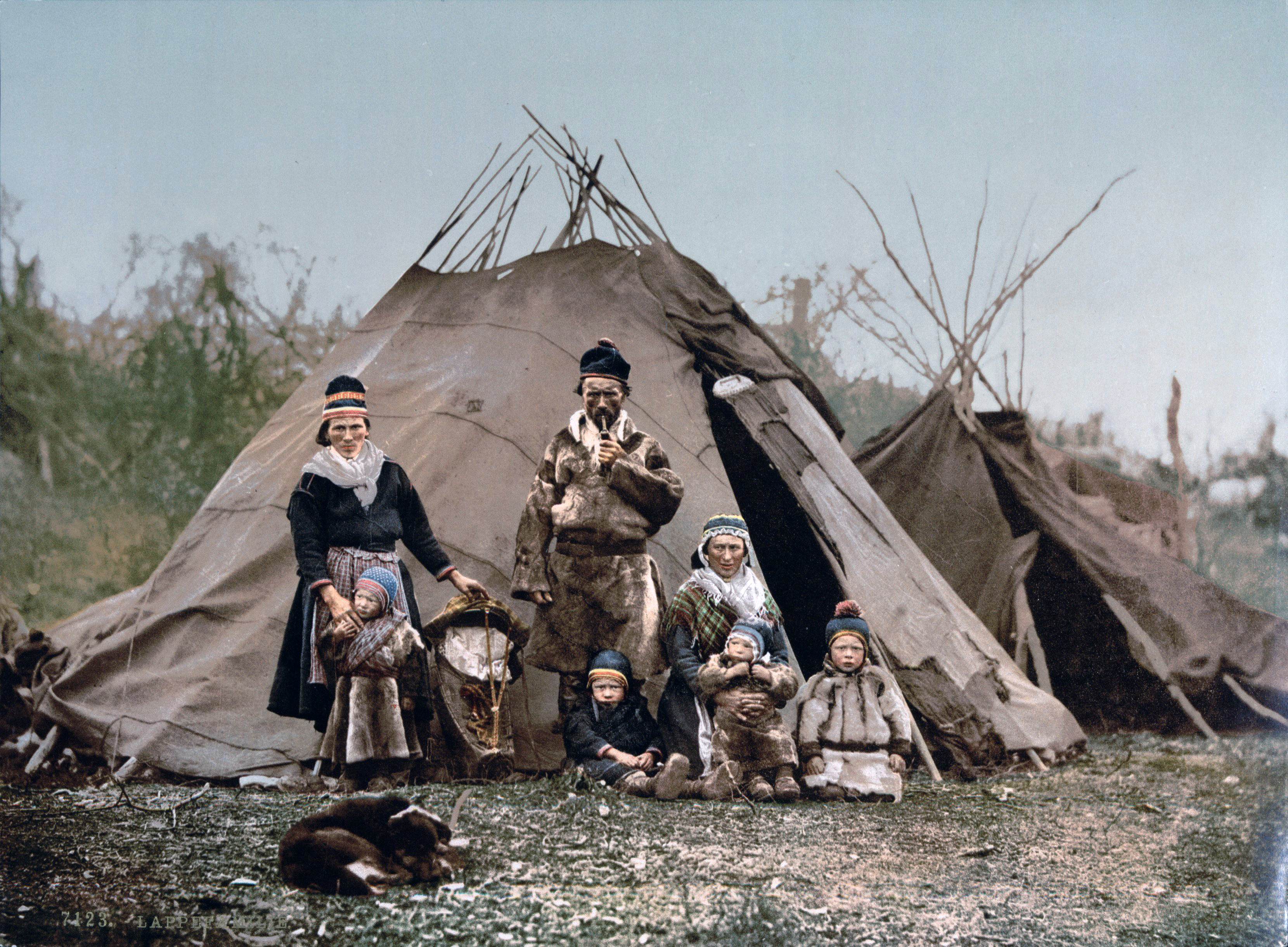
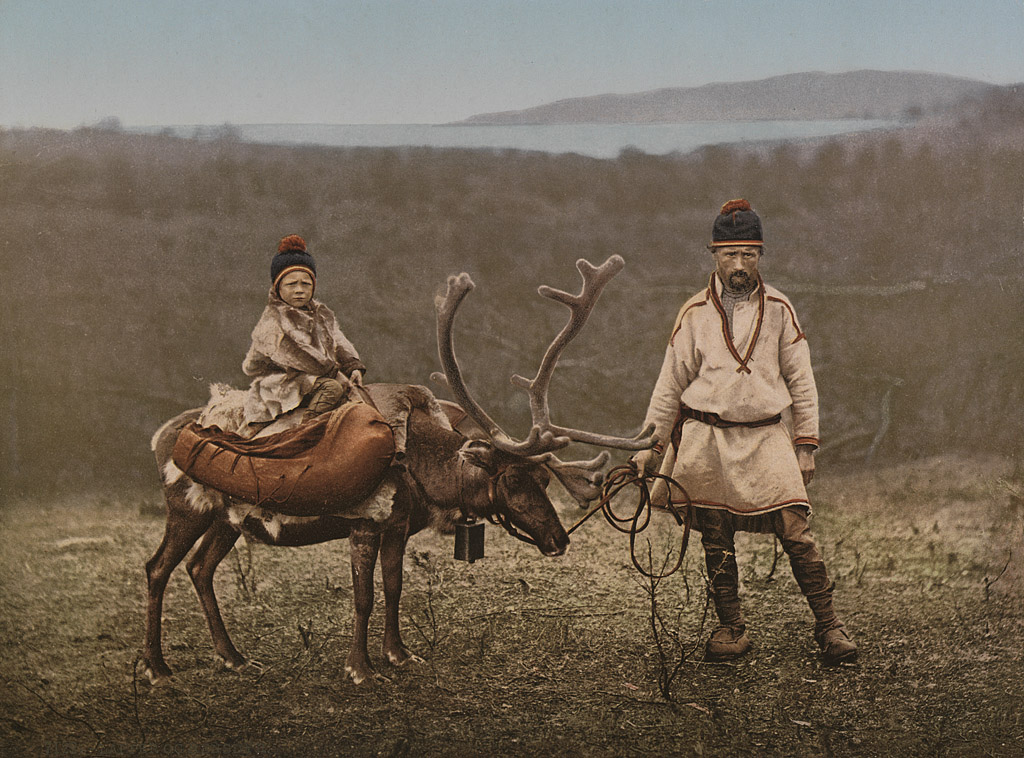
The Saami until recently would subsist primarily on an economy of Reindeer husbandry, fishing, gathering and supplementary hunting. Some still do. Traditionally making use of little to no permanent structures, their family units would follow herds of Reindeer across their territory, making effective use of the beasts.
As far as handling the climate goes, they're partially better adapted genetically for it than most human populations, and more importantly culturally specialised for the environment. Their clothing is warm, and their shelters designed to keep out harsh winds, and trap enough air to stay warm, but to remain ventilated enough to avoid the opposite.
Furthermore, Furs are really quite good at keeping you warm (Hummel 1955). People of the Later stone age and Bronze age had more than ample access to well made and suitably warming clothing. The "Otzi the Iceman" mummy is a classic archaeological example of prehistoric cold weather gear using woven grasses and bearskin. Domestication began around the beginning of the Neolithic, by the Bronze age access to leather was more than common, especially for any culture expecting harsh winters.
So to sum, up, there's no real difference between a hide tent and a nylon one apart from the weight and smell. Natural furs and fibres provide just as much insulation as modern fibres, they're just heavier. And a house with a fire pit in the middle is a house with a Fire pit. Bronze age people had access to pretty much everything we currently use to keep warm, insulation, fire, and fatty foods.
Broadbent, ND, (2004) "The search for a past: the prehistory of the indigenous Saami in northern coastal Sweden", Proceedings of the 22nd Nordic Archaeological Conference, University of Oulu,
Rankama, T, Kankaanpää, J (2004) "Survey and excavation at Lake Vetsijärvi, Lapland in: People, material culture and environment in the North". Proceedings of the 22nd Nordic Archaeological Conference, University of Oulu
Hummel, H.T., "Thermal Properties of Fur", American Journal of Physiology Published 1 August 1955 Vol. 182 no. 369-376