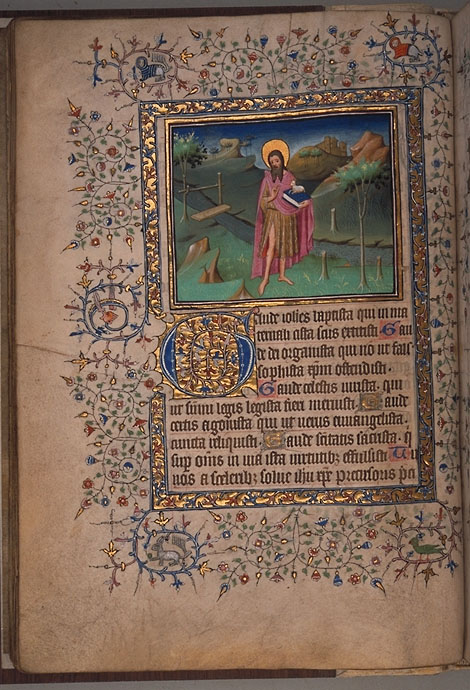
I study art history and and I have yet to find any painting of a man in a pink outfit. There's absolutely none, so how do people know that the color pink was once for boys?
Hellooooooo! You called for me, /u/mikedash?
The idea that pink was one a specifically male color is a misconception, which most likely came about because pop sources reporting on Jo Paoletti's Pink and Blue: Telling the Boys from the Girls in America either misread the book or found it more interesting to tell a story of standards switching. In actuality, there was no concept of a "boy color" or "girl color" until the early 20th century.
You can read a previous answer of mine which discusses the shift toward more gendered clothing for young children at length here, but the gist is that prior to the late 19th century, infants and toddlers were all dressed the same, typically in white gowns; as the boys got closer to the age of "breeching" (being put into breeches/trousers), their gowns would often take on more masculine styling and start to be made in soberer colors, but they were still gowns. In the 1880s/1890s, the wild popularity of Frances Hodgson Burnett's Little Lord Fauntleroy led mothers to grow out their sons' hair into ringlets past the age of breeching, and dress them in velvet suits with big ruffly lace collars. This spurred a backlash and a rise of interest in stronger gender differentiation for children, which led in part to magazines and catalogues switching from making color suggestions based on infants' hair and complexions to ones based on gender. And this is where the "the colors have switched!" misconception comes from, because a few suggested pink for boys and blue for girls - since there was no hard-and-fast concept of gendered colors (except in general terms, e.g. lighter colors are for girls and darker ones for boys, once we start to differentiate them), the people writing the suggestions could make up any combinations and justifications they wanted. Blue may have won out as the "boy color" because it could be made darker, even if it's typically a pastel for babies, or it may have just been historical happenstance that we don't today have evolutionary psychologists arguing that girls are inherently attracted to the color blue.
One interesting bit of evidence for the practice is the really rather dramatic pink rowing outfits worn by the students of Westminster School, one of Britain's leading public schools.
The members of the school's rowing eight have worn this colour ever since a race held against the boys of Eton College in the spring of 1837. Prior to this date, both eights had worn blue, but there is a strong tradition at Westminster that in 1837 both crews turned up in pink outfits, pink being at that time a highly fashionable colour for men to wear.
The crews agreed to race each other for the right to wear pink; Westminster won and their boys' sports teams have worn a vibrant shade of pink - presumably in the face of some derision nowadays - ever since.
The tradition continues to puzzle outsiders. An article published in the US magazine Rowing News in 1998 notes that
for whatever reasons, the most sought after color in British rowing is pink. Henley's prestigious Leander Boat Club boasts pink blades and Leander members are often seen sporting pink socks, pink ties, and the ubiquitous pink beanies. Not to be outdone, Westminster School rows in all pink unisuits and pink blades. The US men's quad had bright pink unisuits that they thought might stick out as humorously garish. Upon seeing what the British wore, the quad kept their pink kit in their suitcases.
Sources
Samuel Orchart Beeton, The Boy's Own Magazine: An Illustrated Journal of Fact, Fiction, History, and Adventure (1863)
John Dudley Carleton, Westminster School: A History (1965)
Jack Carlson, Rowing Blazers (2014)
I can only speak for the later Middle Ages, but a great many English manuscript illuminations of the fourteenth and fifteenth centuries suggest that pink was, at least, a unisex colour – provided, of course, that one could afford it.
Perhaps the most famous is this stunning image of Henry V receiving Thomas Hoccleve’s Regiment of Princes (BL Arundel 38) from a pink-clad man, perhaps John Mowbray or even the poet himself. Note that in another manuscript (BL Royal 17 D.vi) the colour has been transposed to the king’s clothes, although the giver of the book retains fetching pink hose. The images may share ancestry with a similar depiction of the lover in John Gower’s Confessio Amantis (BL Egerton 1991).
Beyond those examples, which might of course reflect the transmission of a preference for pink through the artists’ similar training or use of related pattern books, here are a selection from manuscripts with a range of dates of production, artistic styles and texts: John the Baptist from the Burnet Psalter (AUL MS 25), in which God himself also wears pink; a knight of the Round Table (upper right) from Gawain and the Green Knight (BL Cotton Nero A.x); the dreamer of Langland’s Piers Plowman (OCC MS 201); and three huntsmen from Edward of York’s Master of Game (BodL Douce 335).
A few things to bear in mind. None of these images are “portraits” in the modern sense. They are principally illustrations (not that this difference necessarily meant anything to medieval illuminators and readers), and beholden to their own set of stylistic conventions that may or may not include strict realism. It seems plausible to me, however, that pink would not have been thought of as incongruous or inappropriate in male clothing of the period if so many illustrators (of which I only give a selection!) were willing to use it in their works. On top of this, scholarship on clothing in contemporary writing (such Laura Hodges’ exhaustive works on clothing in Chaucer) suggests that real practice was just as important as allegorical representation in literary depictions of clothes. The same might have held true in the visual arts.
Sheer contingency is important too, though. Note that in many of my examples, the pink (and other colours) employed in the central image are also used in the floral borders. Illuminators worked with the pigments they had to hand, and we should not assume that those always facilitated realistic depictions of clothing.
Last – and perhaps most vexingly for medieval English representations of men wearing pink – is the fact that pink may not have been considered its own colour in any meaningful sense. The MED has no entry for “pink”, and “red” seems to have been used as both adjective and noun for a spectrum of colours including modern red, pink and orange well into the early modern period. The connection between semantics and the capacity for the perception of colour continues to be a fruitful area of study, both literary-historical and scientific. I’d be interested to hear from someone who works on the period in which the word pink “emerges” from red, and how that shift interacts with the development of the gendered use of the colour in text, image, and real clothing.
More importantly, was there any defining event that caused the switch between colors for gender?