This (https://en.wikipedia.org/wiki/Maat#/media/File:BD_Weighing_of_the_Heart.jpg) is hopefully a typical representation of the ceremony. My impression from this image is that the feather seems to outweigh the human heart. Therefore I wonder if it is strictly correct to talk about a balancing of the scales? Since I am not especially informed about the Egyptian book of the dead I am of course open to the possibility that I am overlooking something obvious.
The heart is being balanced against the feather of ma'at, the Egyptian notion of cosmic truth/justice/order. The goal was to have a heart with a weight equal to or less than the weight of the feather.
There is an excellent description of the weighing of the heart ceremony in Setne II, a tale about a trip to the Egyptian underworld.
They entered the seventh hall, and Setne saw the mysterious form of Osiris,the great god, seated on his throne of fine gold, crowned with the atef-crown. Anubis, the great god, was on his left, the great god Thoth was on his right, and the gods of the tribunal of the inhabitants of the netherworld stood on his left and right. The balance stood in the center before them, and they weighed the good deeds against the misdeeds, Thoth, the great god, writing, while Anubis gave the information to his colleague.
He who would be found to have more misdeeds than good deeds is handed over to the Devourer, who belongs to the lord of the netherworld. His ba is destroyed together with his body, and he is not allowed to breathe ever again.
He who would be found to have more good deeds than misdeeds is taken in among the gods of the tribunal of the lord of the netherworld, while his ba goes to the sky together with the august spirits.
He who would be found to have good deeds equal to his misdeeds is taken in among the excellent spirits who serve Sokar-Osiris.
Sometimes the Egyptians phrased morality as positive things they did, as in the biography of Nefersheshemre.
I have come from my town,
I have descended from my nome,
I have done justice for its lord,
I have satisfied him with what he loves.
I spoke truly, I did right,
I spoke fairly, I repeated fairly,
I seized the right moment,
So as to stand well with people.
I judged between two so as to content them,
I rescued the weak from one stronger than he
As much as was in my power.
I gave bread to the hungry, clothes,
I brought the boatless to land.
I buried him who had no son,
I made a boat for him who lacked one.
I respected my father, I pleased my mother,
I raised their children.
The Egyptians also expressed actions they did not do, the so-called "negative confessions" found in Chapter 125 of the Book of the Dead.
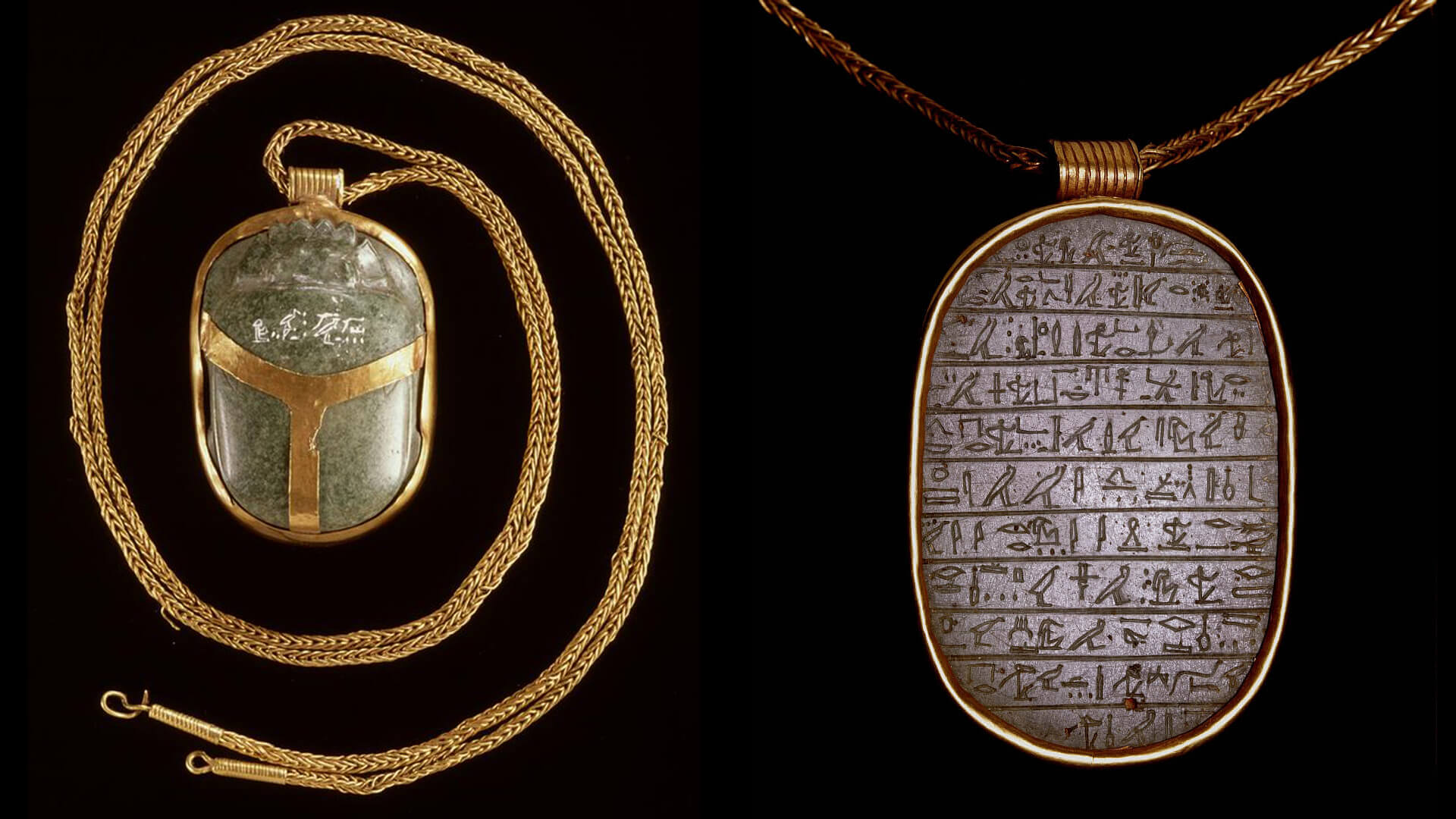
Of course, the Egyptians were not averse to cheating the system. The heart scarab is one of the most common amulets in Egyptian burials. Heart scarabs contain Chapter 30B of the Book of the Dead, a spell to prevent your heart from testifying against you.
O my heart of my mother! O my heart of my mother! O my heart of my different forms! Do not stand up as a witness against me, do not be opposed to me in the tribunal, do not be hostile to me in the presence of the Keeper of the Balance, for you are my ka which was in my body, the protector who made my members healthy. Go forth to the happy place to which we speed, do not make my name stink to the Entourage who make men. Do not tell lies about me in the present of the god. It is indeed well that you should hear!