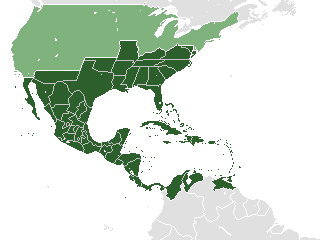
I don’t think there was ever a single agreed upon coherent policy. So it’s hard to say what “they” would have done.
We can look at what individuals thought though. A lot of Confederates were in favor of expanding slavery and the Confederacy. The closest anyone came was when the Southern half (below 34°) of the New Mexico Territory declared for the secessionists, as the territory of Arizona. Initial Confederate claims also included all of New Mexico.
There were a couple of campaigns over the Arizona and New Mexico Areas. Some like General Henry Sibley thought it might be possible to expand and grab Colorado and California. Of course his campaign was broken when he lost at Glorietta Pass. With the Union forces advancing down the Rio Grande and other columns advancing across from Southern California... he retreated. The Confederates never again operated significant forces in the territories. But it demonstrates what Confederate hopes and dreams in the SW were. They were extensive.
Aside from the American West many in the Confederacy had their eyes on all sorts of territory. The Article IV Section 3 of the Confederate Constitution explicitly granted the government the right to acquire new territory and guaranteed that “negro slavery” would be permitted in all such territory. While no major attempts were made to secure any particular territory during the Civil War, the Richmond government did send out several agents to observe and prepare multiple areas for potential future annexation. Of particular note was the John Pickett mission to forment rebellion in Mexico, and Matthew Maury’s plans to annex the Amazon Basin. Ultimately of course the war prevented either plan from being carried out.
But these investigations did result in several Confederate colonies being planted in Latin America after the war, as tens of thousands of southerners resettled. Of note are the towns of New Texas and Americana in São Paulo State Brazil and New Virginia in Mexico.
The Confederate government did not have any official policy regarding expansion other than allowing the addition of slave states via their constitution. However, Southerners had long looked south and west as a natural direction to spread their control over agriculture and slavery. While most Americans north and south generally supported the idea of Westward expansion in the late 1820s and 1830s, things began to change in later years. By the 1840s, the idea of expansion become closely intertwined with the expansion of slavery. As a result, many Whigs changed their stance and became opposed to the seemingly reckless expansion push for by Democrats. At this time abolitionist sentiment was growing in the North amongst Whigs especially. Many of them believed that stopping the expansion of slavery was the first best step to ending it. In this atmosphere Southern Democrats continued to be the biggest proponents of Manifest Destiny and composed the main the driving force behind the annexation of Texas and the conquest of Mexico in 1848. By the election of 1860, when the major political parties largely shifted to sectional ideology, southerners would not have needed their own version of Manifest Destiny since they were its remaining champions. One could argue that Democrats had always been the primary driving force behind Manifest Destiny, especially since the vigorous debates surrounding the annexation of Oregon, Mexico, and Texas show that these actions were likely less popular nationally than we often conceive. After 1861, the southern Democrats who had pushed for massive territorial expansion through manifest Destiny were largely running the Confederate government, though there were officially no political parties in the Confederacy.
A bit more detail on the might be illuminating. After the Republic of Texas declared its independence in 1836, they petitioned to join the United States. Given the delicate political climate regarding adding slave states without a free state to balance the equation, no President would take up their cause. It would have been political suicide. Even Andrew Jackson did not want to touch it. Only in 1844 did Polk successfully argue to allow the annexation as long as Oregon was also added. After the Mexican-American War was winding down in 1848, a small but vocal group of southern Democrats like Jefferson Davis argued for the full or major annexation of Mexico as a way to introduce stability in the region and peacefully expand slavery away from proposed free soil-white settlements in the American west. Some east-coast Democrats like John C. Calhoun opposed full annexation on the grounds that it would add vast numbers of non-white citizens to the nation and advocated for only annexing the sparsely populated places. Whigs like Daniel Webster and Lincoln opposed taking any territory from Mexico at all. In the end Calhoun's seemingly moderate ideology won out, and the United States only annexed the sparsely populated Alta California and Nuevo Mexico. Jeff Davis held many aspirations for further expansion, including towards Santo Domingo and other Caribbean nations in the 1850s.
After the Conquest of Mexico but before the Civil War there was little further territorial expansion by the United States. Yet, some still held out hope for further expansion, which nearly always implied an expansion of slavery in the 1850s. The Knights of the Golden Circle was a secret society formed in the 1850s which conceived of a vast nation centered around the Caribbean. This nation would be in control of all slave based agriculture in the western hemisphere. As you can see from this map it included several northern states like Maryland, Missouri, Delaware, Kentucky and the western half of Virginia that they had no real hope of tearing away from the Union. However some Central American and Caribbean nations would have been vulnerable to Confederate-sympathising predations had they survived the American Civil War. Slavery still existed in many places in the Caribbean and bordering nations. This included the Dutch Caribbean, Cuba, and Brazil. It was also imagined that it would be easy to reintroduce slavery to places like Haiti and other former French and English colonies. The Knights were secret only insofar as their membership, their existence and goals were well known, though it is difficult to know much about them concretely. The Knights' ideas were widely talked about, but it is difficult to say how seriously anybody took them during the war since expansion was a far off concern for most people during the war. This kind of thinking was directly influenced by the ideals of Manifest Destiny.
In addition to formal wars of expansion and conquest in Texas and Mexico, prior to the Civil War we have examples of the Knights' ideas being carried out to varying degrees of success. George Fitzhugh, a Knight of the Golden Circle and famous Southern author, advocated for well to do Southerners to conquer any Central American or Caribbean nation that could be conquered without any further reasoning that the strong should always rule over the weak. He called this filibustering, an older European term usually referring to pirates or raiders, and popularized the term in American parlance. Through the 1850s these filibustering expeditions were a topic of popular discussion and fictional accounts, though a few real successful ones existed. Both Sonora and Baja California were temporarily conquered by American mercenary armies, and Nicaragua was briefly sort-of conquered with hopes of building a canal there. The federal government did not look favorably on filibustering since it is against federal law for a citizen to engage in hostilities with a nation that the United States is at peace with, thus most of the expeditions did not last long after an official denouncement. /u/quickspore has mentioned several other instances in his post as well. These men are continuing to uphold the ideals of Manifest Destiny at a time when most Northerners had distanced themselves from expansion. Manifest Destiny was a southern ideal in the 1850s and 1860s.
The Confederacy did not need their own version of Manifest Destiny since they already owned it by 1861.
Sources: Daniel Walker Howe's What Hath God Wrought, Robert May's The Southern Dreams of a Confederate Empire is probably the definitive work on the Golden Circle, though it is over 40 years old. A newer book came out of LSU press a few years back called Knights of the Golden Circle: Secret Empire, Southern Secession, Civil War by David Keehn, though I have not read it. Blood and Treasure: Confederate Empire in the Southwest by Donald Frazier is a good book looking at Confederate aspirations about expanding west.